Water's Embrace: Floating Rice Rises as Delta Farmers Adapt to a New Mekong
In 2026, climate adaptation isn't a theory in Vietnam's rice bowl, it's a daily struggle and a hopeful reinvention.
SINGAPORE
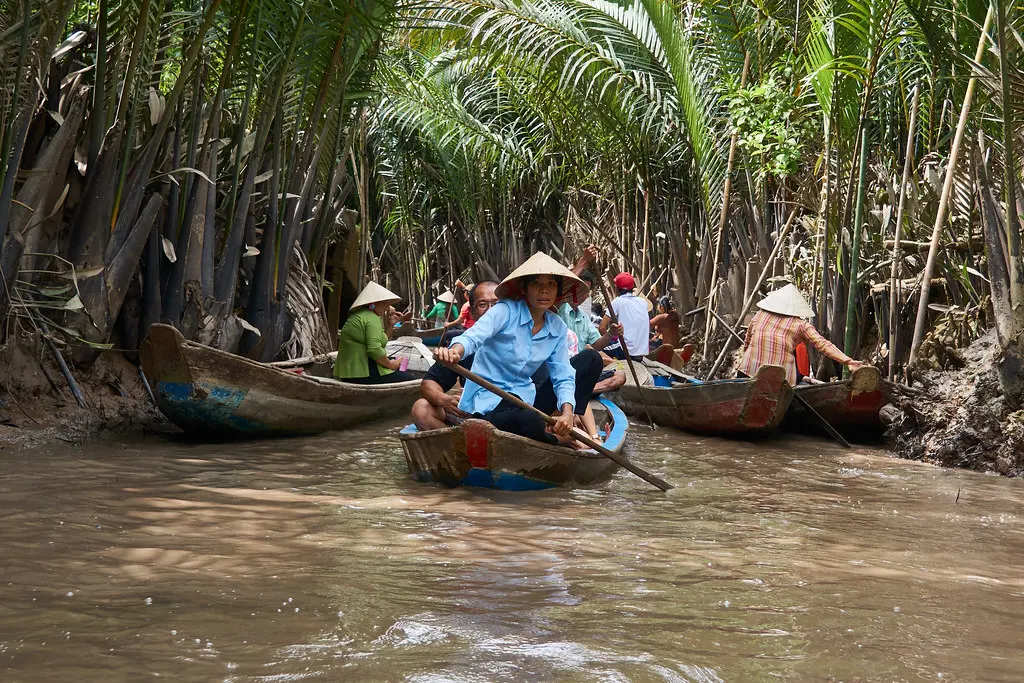
CAN THO, VIETNAM – The Mekong Delta, the ‘rice bowl’ of Vietnam, has long been defined by its rhythm with the river. But in 2026, that rhythm is less a gentle sway and more a desperate struggle against rising tides and unpredictable droughts. I’ve spent the last week here, traveling from the bustling markets of Can Tho to the verdant, though increasingly vulnerable, fields of Chau Thanh district, observing how communities are scrambling to adapt. The most striking transformation? The resurgence of floating rice agriculture, a traditional method now hailed as a climate mitigation marvel.
Driving through the emerald expanse, one immediately notices the changes. The usual patchwork of meticulously diked paddies is giving way, in many areas, to fields where rice stalks visibly stretch towards the sky, their heads buoyant on the surface of floodwaters. This isn't the uniform, high-yield dwarf rice that has dominated for decades. This is floating rice, a hardy, indigenous variety that can grow up to 25 centimeters per day to keep pace with rising water levels.
I met with Nguyen Van Tam, a 58-year-old farmer in Chau Thanh, his face etched with years of sun and worry. "For generations, we fought the water," he told me, gesturing to a newly planted floating rice field, still partially submerged. "Built higher dikes, pumped more. But the river, she always wins. Now, we try to work with her, not against her." Tam is one of thousands who have switched from triple-cropping conventional rice to single-crop floating rice, often intercropped with local fish species.
This shift is not without its costs. The yield of floating rice, at an average of 3-4 tonnes per hectare, is significantly lower than the 6-8 tonnes from modern, irrigated varieties. "My income has dropped by almost 30%," Tam admitted, lighting a cigarette. "But what choice do I have? The saline intrusion last year destroyed everything. This rice, it survived." His neighbor, Le Thi Hoa, echoed the sentiment. "The government's 2026 'Delta Resilience Program' gave us training and subsidized seeds. It's a lifeline, even if it's a tighter one." Her family, like many, now supplements their income with aquaculture, cultivating shrimp and fish in the same fields as the rice.
A Living Landscape of Adaptation
The landscape is morphing, taking on a more diverse, mosaic appearance. The uniform green of continuous rice monoculture is being replaced by a blend of floating rice fields, fish ponds, and even patches of mangroves along the riverbanks – another critical component of the Delta Resilience Program aimed at buffering against storm surges. The Vietnamese Ministry of Agriculture and Rural Development projects that by 2030, floating rice could account for 15% of the Delta’s total rice cultivation area, up from a negligible amount just five years ago.
However, this isn't a universal panacea. "Some NGOs argue that floating rice alone isn't enough, calling for more diversified crops like fruit orchards," I overheard a local agricultural expert, Dr. Tran Minh Duc of Can Tho University, tell a group of foreign delegates. "While diversification is vital, they often miss the cultural heart of the Delta. Rice isn't just a crop here; it's identity. Floating rice allows us to maintain that connection while adapting." Dr. Duc highlighted how the reintroduction of these traditional varieties is also preserving critical local biodiversity, long overshadowed by high-yield strains.
"The river, she always wins. Now, we try to work with her, not against her."
Beyond the fields, the impact resonates in local economies. Smaller, localized rice mills are seeing a resurgence as farmers shift away from the centralized processing of conventional varieties. Yet, the overall economic downturn for many individual farmers is undeniable. The government, alongside international partners, is exploring market incentives for floating rice, aiming to position it as a premium, climate-resilient product. Whether this will fully offset the income gap remains a significant challenge.
The sun dips low over the vast plains, casting long shadows on the resilient rice stalks swaying gently in the water. The Mekong Delta is not just a place where climate change is happening; it's a place where communities are actively, if sometimes painfully, writing a new chapter of adaptation. Their ingenuity, born of necessity, offers a potent lesson for a world grappling with an uncertain future.
Newsletter
Pacific Daily
A curated briefing from Thailand, Asia-Pacific and the world.