Angkor's Precarious Revival: Cambodia's 2026 Strategy Balances Crowds and Collapse
At the heart of the Khmer Empire, a delicate dance between economic aspirations and environmental realities unfolds as authorities plan for a sustainable future for Angkor Wat.
SINGAPORE
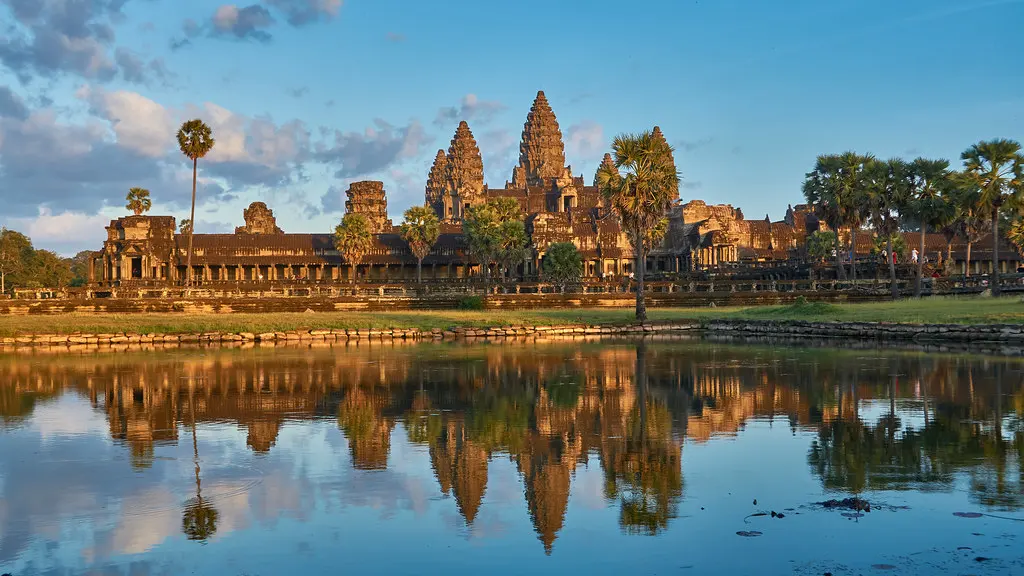
SIEM REAP, Cambodia – The crimson sun bleeds across the iconic spires of Angkor Wat, illuminating generations of human ambition and the relentless embrace of nature. Below, a new dawn breaks for Cambodia’s most treasured heritage site, a dawn laden with both promise and peril. As a correspondent on the Pacific Originals desk, I’ve spent the past weeks navigating the dusty paths and hushed galleries of Angkor Archaeological Park, listening to the tremors of a strategy designed to steer this marvel into 2026 and beyond.
The Cambodian government, through the Apsara National Authority (ANA), has unveiled an ambitious plan aimed at revitalizing tourism while simultaneously fortifying the park against mounting environmental threats. From my vantage point atop Phnom Bakheng, surveying the vast sprawl of temples, the scale of the challenge is evident. ANA’s 2026 strategy outlines a multi-pronged approach: diversifying visitor routes to alleviate pressure on hotspots, upgrading infrastructure, and implementing advanced monitoring systems for structural integrity and hydrological stability. The target is clear: sustainable growth, a phrase that often rings hollow but here, feels utterly vital.
Yet, the very ambition of increasing tourism revenue — a crucial lifeline for the Cambodian economy — rubs uncomfortably against the park's fragility. Before the pandemic, Angkor saw over 2.6 million visitors in 2019. While numbers are still recovering, with approximately 1.5 million in 2023, the long-term projection anticipates a return to and eventual exceeding of pre-pandemic levels. “Our goal is not merely to count tourists, but to ensure every visit contributes positively to preservation,” said Mr. Sum Map, Director-General of ANA, during a recent press briefing at the ANA headquarters. He detailed plans for a new visitor management system, including timed entry for certain temples and a potential cap on daily visitors to high-traffic areas like the central sanctuary of Angkor Wat. This is not some novel concept; similar measures protect sites from Machu Picchu to Venice. The question is, can they be effectively enforced here, where the economic incentive to maximize visitor numbers is so strong?
The Silent Erosion of Climate Change
Beyond the wear and tear of human footsteps, a more insidious enemy is at work: climate change. The temples, built predominantly of sandstone, are incredibly vulnerable to extreme weather patterns. During my visit, I spoke with Dr. Lena Karlsson, a hydrogeologist working with an international conservation group in the park. “We’re seeing more intense dry seasons followed by increasingly heavy monsoons,” Dr. Karlsson explained, gesturing towards a newly repaired section of the Ta Prohm temple wall. “The rapid wetting and drying cycles accelerate sandstone erosion. Then, the heavy rains cause flash floods, impacting foundations and introducing aggressive biological growth.” She pointed to a detailed hydrological map showing alarming drops in groundwater levels in some areas, threatening the very soil upon which these colossal structures stand.
The ANA’s strategy does address these concerns, proposing enhanced drainage systems, reforestation efforts in buffer zones, and the deployment of sensor networks to monitor moisture levels and structural shifts. However, these are costly, long-term interventions. The park’s budget, while supplemented by international grants, primarily relies on ticket sales. This creates a perpetual tension: more tourists to fund preservation, yet more tourists to manage. Some international reports, like a recent piece from *The Guardian*, have focused heavily on the perceived failure of local authorities to curb uncontrolled development around Siem Reap, linking it directly to hydrological issues. While development is indeed a concern, such analyses often overlook the extraordinary efforts of ANA engineers and archaeologists who are quite literally fighting rising tides and sinking foundations daily, often with limited resources. It’s too simplistic to paint the picture as solely one of unchecked greed; the challenges are far more complex, and the solutions demand a level of international collaboration that has yet to be fully realized.
"Angkor is not just stone and history; it is a living entity, breathing and eroding. Our preservation efforts must be just as dynamic." – Mr. Sum Map, Director-General, Apsara National Authority.
Balancing Act on Shifting Sands
The 2026 strategy represents a critical juncture. It aims to broaden the visitor experience beyond the famous "big three" (Angkor Wat, Bayon, Ta Prohm) to lesser-known temples, alleviating concentration. This decentralization, if successful, could distribute tourist impact more evenly. Yet, it also demands more resources for site maintenance across a larger area. The future of Angkor, therefore, hinges not just on the technical prowess of its caretakers but on the collective will – of the government to prioritize long-term preservation over short-term gains, of tourists to embrace responsible travel, and of the international community to provide sustained support. As I depart this timeless wonder, the hum of tuk-tuks mixes with the calls of unseen birds, a symphony of past and present, a reminder that Angkor's survival is a continuous, precarious balancing act on shifting sands.
Newsletter
Pacific Daily
A curated briefing from Thailand, Asia-Pacific and the world.