Washington Looks to Singapore to Broker an Elusive Regional Pact
Enlisting an intermediary to advance multilateral defense talks highlights the limits of direct American leverage across Southeast Asia
SINGAPORE
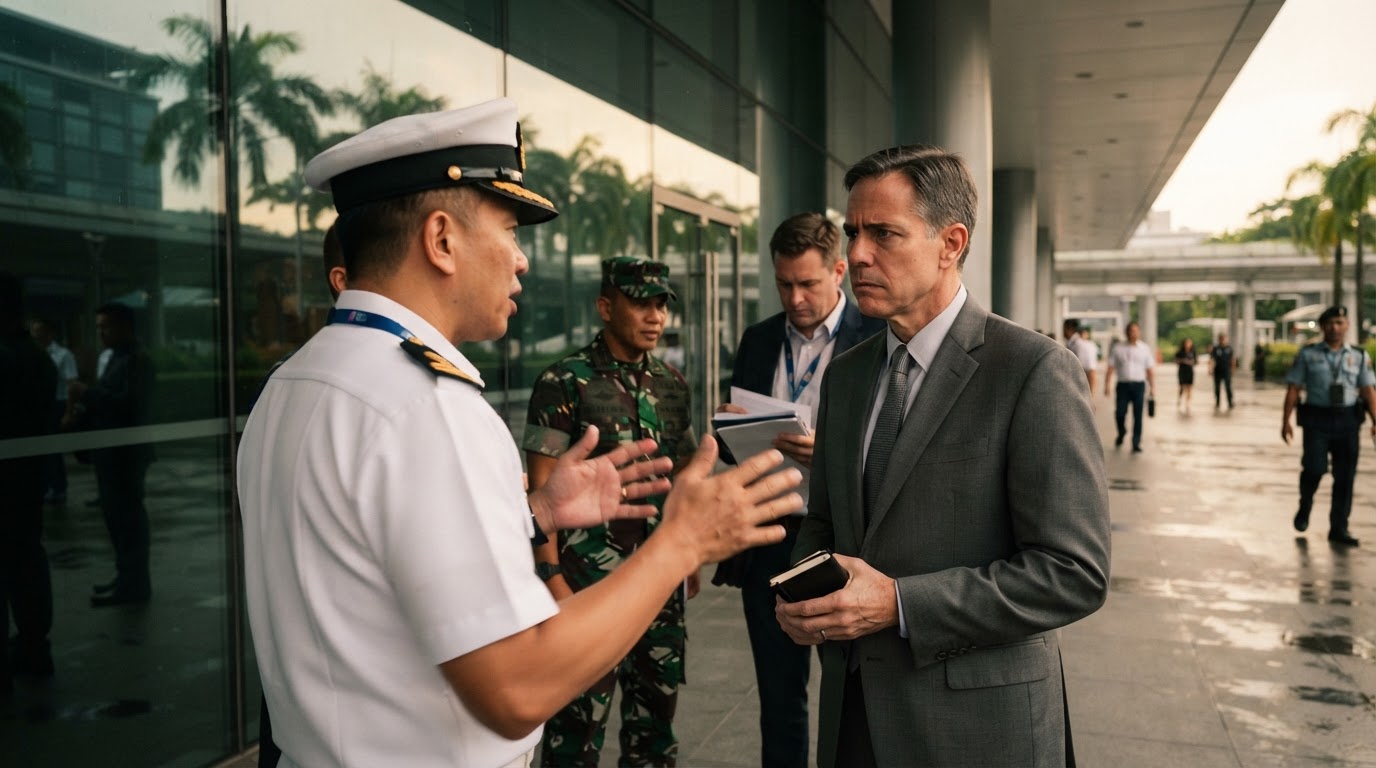
The United States has designated Singapore to steer forthcoming negotiations over a multilateral defense framework with ASEAN. Delegating this diplomatic effort to a regional partner marks a distinct structural recalculation by Washington. Rather than attempting to impose an external security pact directly, American officials have recognized that collective defense initiatives cannot advance across Southeast Asia without an internal broker.
Structural constraints explain why direct American overtures encounter persistent friction. Regional security in Southeast Asia rests on institutional consensus, strategic ambiguity, and an entrenched reluctance to assume binding military commitments. While bilateral cooperation between Washington and individual capitals remains routine, collective defense mechanisms generate immediate anxiety over strategic autonomy. Singapore possesses administrative efficiency, modern defense infrastructure, and institutional standing within the regional grouping. Enlisting the city-state confirms that any defense proposal originating in Washington requires local filtering before member governments will entertain formal discussions.
The Consensus Dilemma
Appointing Singapore does not remove the fundamental contradictions dividing the regional bloc. Member states maintain divergent positions regarding their exposure to external powers. Maritime capitals confronting contested waters often value security engagement with external partners, whereas continental economies remain deeply integrated with China and resist initiatives that appear confrontational. Singapore can establish agendas and facilitate preliminary meetings. Administrative capability cannot manufacture common strategic intent where national priorities diverge.
American planners operate on the presumption that diplomatic process can gradually aggregate disparate bilateral ties into a unified regional architecture. That reasoning overlooks the deliberate nonalignment that defines security doctrine across the Indo-Pacific. Regional capitals rely on diplomatic latitude to manage external pressures and balance competing economic and security dependencies. A formal multilateral defense framework threatens to dismantle the strategic balance that allows smaller governments to conduct commerce with China while retaining access to American defense capabilities. Confronted with proposals requiring clear choices, several member governments will delay discussions, demand procedural revisions, or weaken prospective commitments.
Friction Behind Functional Cooperation
An alternative view suggests that Singapore holds the credibility required to draft an agreeable compromise. Advocates argue that an effective regional intermediary can separate technical defense measures, such as maritime surveillance and shared logistics, from wider strategic rivalries. In this view, pragmatic functional arrangements allow regional forces to upgrade technical coordination without signing contentious security treaties.
Significant obstacles complicate that expectation. Functional defense cooperation requires standardized operational procedures, integrated communication networks, and shared facilities. Once established under an American framework, such technical systems carry clear geopolitical implications. Regional capitals wary of friction with China will view shared operational systems as an unacceptable liability.
Singapore itself operates under strict diplomatic limits. Spearheading an American security initiative places the city-state under regional scrutiny and risks friction with peers committed to nonalignment. Diplomatic influence within ASEAN depends on collective discretion rather than assertive leadership on behalf of external powers.
Washington has established a conduit for defense talks next year, but procedural arrangements cannot bridge conflicting regional interests. Entrusting negotiations to an influential partner postpones core disagreements rather than resolving them. Progress on any collective security framework ultimately depends on whether ten sovereign governments perceive safety in formal alignment, an outcome that diplomatic mediation alone cannot deliver.
Sources
Newsletter
Pacific Daily
A curated briefing from Thailand, Asia-Pacific and the world.