Virtual Reality for Hospitalized Children Points to Broader Cost-Benefit for Asia’s Public Health
Japan's initiative highlights how digital interventions can improve patient experience and well-being during long hospital stays.
SINGAPORE
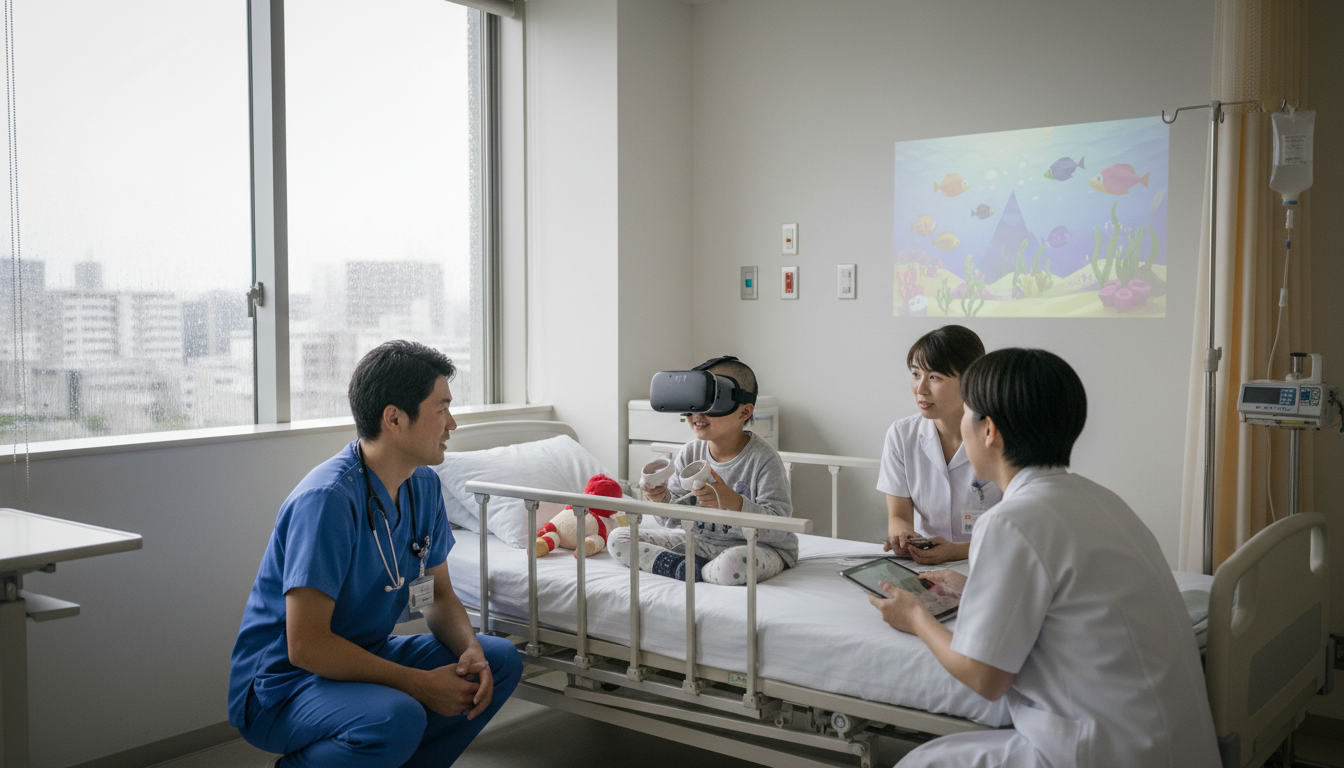
Long hospital stays present challenges beyond medical treatment, especially for children. Isolation and the disruption of daily life can affect a patient's well-being and outlook. In Japan, an initiative has emerged that uses virtual reality (VR) to address some of these non-medical needs for young patients. More than 30 hospitals, including Okayama University Hospital, are participating in a project that allows children and young adults undergoing treatment for serious illnesses, such as cancer, to experience virtual visits to zoos and other destinations.
The project intends to provide opportunities for patients who find it difficult to leave the hospital to interact with others, reduce feelings of isolation, and offer something positive during treatment and post-discharge. In mid-July, 15 children aged 4 to 16 reportedly gathered in a playroom at Okayama University Hospital to participate. The Bangkok Post Life reported on this development in September 2026.
The application of virtual reality in this context moves beyond entertainment; it positions VR as a tool for public health support. For families in Asia, a long hospital stay for a child carries significant financial and emotional weight. While this initiative does not reduce direct medical costs, it offers a qualitative benefit that can influence the overall patient experience. By mitigating isolation and offering a sense of normalcy, such programs could potentially reduce the psychological burden on patients and their families, which in turn might aid recovery or improve compliance with treatment plans.
From an everyday economy perspective, the investment in such VR programs, while not a direct cost-saving measure in the immediate medical sense, could represent a prudent allocation of resources in the broader healthcare ecosystem. The psychological well-being of a patient can affect recovery times and the need for subsequent mental health support. If VR interventions contribute to a more positive patient experience, there could be downstream benefits, including potentially lower re-admission rates related to psychological distress or improved long-term health outcomes that reduce future healthcare expenditures.
However, the implementation of such programs requires infrastructure and training. The initial cost of VR equipment and the personnel needed to manage and supervise its use across numerous hospitals could be substantial. Maintaining hygiene standards for shared VR devices in a hospital environment also presents practical challenges. Furthermore, while the project aims to foster interaction, the nature of VR is often a solitary experience. The claim that it will definitively enable patients to “interact with others” merits scrutiny regarding how this interaction is facilitated within a virtual environment and if it genuinely replaces in-person social engagement.
Yet, the potential for VR extends beyond hospital recreation. UNESCO's call for proposals in January 2026 for developing a virtual exhibition under the 'Shared Heritage: Museums in South-East Asia' project points to a broader interest in virtual environments for cultural engagement. The United Nations also initiated a new thematic virtual tour focusing on Asia and the Pacific in May 2021. These examples illustrate a growing acceptance and application of virtual platforms for education and engagement across the region. If these virtual initiatives can bridge geographical distances for cultural access, their utility in mitigating the physical confinement of hospital patients seems a logical progression.
The success of the Japan initiative will depend on its scalability and the measurable impact on patient outcomes. For other Asia-Pacific nations, including Thailand, where healthcare resources are often constrained, adopting similar programs would require careful assessment of these factors. The question remains whether the benefits to patient morale and potential long-term health effects outweigh the operational costs and logistical complexities. The experience in Japan will offer valuable data on this emerging intersection of digital technology and public health, guiding future decisions about how best to support individuals facing prolonged medical care.
Sources
Newsletter
Pacific Daily
A curated briefing from Thailand, Asia-Pacific and the world.