Vietnam’s Educational Trajectory Signals Shifting Regional Influence
Hanoi's academic achievements reflect a recalibration of strategic capability, warranting examination beyond immediate success metrics.
SINGAPORE
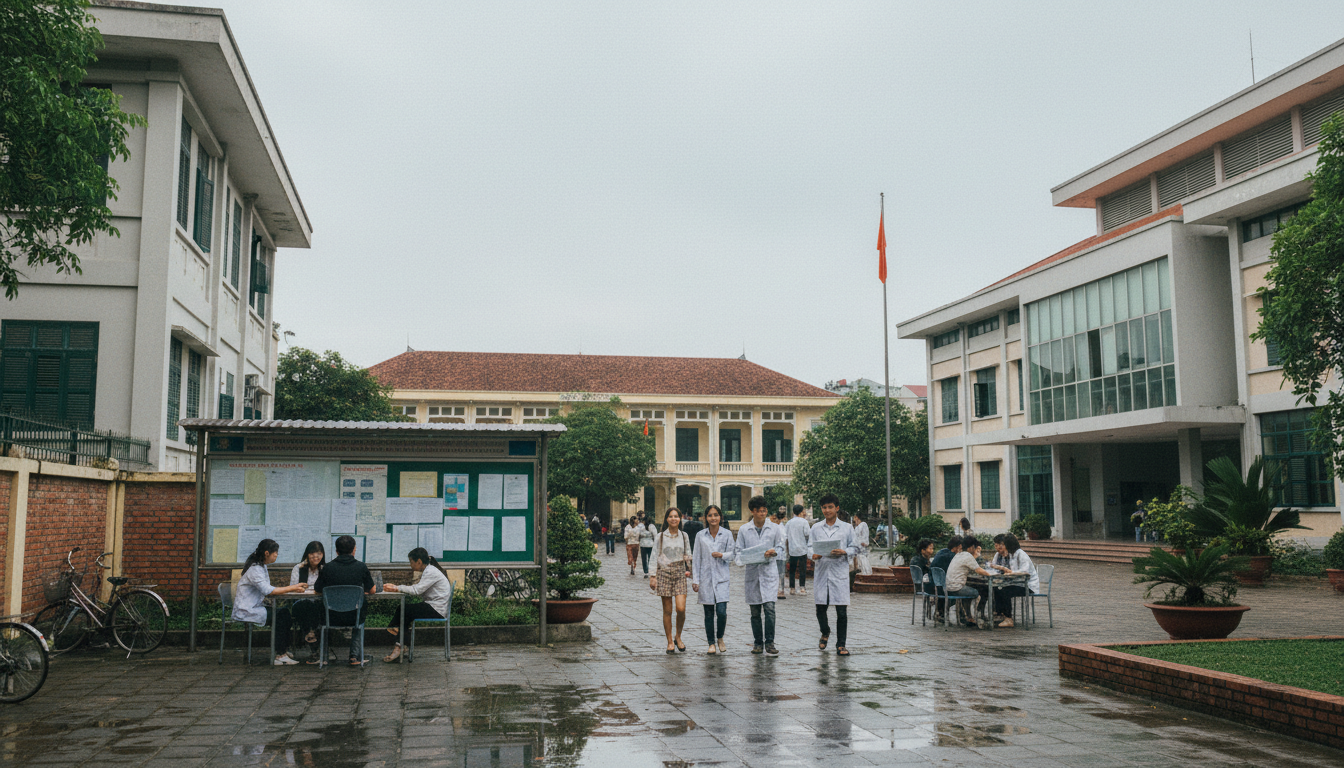
The reported admission of eight students from a single Chinese-language class at Hanoi's Foreign Language Specialized School to China’s Tsinghua University and Peking University represents a specific educational outcome. This event, confirmed by VnExpress International on 2026-09-15, underscores an increasing educational alignment between Vietnam and China. While the achievement of these students is notable, the broader implication resides in the evolving capabilities of Vietnam's educational infrastructure and its potential influence on regional dynamics.
Historically, educational and cultural ties have often preceded or accompanied shifts in geopolitical and economic relationships. The proficiency demonstrated by these Vietnamese students in Chinese, securing entry to institutions that are themselves instruments of Chinese soft power and technological advancement, indicates a strategic investment. This is not merely an isolated academic success; it reflects a capacity within Vietnam to cultivate specialized linguistic and academic talent geared towards engagement with China. Previous reports from VnExpress International, such as a student entering Tsinghua’s nuclear engineering program (2026-07-30) or a Vietnamese student achieving a perfect SAT score (2026-03-01), further illustrate an upward trend in Vietnam’s high-achieving student cohort, though these instances involve different target institutions and skill sets.
Capability Shift
This specific educational pipeline indicates a potential reorientation of human capital development within Vietnam, complementing its existing engagements with Western educational systems. The capability shift is not in Vietnam’s ability to produce high-performing students—that has been evident across various metrics—but rather in the increasing sophistication and specificity of its engagement with Chinese academic institutions. For a regional power like Thailand, which has historically balanced its relationships between major global powers, this development in Vietnam offers a data point for assessing its own strategic educational investments and diplomatic positioning. Thailand’s economic ties to China are substantial; however, a direct comparison of its educational output and elite academic integration with Chinese institutions at this specific, high-level is a relevant metric for strategic comparison.
An alternative interpretation suggests that this simply represents individual academic excellence, rather than a systemic strategic shift. The number of students, while impressive for a single class, may not reflect nationwide trends or governmental policy. However, even individual successes, when clustered and recurring, can indicate underlying systemic strengths or emerging pathways. The critical factor is whether this capacity to funnel talent into China's top universities becomes a sustained and scalable pattern, potentially influencing future technological, economic, and diplomatic exchanges between the two nations. The long-term implications for regional equilibrium, particularly for Southeast Asian nations navigating complex relations with both China and the West, warrant continued observation. The Lowy Institute, for instance, has previously highlighted the importance of picking partners in critical sectors (2025-10-15), a principle that extends to human capital development and educational collaboration. This specific instance illuminates a practical manifestation of such strategic alignment, though its ultimate scale and effect remain to be fully quantified.
Sources
Newsletter
Pacific Daily
A curated briefing from Thailand, Asia-Pacific and the world.