Vietnam's Rice Festivals Keep a Farming Culture Alive as the Mekong Changes
Harvest celebrations in the Mekong Delta and the northern highlands honour an ancient crop, even as saltwater, climate and markets reshape how rice is grown.
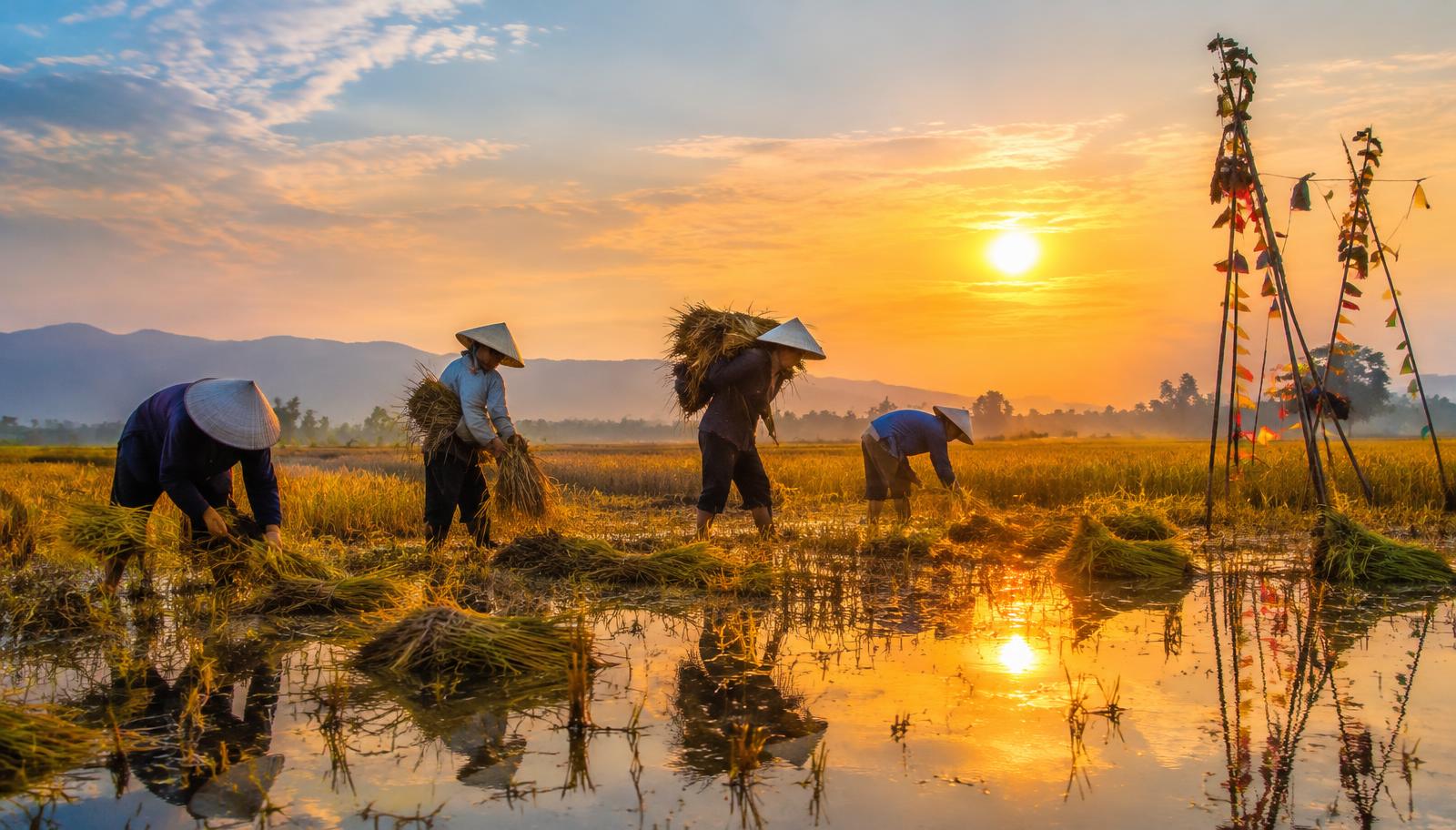
CAN THO — At first light in the Mekong Delta, farmers in conical hats move through golden fields, cutting and bundling rice as the sun lifts over the water. Nearby, bamboo poles hung with ribbons mark preparations for a harvest celebration. Across Vietnam, rice festivals remain some of the country's most vivid cultural events, and they carry new meaning as the delta faces deep change.
Rice is more than food in Vietnam. It shapes the calendar, the language and family life. Festivals mark planting and harvest with offerings to ancestors and earth spirits, communal meals, folk games and music. In the northern highlands, terraced fields around Mu Cang Chai and Sa Pa draw visitors each autumn as the rice turns gold. In the south, the Mekong Delta, Vietnam's rice bowl, celebrates with boat races, markets and performances of don ca tai tu, the region's traditional chamber music recognised by UNESCO.
These events have also become part of tourism strategy. Provincial authorities promote harvest seasons and festivals to domestic and international travellers, and homestays in the delta offer visitors the chance to work in fields, cook regional dishes and travel by sampan through canals.
A delta under pressure
Behind the celebrations, the Mekong Delta faces serious challenges. Saltwater intrusion during dry seasons has damaged crops in coastal provinces, worsened by upstream dams, sand mining and rising sea levels. Land subsidence caused partly by groundwater extraction adds to the risk. Scientists and agencies including the International Rice Research Institute have worked with Vietnamese researchers on salt-tolerant varieties and new farming patterns.
Some farmers have shifted from three rice crops a year to two, or alternated rice with shrimp farming in brackish areas. Government policy has encouraged a move from volume towards higher-quality, lower-emission rice, including a national programme to develop one million hectares of high-quality, low-carbon rice in the delta.
Culture as resilience
Festivals matter in this context because they keep communities connected to the land. Young people from the delta often migrate to Ho Chi Minh City or industrial zones for work. Harvest celebrations bring families home and remind younger generations of knowledge passed down through farming life, from reading the tides to choosing seed.
Vietnam remains one of the world's largest rice exporters, supplying markets from the Philippines to Africa. Its reputation increasingly rests on fragrant and specialty varieties, some of which have won international competitions, rather than on cheap bulk grain.
For visitors, a rice festival offers colour, music and food. For the delta, it is something deeper: an annual statement that a farming culture thousands of years old intends to adapt rather than disappear.
Sources
Newsletter
Pacific Daily
A curated briefing from Thailand, Asia-Pacific and the world.