Vanuatu's Maritime Disaster Exposes Regional Governance Gaps, Not Isolated Failure
A recent ferry sinking, with more than 30 feared dead, underscores persistent structural deficits in Pacific infrastructure and regulatory oversight, affecting regional stability and development initiatives, with implications for nations like Thailand.
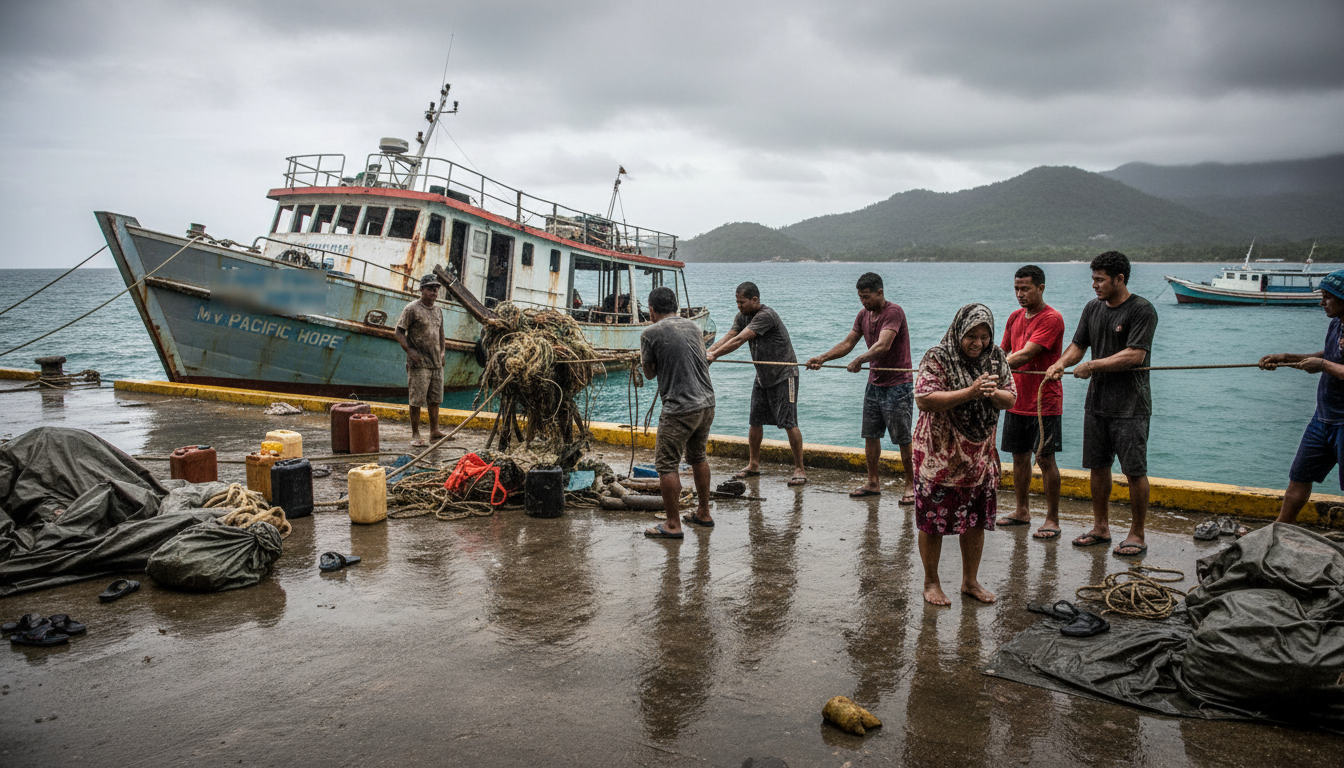
The reported sinking of an inter-island ship between Vanuatu’s Santo and Ambae islands, leaving more than 30 people feared dead on Friday, is not an isolated maritime tragedy. This event, occurring despite prior warnings, points to a recurring pattern of infrastructure fragility and regulatory enforcement gaps across the Pacific region.
The immediate focus is on the human cost in Vanuatu, yet the incident resonates across the broader Asia-Pacific. The Guardian reported one dead and more than 30 missing in rough seas on September 13, 2026, a day before Islands Business reported 30 feared dead. RNZ noted on September 14, 2026, that this disaster exposes a gap between warnings and action, a concern that transcends national borders in an interconnected region.
Countries like Thailand, engaged in their own maritime transport challenges and regional development, will observe how such events undermine confidence and potentially impact trade and tourism flows. Vanuatu has been promoting sustainable tourism, as highlighted by Forbes, and advancing green energy electrification, according to the United Nations Development Programme. These development initiatives are inextricably linked to foundational safety and governance structures, and their efficacy is questioned by such incidents.
The challenge is not confined to Vanuatu. The Pacific Islands Forum, a key regional body, experienced turmoil in August 2026 when several leaders pulled out of the Palau summit, as reported by The Guardian. Such internal disunity weakens collective responses to shared vulnerabilities. Concurrently, France's continued claims over Pacific islands, reported by the South China Morning Post on September 4, 2026, as Vanuatu turns to the World Court, introduces a layer of geopolitical complexity that can divert resources and attention from critical domestic infrastructure needs.
This maritime incident underscores a critical regional tension: the imperative for development and connectivity against the reality of limited resources and fragmented governance. While there is stated intent for progress in areas such as sustainable tourism and green energy, the recurrent pattern of infrastructure failures indicates that underlying systemic issues persist. The immediate challenge is to address the safety and regulatory gaps in inter-island transport; the enduring regional question is how such incidents will shape the broader trajectory of governance and cooperation in the Pacific.
Sources
Newsletter
Pacific Daily
A curated briefing from Thailand, Asia-Pacific and the world.