Trade Fair Optimism Meets Structural Strain in Southeast Asia
Indonesian tourism operators assert commercial expansion across exhibition floors, yet sector resilience faces mounting operational headwinds
SINGAPORE
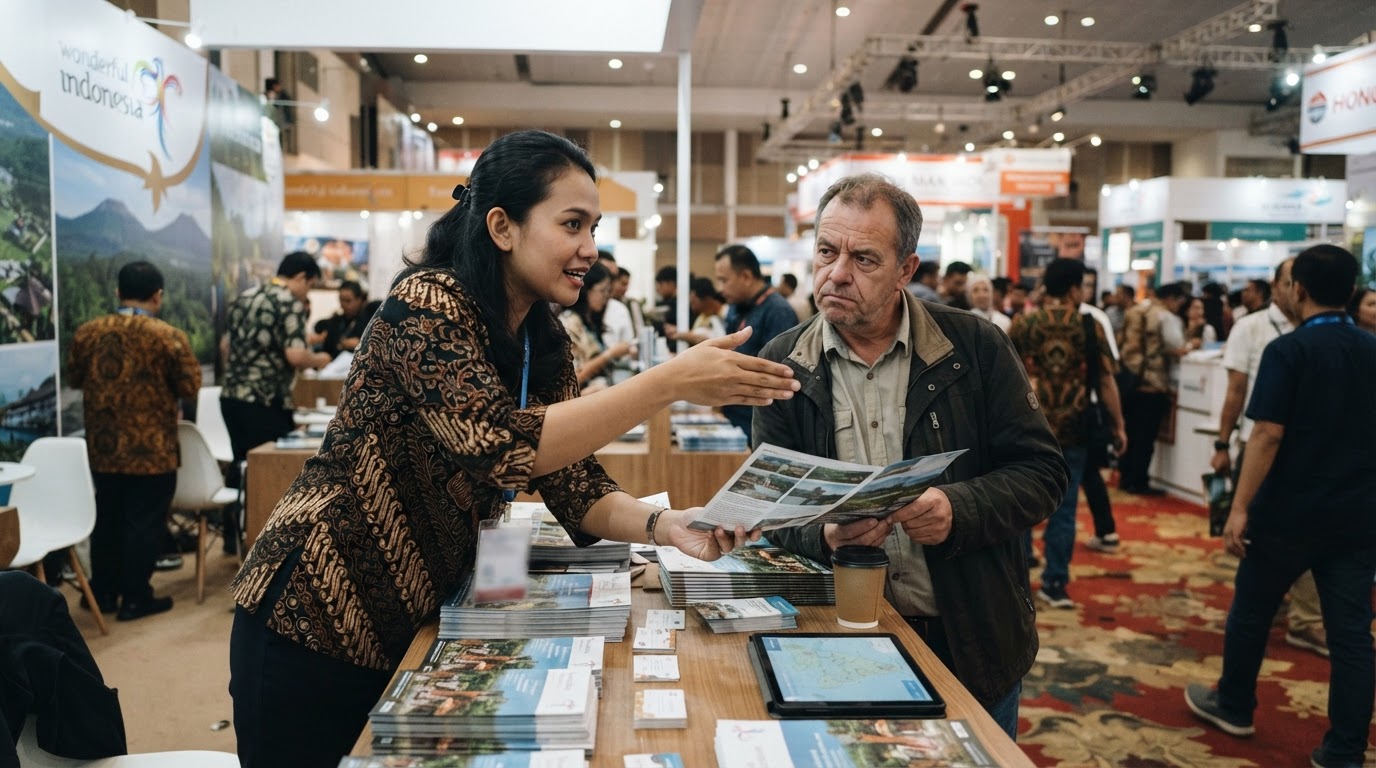
Trade gatherings operate on an unwritten economic premise: confidence must be exhibited before it can be monetised. At the Jakarta Wonderful Indonesia Tourism Fair, known as WITF 2026, commercial representatives gathered in October to present a narrative of uninterrupted expansion. Industry delegates from the Association of Indonesian Tours and Travel Agencies and affiliated exhibition organisers reported sales growth alongside sustained business-to-business transactions. Across the convention floor, demand was described as resilient against economic pressures, changing market conditions and localised environmental disruptions.
Such declarations warrant empirical distance. When trade associations report rising volumes against a backdrop of broader macroeconomic friction across Southeast Asia, the distinction between transactional velocity and actual commercial health narrows quickly. Sector leaders, including Pauline Suharno of the Association of Indonesian Tours and Travel Agencies, maintain that buyer interest remains intact. Similar confidence emerged from Hosea Andreas Rungkat within the exhibition and convention sphere, framing buyer attendance as proof of structural strength.
The Friction Behind Aggregate Demand
Yet aggregate sales declarations reported at promotional forums often mask shifting margins. Travel intermediaries operate within compressed operational boundaries, where higher headline revenue frequently absorbs mounting logistical costs rather than yielding net profit. Across regional nodes spanning from Vietnam to traditional long-haul sourcing markets such as the United States, travel expenditure faces recalibration. Procurement cycles have tightened, while corporate travel programs scrutinise overhead with greater vigilance.
What industry representatives describe as resilient volume may reflect pre-committed institutional bookings rather than spontaneous consumer appetite. Promotional platforms naturally select for closed transactions, presenting completed contracts while obscuring deferred commitments. The presence of international buyers signals ongoing interest in the region, but buyer participation does not guarantee sustained downstream conversion once delegations disperse.
Environmental unpredictability introduces operational friction that promotional presentations rarely resolve. Localised disruptions, acknowledged during the forum discussions, test the physical infrastructure underpinning travel itineraries. Across emerging destinations, logistical fractures reverberate through supply chains, leaving regional ground operators to absorb rebooking penalties and operational delays that promotional bulletins do not capture.
Manufactured Sentiment and Regional Realities
Regional competitors face parallel cross-currents. While trade bodies project uniformity, outbound and inbound flows remain fragmented. Established commercial centres capture reliable corporate convention business, while newer initiatives struggle to justify capital outlays without sustained international connectivity. The industry’s insistence on uninterrupted momentum serves an institutional purpose: reassuring credit providers, hotel developers and regional authorities that capacity expansion remains viable.
That posture carries liabilities if consumer discipline hardens. Squeezed domestic margins cannot indefinitely subsidise promotional optimism. For regional intermediaries, navigating shifting currency environments and institutional cost controls demands transparent balance sheets rather than choreographed buyer forums.
The tension displayed at WITF 2026 is not whether commercial transactions occurred, but whether convention-floor momentum can outlast broader macroeconomic deceleration. Industry declarations confirm that sales contracts were signed under convention lights. Whether those commitments translate into durable operational solvency across the broader archipelago remains an unresolved economic constraint.
Sources
Newsletter
Pacific Daily
A curated briefing from Thailand, Asia-Pacific and the world.