Tonga's Maritime Incidents Signal Regional Regulatory Weakness
Repeated whale-watching boat mishaps in Vavaʻu reveal systemic challenges in Pacific tourism oversight and broader maritime governance.
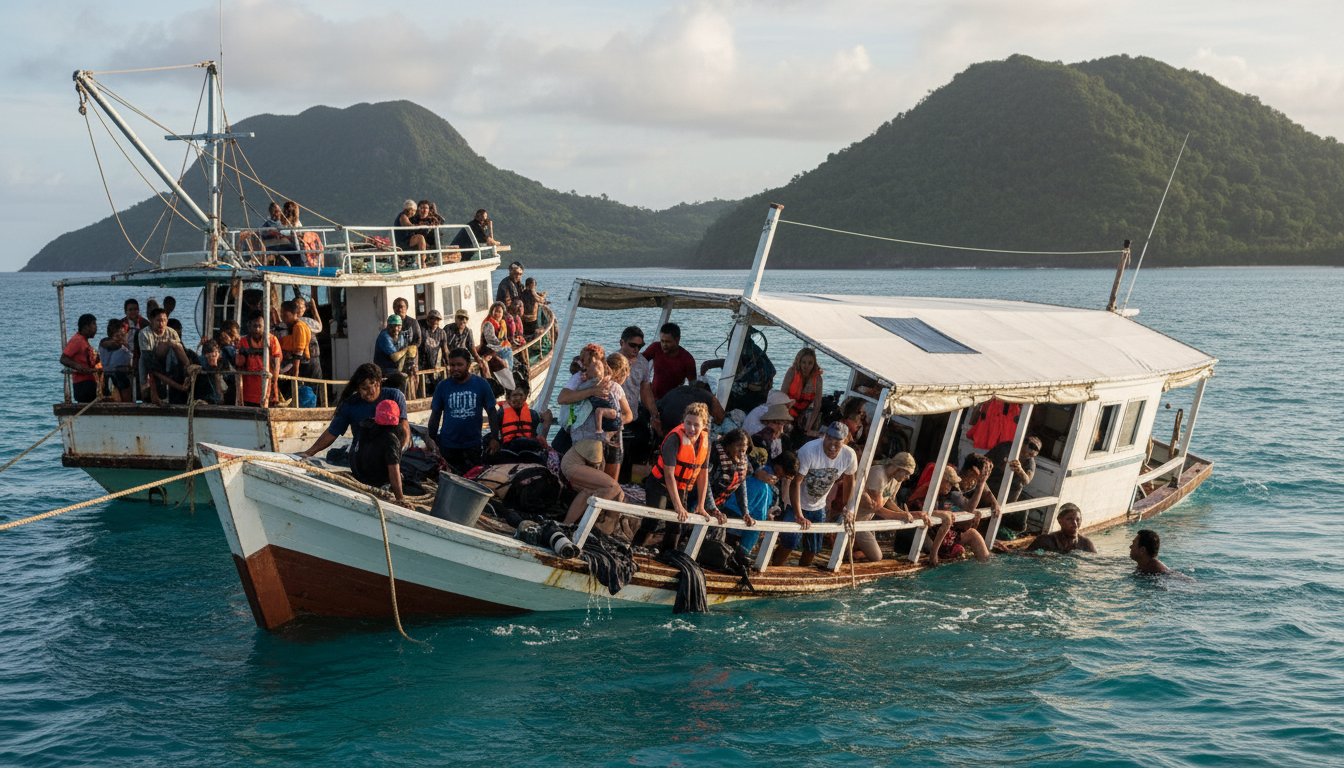
The report of another whale-watching boat accident in Vavaʻu, Tonga, on Thursday, September 17, 2026, less than four weeks after a prior capsizing involving an unlicensed vessel carrying New Zealand Anglican Church delegates, highlights a persistent pattern. These incidents, as reported by Kaniva Tonga, demonstrate a recurring vulnerability within a sector central to Tonga's economy.
The repeated occurrence of serious maritime incidents within a short timeframe – specifically, two whale-watching boat accidents in Vavaʻu in less than a month in 2026 – suggests that these are not isolated mechanical failures or singular operational errors. The first incident, on August 24, 2026, involved an unlicensed boat. The second, on September 17, 2026, likewise raised safety concerns. This sequence indicates a structural issue related to regulatory enforcement and oversight, particularly concerning the licensing and operational standards of commercial vessels.
Historically, the challenge of regulating an expanding tourism sector in archipelagic nations has been significant. The Tongan government's investigation into the August 24 capsizing indicates an acknowledgement of a problem, but the subsequent incident suggests that immediate preventative measures or policy shifts have either not been implemented or have proven insufficient. The specific reference to an "unlicensed boat" in the earlier incident points directly to a failure in enforcement. Such regulatory lapses introduce risks that extend beyond immediate safety concerns, potentially impacting the broader reputation of Pacific tourism and its long-term economic viability.
The regional consequence of these events is pertinent. While these incidents occurred in Tonga, they are indicative of pressures faced by many Pacific island nations balancing economic development through tourism with the imperative of safety and environmental protection. The rapid expansion of marine tourism, exemplified by activities like whale watching, without commensurate strengthening of regulatory frameworks and enforcement capabilities, can lead to a erosion of trust among international visitors. This dynamic creates a regional challenge, as perceived safety risks in one nation can influence perceptions across the wider Pacific tourism market. The absence of robust, consistently enforced regulations represents a capability gap that could affect regional stability and economic development more broadly. The issue is not merely one of individual boat safety but of the capacity of small island states to effectively govern complex, revenue-generating industries.
The counterargument posits that the Tongan government is actively investigating these incidents, implying a commitment to addressing the issues. An investigation by the Tongan government was reported on August 24, 2026, following the first capsizing. This action, however, has not prevented the occurrence of another incident. The focus remains on the demonstrable capability to prevent recurrence, rather than solely on post-incident response. The constraint that remains unresolved is the consistent and proactive enforcement of maritime safety regulations across the Pacific, particularly in high-growth tourism sectors.
Sources
Newsletter
Pacific Daily
A curated briefing from Thailand, Asia-Pacific and the world.