Tokyo's Moon-Gazing Redefines Tradition for the Urban Budget
The classification of traditional moon-viewing spots in Tokyo signals a shift in cultural access, impacting everyday economics.
TOKYO
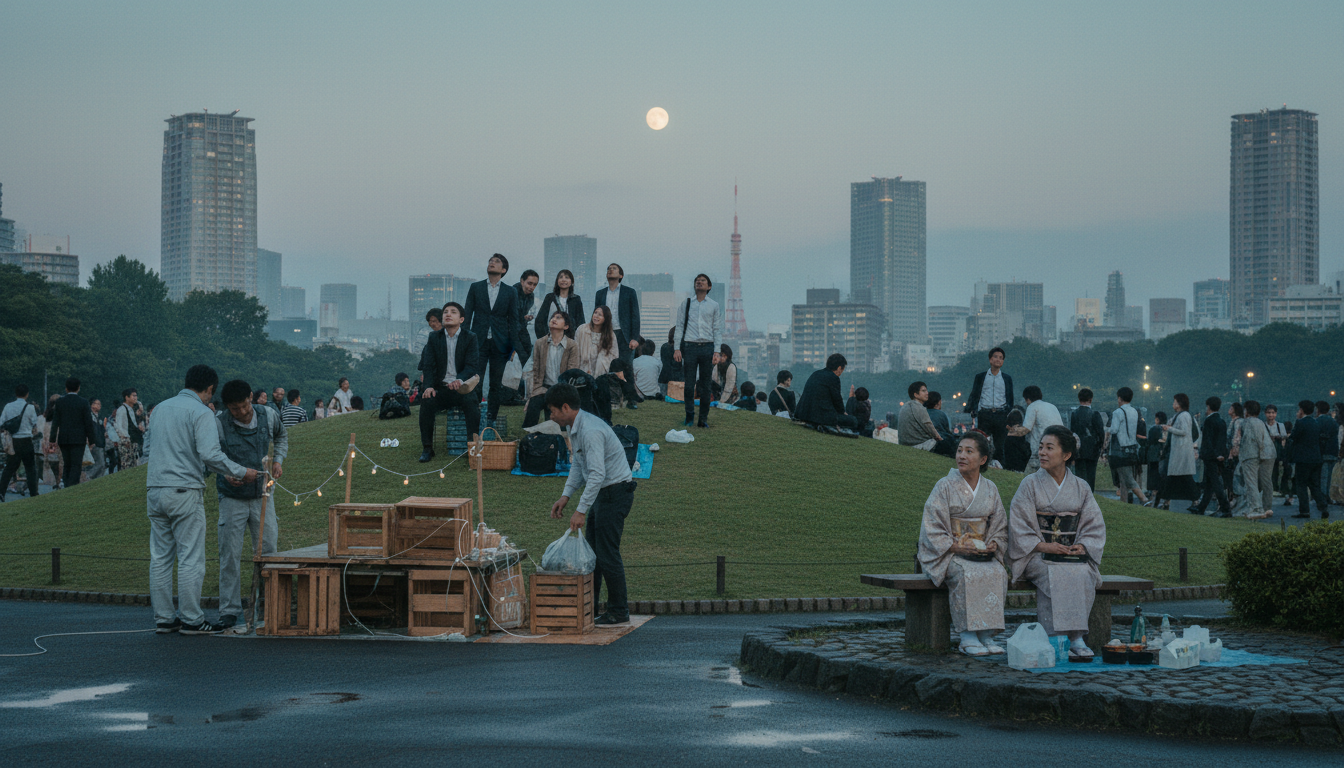
Tokyo's metropolitan area has identified six "officially certified" locations for Tsukimi, the traditional autumn moon viewing. This development, noted in 2026, frames a centuries-old cultural practice within the context of contemporary urban management. For an everyday economy writer, this raises questions about how such classifications might alter the financial landscape for residents and visitors.
Historically, moon viewing was a widely accessible tradition in Japan. The introduction of "certified" spots suggests a more structured, and potentially regulated, experience. While the Tokyo Weekender report, dated 2026-09-16, does not specify any costs associated with accessing these locations, official designations often precede or accompany mechanisms for control and, eventually, revenue. This could mean fees for entry, timed access, or increased costs for nearby services, shifting the burden onto individuals' monthly budgets. The traditional practice, once a matter of individual choice, risks becoming a consumable experience in a high-density urban environment.
This approach to cultural tradition in Tokyo stands in contrast to how the moon features in other parts of the Asia-Pacific region, where its significance is often tied to distinct national ambitions or political narratives. For example, in South Korea, the moon is primarily a subject of scientific and technological endeavor. Reuters reported in August 2026 that South Korea aims for a moon landing by 2030, positioning lunar engagement as a marker of future technological prowess and economic potential. This is a considerable investment, indicative of a national priority beyond cultural contemplation.
Furthermore, the term 'Moon' in South Korea has also been intertwined with political events. From 2021 to 2025, former President Moon Jae-in was a central figure in various Reuters reports. Headlines from 2021 cited South Koreans' sarcasm about hypocrisy during his final year, his G7 summit appearance overshadowed by China, and his willingness to engage North Korea with U.S. President Biden. Later, in April 2025, South Korea's prosecutors indicted ex-president Moon Jae-in for bribery. These examples illustrate how a lunar reference, or a name associated with it, can carry vastly different public and economic weight depending on the national context, ranging from high-stakes politics to advanced technology.
The implications for Thailand and the wider Asia-Pacific are worth considering. While Thailand also has cultural practices linked to lunar cycles, there is no indication of similar 'certification' for viewing spots or national space missions related to the moon. However, the Tokyo model of institutionalizing and potentially commercializing cultural practices in urban settings could set a precedent. If cultural assets are increasingly viewed through an economic lens, similar strategies might emerge in other nations, especially those reliant on tourism. This could transform traditionally open cultural activities into managed experiences, with potential consequences for who benefits and who pays. The core question for monthly budgets remains: does formal 'certification' serve to preserve tradition, or does it primarily repackage it for consumption, altering its accessibility and cost?
Sources
Newsletter
Pacific Daily
A curated briefing from Thailand, Asia-Pacific and the world.