The unacknowledged cost of K-pop's global reach
Fan displays outside Hybe headquarters reveal a dissonance between commercial success and local civility, a tension familiar across Asia-Pacific's cultural exports.
SINGAPORE
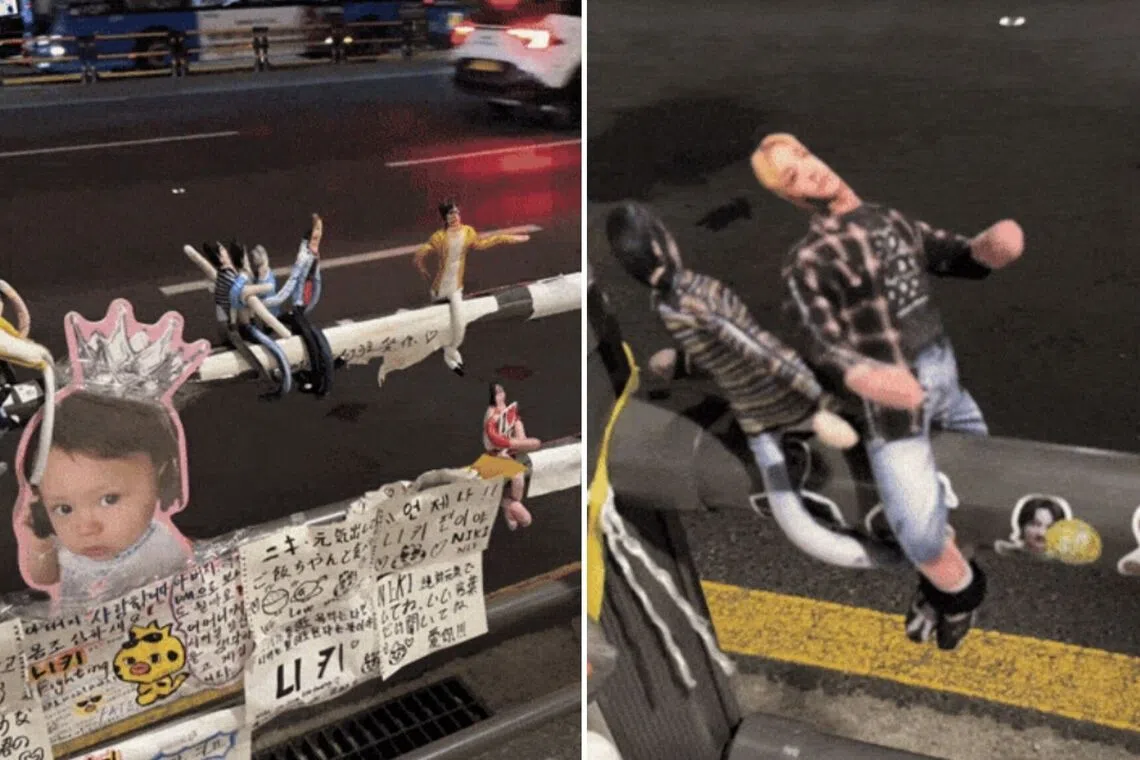
Outside Hybe's Seoul headquarters, a persistent tension manifests: K-pop fans affix dolls resembling boy band Cortis members to railings, while local residents voice complaints. Sanitation workers removed many of these ‘rat jerky dolls’ after concerns were raised, yet fans reportedly continue to place them, leaving residue behind. This dynamic, where the commercial success of cultural exports meets the practicalities of public space, reflects a larger, often unaddressed, friction.
Fans regard these displays as an integral part of K-pop culture, asserting that they cause no harm. Residents, conversely, advocate for expressions of support that do not contribute to public clutter. This disagreement is not merely about dolls or tape; it indicates a persistent structural challenge within the K-pop industry, where a globalized phenomenon intersects with local daily life. The agency, Hybe, has seen its founder, Bang, subject to a police detention warrant in April 2026, and its groups, such as NewJeans, have faced internal disputes leading to members reportedly leaving in November 2024. Even a BTS comeback concert in March 2026 was described as a 'disaster' for some businesses, according to The New York Times.
While collaborations, such as Disney and Hybe's partnership in July 2022 to disseminate BTS content globally, underscore the industry's outward ambitions, the local impact often remains unexamined. The question arises: does the industry, in its pursuit of international reach and billion-dollar valuations, adequately address its responsibility to the immediate communities it inhabits? The dolls outside Hybe are not official merchandise, a detail that subtly underlines the informal, yet impactful, nature of fan engagement. This engagement, while driven by genuine affection, presents a consistent, low-level disruption that agencies appear reluctant to address directly.
One might argue that such displays are a minor inconvenience, a negligible byproduct of a cultural movement that generates significant economic value and soft power. This perspective posits that the enthusiasm of a global fanbase, expressed through these physical gestures, should be tolerated, if not celebrated, given K-pop's influence. However, this argument tends to externalize the costs onto specific local communities while the benefits are reaped globally and by corporate entities. The issue transcends simple tidiness; it speaks to the boundaries of corporate responsibility when a product’s success is intrinsically tied to public fan culture. The tension between fans' desire for expression and residents' need for an uncluttered public environment remains, unresolved by either party or the industry that profits from both.
Sources
Newsletter
Pacific Daily
A curated briefing from Thailand, Asia-Pacific and the world.