The Screen's Allure: Remaking Retail in Southeast Asia
As Singapore retools its workforce for social commerce, the landscape of transactional exchange across the region shifts, prompting a re-evaluation of public spaces.
SINGAPORE
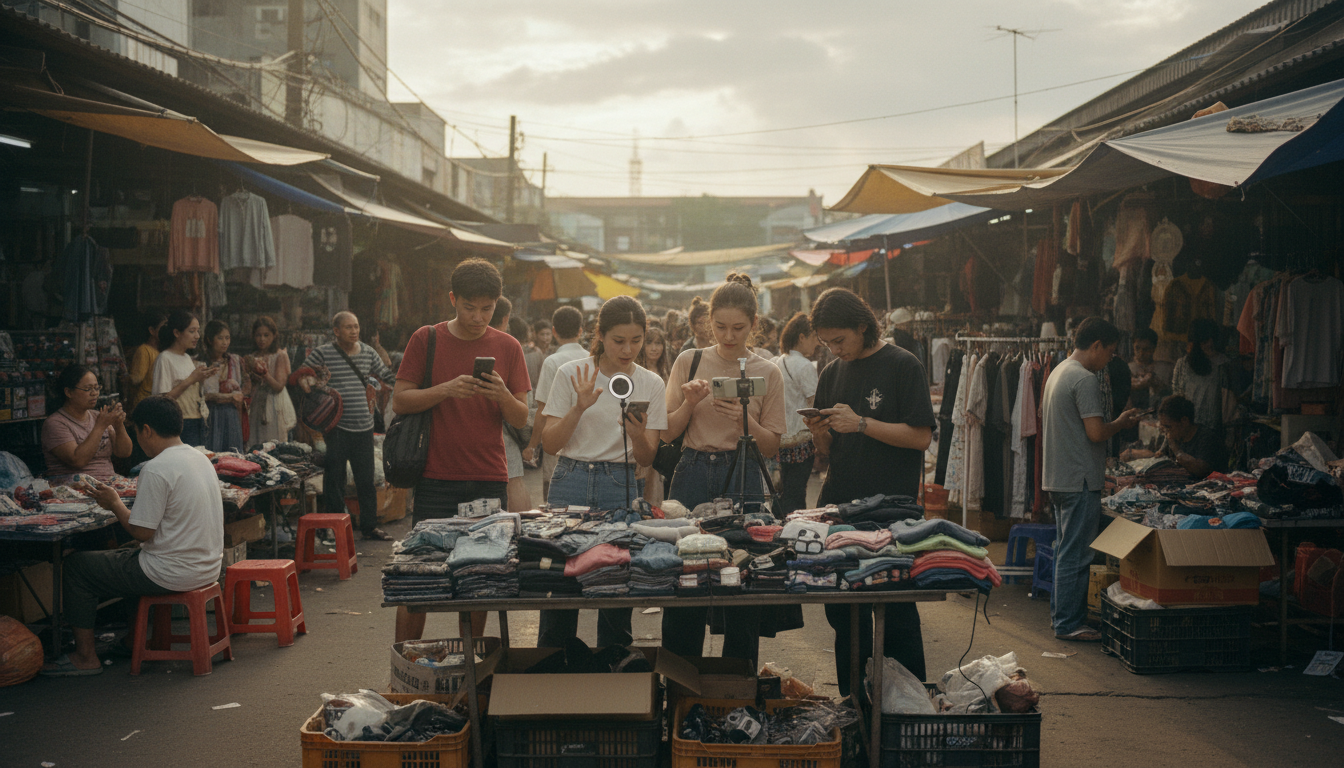
The bustling retail districts of Southeast Asia have long been stages for a particular kind of engagement. Shoppers, drawn by the tangible allure of goods, moved through physical spaces, their decisions shaped by display, immediate touch, and the murmur of fellow consumers. Now, a subtle but significant transformation is underway, quietly reshaping these familiar scenes.
Singaporean retailers are retraining their workers. The demand for roles like livestream hosts and social commerce leads is growing, as reported by CNA Lifestyle on August 27, 2026. This reflects a broader regional pivot. These new roles transform the retail interaction, moving it from a physical encounter to a mediated one, often viewed through a screen. A livestream selling session, as described by CNA Lifestyle, involves hosts demonstrating products and engaging with viewers in real time. This is not merely an adaptation of marketing; it is a fundamental shift in the nature of retail itself.
This reorientation towards social commerce and livestream selling suggests a recalibration of what a 'shop' means. No longer solely a brick-and-mortar presence, the retail outlet extends into the digital realm, becoming a broadcast studio, a performance space. Artificial intelligence, too, is being employed to make livestream selling more efficient, suggesting a future where even the 'live' interaction is optimized by algorithms. The question arises: what becomes of the public square, the bustling market, when transactions increasingly occur in personal digital bubbles? Will the energy of commerce, once radiating from physical hubs, dissipate into countless individual screens?
The broader Asia-Pacific region is experiencing significant digital growth. Stripe’s chief revenue officer, for instance, stated on August 25, 2026, that their APAC business was expected to grow faster than any other region. This underscores a fertile ground for digital transformation, including social commerce. However, for places where street markets and traditional shop houses are deeply woven into the cultural fabric, this evolution presents a contradiction. The tactile, often theatrical, experience of haggling over goods, the smell of street food mingling with the wares, the sheer human density – these elements define a significant portion of a locale's retail identity. While new digital roles are created, the essence of communal exchange risks being diminished.
One might argue that this digital shift offers unprecedented access and convenience, democratizing commerce by bringing a wider array of products to a broader audience. For businesses, it offers a new, potentially more efficient, sales channel. Indeed, panellists cited by The Straits Times on February 21, 2025, underscored the vitality of upskilling workers and the importance of relevance and company support in such transitions. The digital storefront requires new skills, new forms of engagement, and a different kind of charisma from its hosts. Yet, for a traveler or a local, the act of shopping often involves more than mere acquisition; it is about discovery, interaction, and the unique sensory experience of a place. The challenge for destinations rooted in vibrant physical commerce is how to embrace the screen's allure without losing the character of their streets, the very places that have historically defined their trade and identity.
Sources
Newsletter
Pacific Daily
A curated briefing from Thailand, Asia-Pacific and the world.