The Physical Anchors of Speculative Computing
CoreWeave’s rapid expansion into Southeast Asia exposes the structural gap between volatile market valuations and long-term regional infrastructure commitments.
SINGAPORE
Capital markets often treat specialized compute expansion as a liquid cross-border asset, yet every physical facility requires land, grid allocations, and sovereign patience. CoreWeave announced its first data center in Asia-Pacific on August 4, 2026, targeting Indonesia as a regional entry point. The corporate decision was initially read by market participants as validation for broader regional infrastructure integration. Market reactions arrived swiftly across trading floors. On August 12, 2026, Asian stocks rose behind a rally in Nvidia-backed CoreWeave, lifting benchmark indices such as the Kospi by 4.6 percent.
The optimism met sudden friction just two months later. Channel News Asia published an analysis on October 16, 2026, examining why CoreWeave found itself in the crosshairs of an artificial intelligence scare. The rapid swing in institutional sentiment between August and October captures a structural imbalance confronting emerging host nations. Trading desks can reprice equity value and unwind financial risk across seconds. Municipalities and grid planners, by contrast, must commit permanent land and electrical capacity that cannot be liquidated through market orders.
The Geography of Compute
The broader timeline shows how specialized computing transitioned from a private infrastructure niche into a regional bellwether. On September 22, 2025, Michael Intrator, Chief Executive Officer of CoreWeave Inc., attended an interview with CNBC on the floor at the New York Stock Exchange. That appearance framed compute capacity as a scarce industrial commodity commanding vast institutional appetite. By July 20, 2026, market evaluations had expanded the company's capital standing, culminating in an enterprise valuation baseline reaching USD 39000000000.
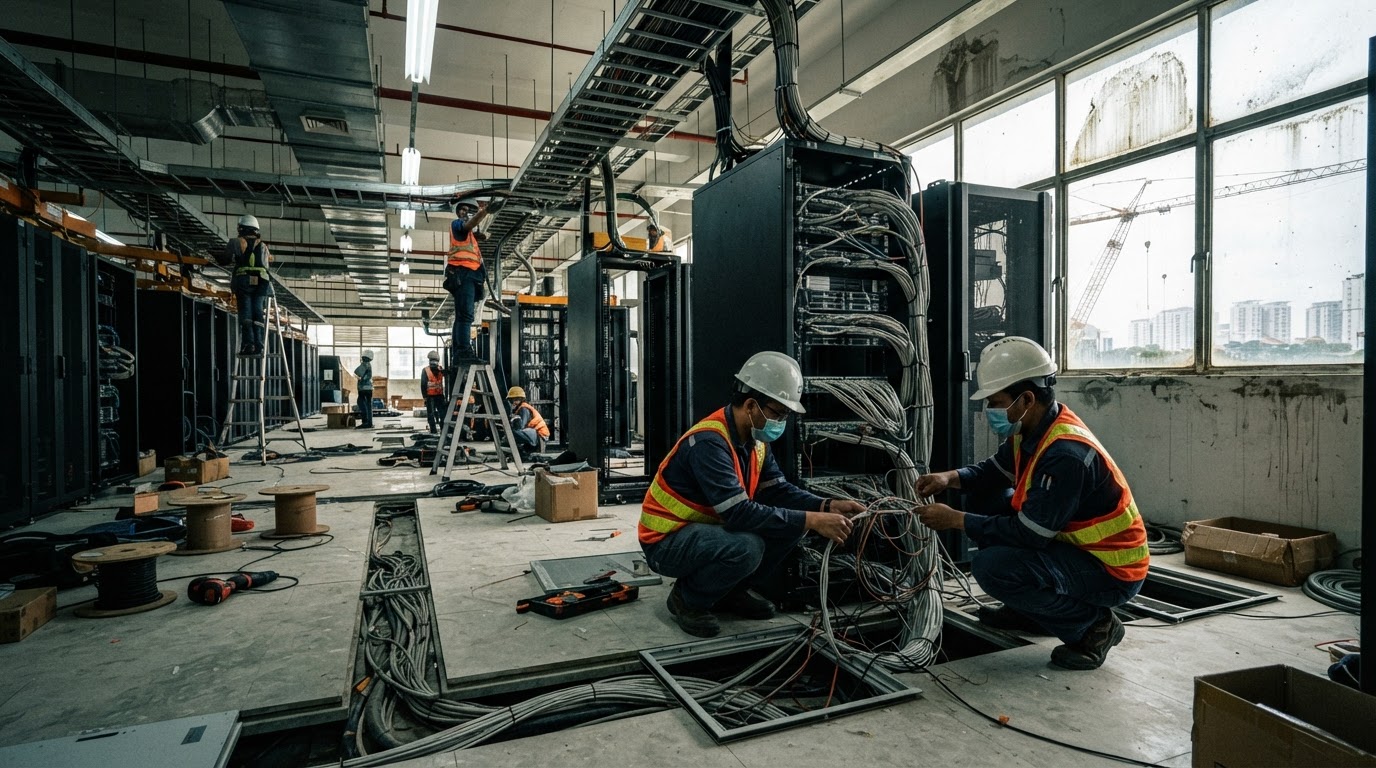
Deploying that capital outward introduced different geographic realities. An operational footprint in Indonesia required negotiating access to utility baseloads and local power infrastructure. Commercial deep-learning clusters demand continuous electricity, cooling infrastructure, and physical grid capacity.
Municipalities and grid planners must commit permanent land and electrical capacity that cannot be liquidated through market orders.
Host territories bear the lingering commitments when international trading sentiment turns skeptical, retaining substation tie-ins, cooling demands, and civil site allocations.
Sovereign Exposure and Financial Swings
Equity movements from August illustrated how tightly Asia-Pacific liquidity tracks corporate actions initiated across Western capital markets. When the Kospi jumped 4.6 percent alongside CoreWeave's rally, market participants celebrated downstream momentum. Yet equity appreciation provides little protection against operational downtime or delayed infrastructure utilization. Digital development blueprints often treat international cloud operators as stable industrial foundations, but provider balance sheets remain subject to equity sentiment shifts and volatile financing cycles.
Industry observers assessing the October scare pointed to compute demand questions, hardware monetization uncertainties, and elevated corporate liabilities. These concerns matter directly to regional industrial planners. If specialized compute operators face financing constraints, capital projects across developing markets risk slowdowns, reduced utilization, or delayed grid connections.
Host authorities throughout Southeast Asia face an enduring strategic problem. Sovereign planners are asked to allocate public resources, substation capacity, and water supplies to speculative global compute networks before long-term demand has solidified. Stock markets may register immediate shifts in risk appetite, but the concrete substations and grid interconnects built to power foreign compute clusters remain fixed precisely where they were laid.
Sources
Newsletter
Pacific Daily
A curated briefing from Thailand, Asia-Pacific and the world.