The Lorient Curtain and Asia's Uneven Waterfront
While elite yachting focuses on speed runs, coastal communities in Asia face a different set of currents.
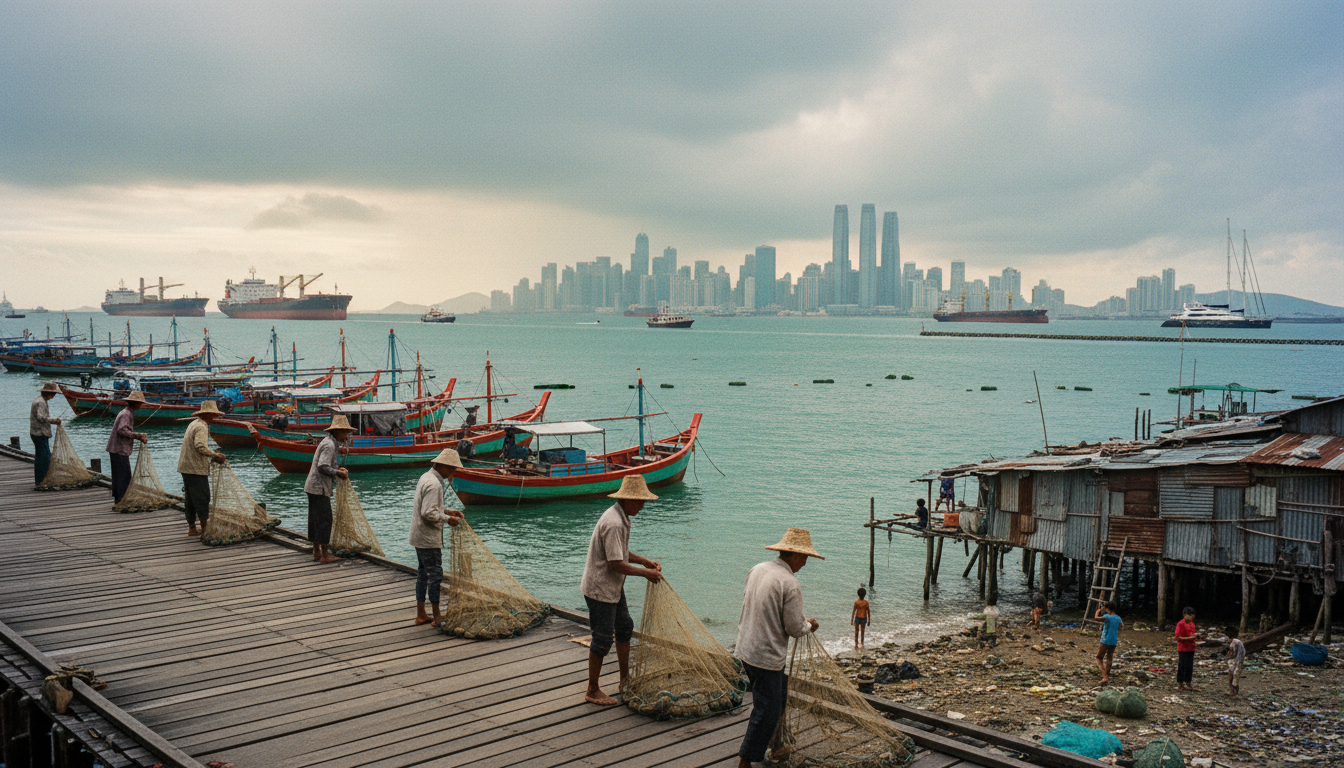
The 16th edition of the Défi Azimut, a Lorient-based event, has commenced its focus on speed runs and identifying the fastest boat over a one-mile racetrack. This event, as reported by Sail World Asia on September 16, 2026, centers on a distinct measure of performance within the yachting world. Its unfolding, however, occurs against a backdrop of complex and unequal realities across the Asia-Pacific.
While the Défi Azimut celebrates nautical speed, a contrasting current describes the region's broader relationship with the sea. Azimut Benetti's CEO stated that Asia Pacific represents a "great market for yachts" (CNBC). This assertion aligns with reports of a boom in luxury yacht sales, particularly after Covid-19, as documented by the South China Morning Post on March 21, 2022, concerning Benetti. Further, The Straits Times highlighted Vietnam's emergence as a new hotspot for luxury yachts among the ultra-rich. This concentration of high-value maritime assets indicates significant capital flow into a niche segment of coastal engagement.
This trend, while profitable for manufacturers and certain local economies, highlights a structural tension. The demand for luxury yachts, and the infrastructure it requires, often develops independently of the pressing issues facing many of the region's coastlines. Thailand, with its extensive coastline and reliance on marine ecosystems, exemplifies this disparity. While private capital fuels luxury leisure on some shores, other coastal communities contend with different forms of marine activity, from subsistence fishing to the impacts of industrial development and climate shifts.
The focus on speed and luxury in events like the Défi Azimut, or the growth in yacht sales across Asia, risks creating a narrow perception of maritime development. It prioritizes certain forms of economic activity and leisure that may not align with broader regional strategic needs or the vulnerabilities of its populations. The question remains: how do these high-value maritime ventures integrate with, or divert resources from, the more pervasive challenges of coastal management, resource allocation, and environmental protection that define much of the Asia-Pacific's relationship with its oceans? The disparate interests suggest that the benefits of an expanding yacht market may remain largely confined to specific economic strata and geographic pockets, rather than contributing to comprehensive regional resilience.
Sources
Newsletter
Pacific Daily
A curated briefing from Thailand, Asia-Pacific and the world.