The K-Beauty Paradox: Discount Retail's Cost in South Korea's Export Economy
Daiso's expansion, fueled by K-beauty, points to a broader tension between local affordability and export ambitions in South Korea, with implications for regional markets.
SINGAPORE
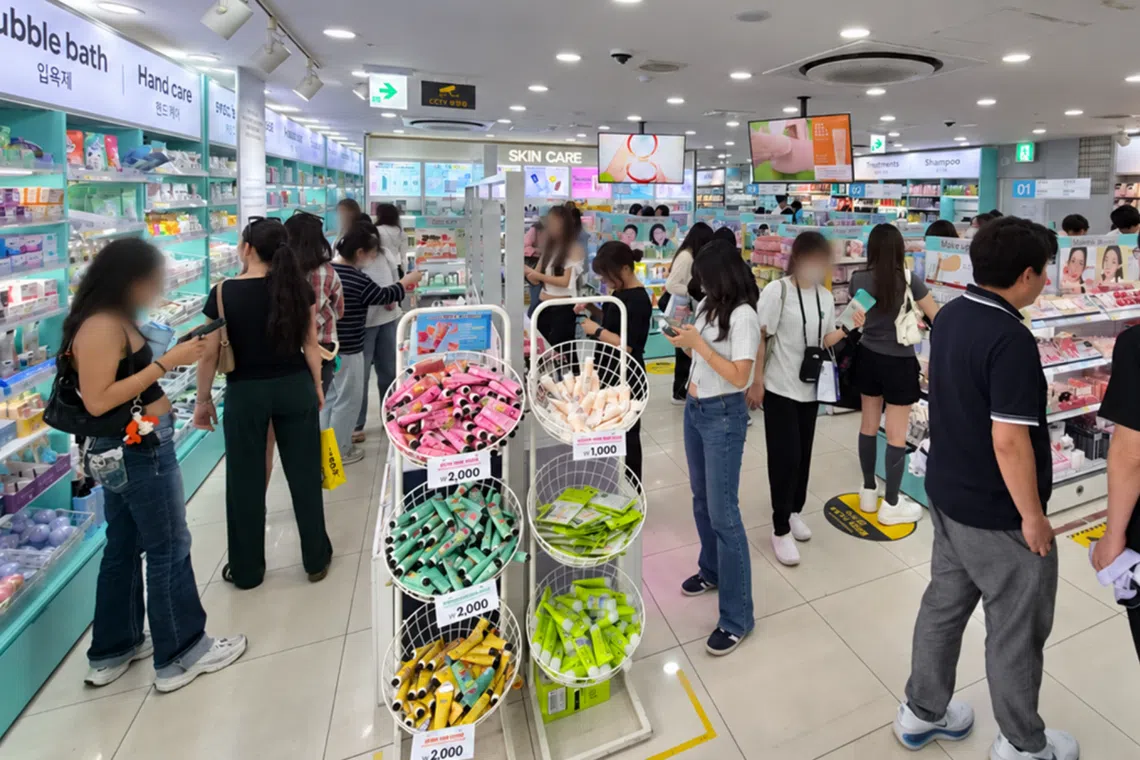
South Korea’s Daiso, known for its low-price policy, is approaching 5 trillion won in annual sales. This growth, reported by The Straits Times Life on September 17, 2026, is significantly driven by foreign tourists purchasing K-beauty products and souvenirs at its stores. Beauty products constitute Daiso's fastest-growing category, with sales soaring and foreign card transactions doubling. This trend has led to the opening of a dedicated beauty-focused store in Seoul. Experts credit Daiso's strict low-price policy and quality selection for its success amid inflation, attracting budget-conscious young international shoppers.
This phenomenon illustrates a tension within South Korea's economic landscape. On one hand, the success of K-beauty in a discount retail setting like Daiso suggests a democratisation of access, allowing a wider demographic, including tourists, to engage with products previously perceived as more premium. The Straits Times on January 7, 2026, highlighted Daiso as a 'go-to store' for 'premium K-beauty products,' an apparent contradiction that underscores the effective positioning of these items within a budget-friendly context. The focus on foreign card transactions further indicates that a significant portion of this growth comes from outside the domestic market, leveraging the global appeal of K-beauty.
However, this growth model, while boosting sales figures and tourist spending, raises questions about the long-term health of the K-beauty industry, particularly for companies that have invested in brand building around a premium image. The Korea Herald on October 3, 2025, noted a 'price war' heating up in K-beauty during an 'age of austerity.' Daiso's success with inexpensive products could intensify this price competition, potentially compressing margins for other local brands. If consumers, both local and international, increasingly associate K-beauty with low prices through channels like Daiso, it could force higher-end brands to either compromise on pricing or find new ways to differentiate themselves, possibly through even more advanced formulations or exclusive distribution channels. The cost of this discount-driven expansion may ultimately be borne by smaller or mid-tier K-beauty brands struggling to maintain profitability against a low-cost incumbent that benefits from bulk purchasing and high volume.
The Korean e-commerce sector has also been 'turning outward' as of July 6, 2025, according to The Korea Herald, in response to 'China’s pressing market incursion.' This suggests a broader strategic move by Korean businesses to diversify their revenue streams beyond the domestic market and away from concentrated regional competition. Daiso’s success with foreign buyers aligns with this outward turn, yet it simultaneously entrenches a low-price perception for a key export category. This creates a dual pressure: to compete on cost internationally while also safeguarding the perceived value of Korean products.
For markets like Thailand and the wider Asia-Pacific, Daiso’s model presents both opportunity and challenge. The success of a discount retailer in selling popular K-beauty items highlights the strong regional demand for these products, even among budget-conscious consumers. This could encourage similar retail strategies in other countries, potentially making popular beauty products more accessible. However, it also means that local beauty industries in these regions might face increased competition from affordable, globally recognized Korean brands, placing pressure on their pricing strategies and market share. The long-term implications for local brand development, when consumers are conditioned to expect certain products at very low price points, are significant. The model, which mirrors in some ways how 'cultural copycats' like Miniso expanded globally, as reported by the South China Morning Post on November 5, 2018, demonstrates the power of a value proposition in scaling retail operations across borders. The question remains whether this particular form of market penetration supports the broader economic ambition of premium Korean exports, or subtly undermines it by shifting consumer expectations towards affordability above all else.
Sources
Newsletter
Pacific Daily
A curated briefing from Thailand, Asia-Pacific and the world.