Economic Coercion and Shifting Regional Capabilities: The US-Iran Sanctions and Asia-Pacific Responses
Beijing's 'economic wars' denunciation indicates a continued strategic recalibration in response to US measures, with implications for sovereign states like Thailand navigating renewed power competition.
SINGAPORE
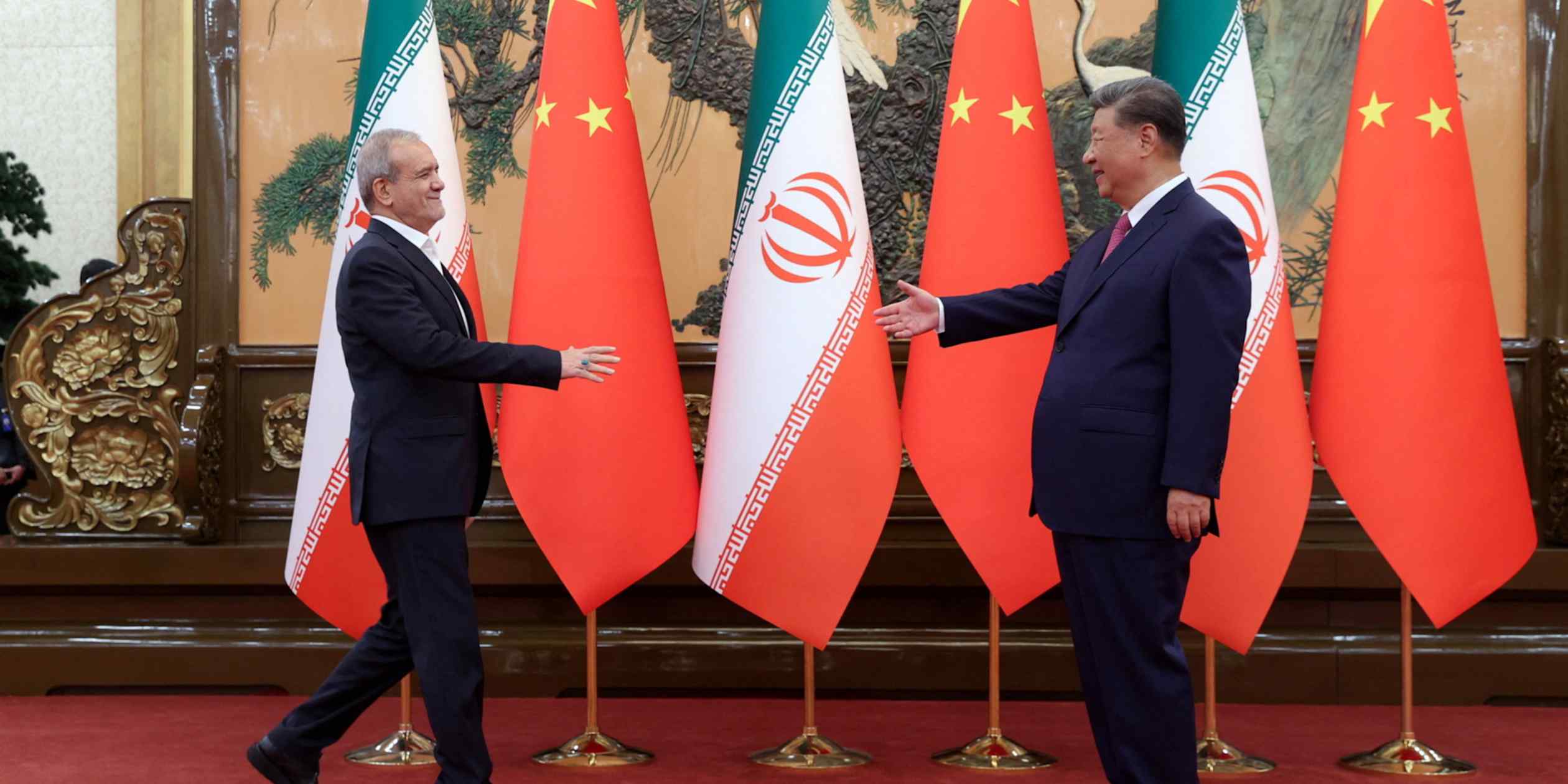
The United States’ campaign to cut off Iran, met with China’s denunciation of 'economic wars,' marks a continuation of a pattern of extra-territorial economic measures and the reactions they provoke. This event, reported by Nikkei Asia on August 25, 2026, interrupts a prior pattern of more integrated global economic engagement, pushing states to confront choices between competing economic spheres. The US action against Iran and China's response highlight a persistent structural tension in the global economic order: the capacity of a single state to leverage its economic power to isolate another, and the subsequent resistance to such a capability.
Historically, China has previously condemned external military actions, as seen in its reaction to NATO’s Kosovo policy, as reported by BBC. While the specific targets differ – military action versus economic sanctions – the consistent element is Beijing’s articulated opposition to unilateral interventions it perceives as undermining state sovereignty or global stability. This consistency suggests that China views such economic measures as extensions of a broader strategic competition, similar to how it rallied the Asia-Pacific against protectionism at a trade meet reported by Bloomberg in May 2026.
For the Asia-Pacific, particularly states like Thailand, this re-emerging dynamic carries significant consequences. Thailand, an economy deeply integrated into regional and global supply chains, relies on predictable trade and investment environments. The prospect of secondary sanctions, or the pressure to choose between major economic partners, represents a constraint on its foreign policy and economic autonomy. The US campaign against Iran, and China’s public opposition to it, underscore that even states not directly involved become subject to the broader geopolitical currents. The central claim here is that the US's renewed use of sanctions against Iran, and China's public characterization of these as 'economic wars', is not merely a diplomatic spat but a reflection of an ongoing contest over the legitimate instruments of international power, which directly impacts the strategic calculus of Asia-Pacific nations.
Sovereignty and Economic Strategy
Beijing’s labeling of US sanctions as 'economic wars' signals a broader strategic concern about the weaponization of economic interdependence. This framing is not merely rhetorical; it aims to galvanize international opposition to practices that China views as destabilizing. The response from some Chinese netizens to PM Wong’s remarks on a Japan-China spat, reported by The Straits Times in November 2025, indicates a domestic sentiment prepared to defend Chinese positions vigorously. This sentiment, combined with state-level declarations, forms a cohesive narrative for Beijing. The challenge for states in the Asia-Pacific is to navigate this geopolitical competition without compromising their own economic interests or sovereignty. The China missile test reported by The Japan Times in August 2026, which deepened Pacific divides over militarization, provides a parallel example of how actions in one domain can exacerbate tensions across the region, further complicating the strategic environment for states like Thailand.
The limitations of this analysis include the absence of specific details regarding the US sanctions against Iran, their scope, or the precise nature of China's proposed counter-measures, beyond the general denunciation. Without these details, a full assessment of the immediate economic risks to third-party states remains qualitative. However, the observable pattern of escalating rhetoric and distinct strategic postures—the US employing economic pressure, China decrying it as 'warfare'—underscores a regional and global environment where states are increasingly compelled to articulate their positions relative to these powerful dynamics. The unresolved tension lies in how states like Thailand can maintain economic neutrality and continue their development trajectories amid intensified economic statecraft and a deepening divide over international norms.
Sources
Newsletter
Pacific Daily
A curated briefing from Thailand, Asia-Pacific and the world.