The Inert Munitions of Undersea Deterrence
Four MK-48 training shapes entering naval inventory measure administrative endurance rather than immediate combat capacity.
SINGAPORE
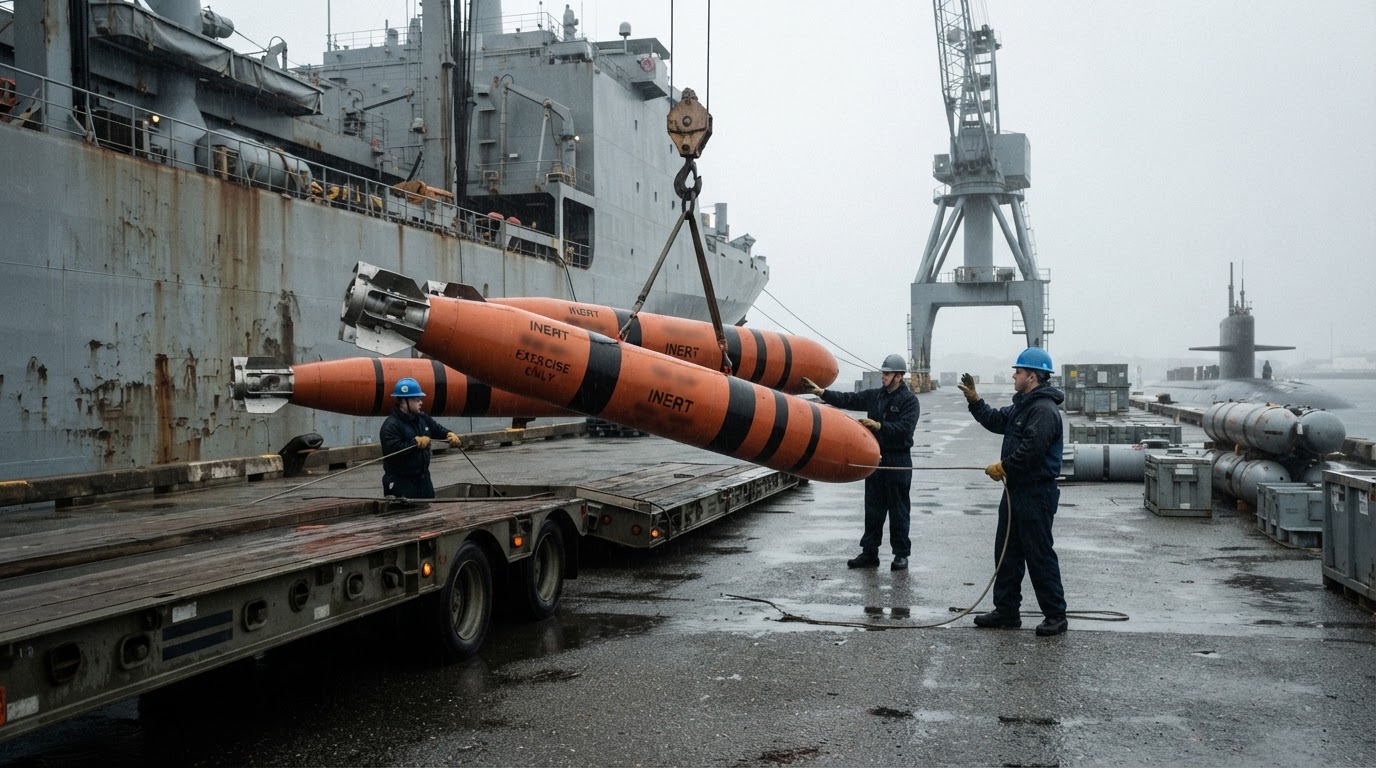
Naval deterrence trades in a quiet physical paradox: genuine operational confidence relies on equipment that carries neither high explosives nor combat range. Taiwan expects to receive four MK-48 Mod 6 Advanced Technology heavyweight torpedo trainers by the end of this year, according to a report submitted by the Ministry of National Defense to the legislature. The pending delivery marks a modest bureaucratic milestone within an acquisition sequence that has seen its schedule revised several times, attracting intense scrutiny from lawmakers and the public.
Public debate surrounding maritime defence often treats procurement authorizations as synonymous with immediate combat readiness. Live munitions capture headlines and legislative debate, yet modern submarine operations demand hundreds of handling iterations long before a live weapon ever enters a launch tube. Naval authorities plan to incorporate the incoming trainers into submarine exercises next year, aiming to complete formal acceptance procedures before year-end. Without inert shapes to verify mechanical interlocks, exercise loading crews, and drill recovery teams, advanced undersea platforms remain theoretical rather than operational assets.
Ballast and Bureaucracy
The prolonged procurement sequence behind this transfer reflects enduring friction within transpacific defence logistics. Repeated delivery revisions transformed what ought to have been a routine logistics transfer into a running audit of administrative reliability. An allied manufacturer managing global production commitments must constantly reconcile international delivery queues with domestic industrial constraints. When training units require multiple timetable adjustments before delivery, that delay exposes the vulnerable operational space between legislative approval and dockside reception.
The delivery schedule for the US-made torpedoes has been revised several times, drawing considerable attention from lawmakers and the public.
The operational challenge facing naval planners involves procedural discipline rather than headline rhetoric. Crews operating Hai Lung-class vessels, as well as teams preparing for new platforms, need to master sensory telemetry and fire-control sequences without expending finite live arsenals. The MK-48 Mod 6 trainer allows handling teams, sonar operators, and offshore recovery vessels to rehearse complex maritime drills under actual ocean conditions. An inert training shape faithfully matches the mass, balance, and digital interface of the combat munition, allowing crews to build muscle memory without exhausting irreplaceable stores.
The Limit of Simulation
A sceptical observer might reasonably counter that four inert torpedo trainers alter none of the prevailing strategic balances across regional waters. They provide zero kinetic striking power and contribute nothing to combat magazine depth. A training shape hoisted from the water by a recovery ship at the end of an exercise remains simply an instrumented cylinder. If production lines for operational MK-48 torpedoes encounter comparable manufacturing delays, high proficiency in handling practice shapes merely trains sailors to wait efficiently for combat munitions that remain abroad.
That institutional limitation must be faced directly. Credible deterrence does not materialize simply because an administrative acceptance checklist finishes before the calendar closes. The genuine value of the four US-made torpedo trainers lies instead in the rigorous procedural standard they enforce across the naval service. Fleets do not schedule operational submarine exercises around training ordnance unless handling routines have reached a demanding professional threshold. Four training shapes cannot defend territory on their own, yet they establish the mundane, repeatable competency without which undersea operations remain entirely unproven.
Sources
Newsletter
Pacific Daily
A curated briefing from Thailand, Asia-Pacific and the world.