Regulatory Friction Stalls Australia’s Outback Computing Ambitions
Planning delays confronting remote data infrastructure demonstrate the persistent gap between resource extraction and sovereign digital capability across the Indo-Pacific
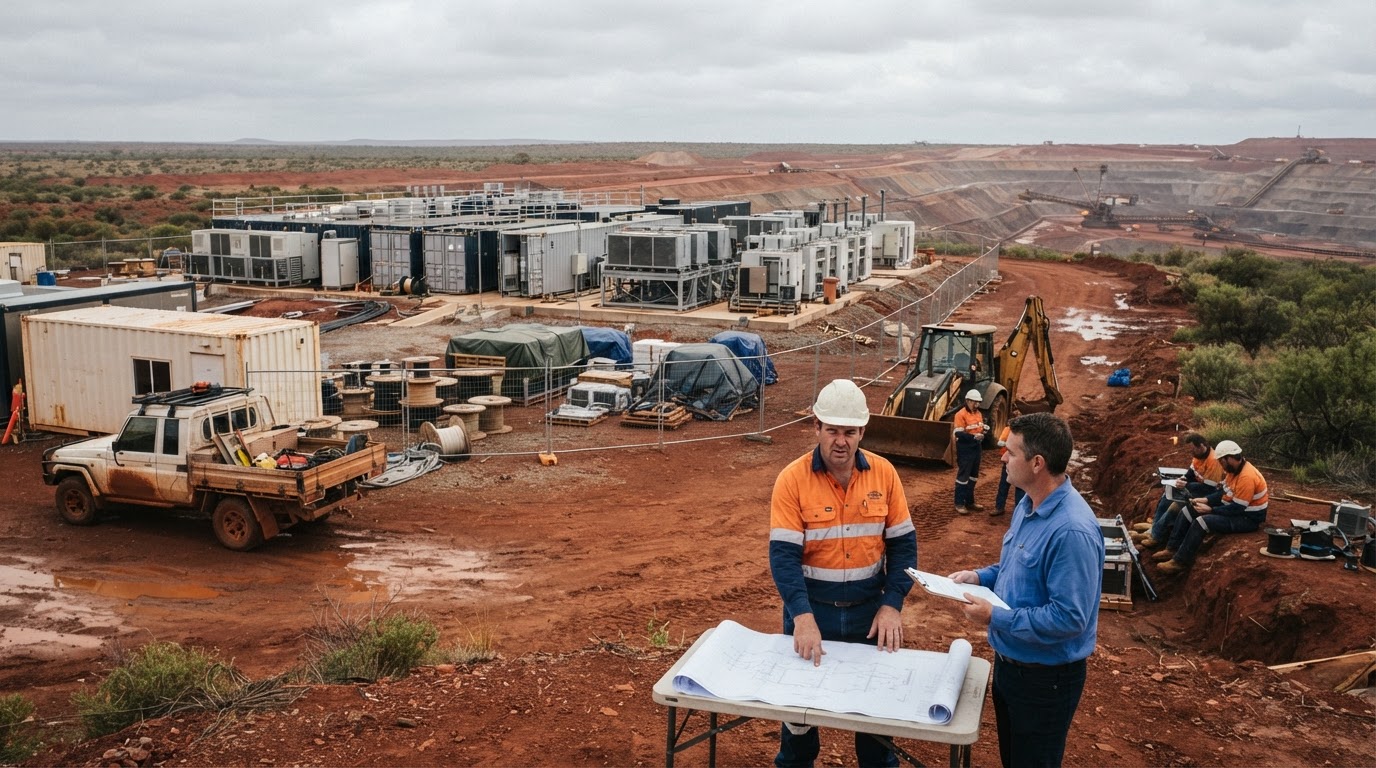
Industrial policy across the resource perimeters of the Indo-Pacific has long presumed that physical energy extraction can be converted directly into sovereign computational power. The operational retreat of an Australian outback data centre venture, which has withdrawn its target schedule after administrative approvals stalled, interrupts that assumption. While ministerial declarations often treat upstream gas flows and high-density processing as interchangeable assets, administrative realities indicate an enduring structural divergence. Statutory records demonstrate that capability delivered by resource extraction remains restricted to raw fuel output until planning frameworks permit downstream technical deployment. What has altered on the ground is not a collapse in digital demand, but the sudden assertion of regulatory discipline over commercial ambitions.
Historical precedent in northern Australia shows that political consensus readily gathers around extractive infrastructure when state revenues and export volumes are at stake. On September 1, 2026, Northern Territory Chief Minister Lia Finocchiaro, Australia's Minister for Resources Madeleine King, and Northern Territory Minister of Mining and Energy Gerard Maley joined Tamboran Resources Chief Executive Officer Todd Abbott near Daly Waters to inaugurate gas transmission to Darwin from the Beetaloo Basin. That ceremony at the Shenandoah South shale gas project, marked by the presence of the Tamboran Resources H&P Flex drilling rig, demonstrated executive support for primary fuel delivery. Yet that gathering inaugurated pipeline supply, not the complex regulatory permits required for digital infrastructure. Ministerial presence at a drill site confirms resource policy priorities, but it cannot legally substitute for the independent statutory clearances governing downstream facilities.
The Regulatory Divergence
What this setback reveals is a fundamental operational mismatch between extractive logistics and computational governance. Planners envisioned co-locating data centres near primary energy reserves, arguing that regional generation assets could bypass metropolitan grid constraints and yield domestic processing sovereignty. That commercial calculation assumes regulatory bodies treat energy transmission and computational facilities as part of a single unified corridor. In practice, regulatory oversight of digital infrastructure operates through distinct statutory mechanisms, assessing land tenure, water rights, and environmental parameters independently of resource extraction permits. Extractive operations follow established historical precedents under mining legislation, whereas computing facilities confront newer, uncoordinated environmental and spatial reviews.
When an administrative body pauses evaluation, the underlying commercial thesis unravels. Private capital faces escalating holding costs, forcing project sponsors to abandon published delivery schedules rather than maintain unhedged operational exposure. The resulting delay indicates that ministerial sponsorship does not insulate complex infrastructure from statutory scrutiny. Where developers anticipated rapid execution under the umbrella of broader northern development policies, independent administrative bodies retain the procedural leverage to halt timelines entirely. The consequence is an acute capital standstill that delays the realisation of secondary digital processing capabilities.
Strategic Repercussions
For regional observers across Southeast Asia and the Pacific, Australia's outback computational stalling carries direct strategic relevance. Developing economies across the corridor often pursue identical policy designs, attempting to tether ambitious data initiatives directly to domestic gas exploitation to avoid external energy price volatility. These initiatives routinely mistake high-level political patronage for administrative certainty. Evidence from Australia suggests that sovereign computing capability cannot simply draft behind extractive approvals. When statutory institutions insist on independent environmental and technical compliance, political goodwill cannot prevent commercial schedules from unravelling.
Extractive capacity can be inaugurated by political decree, but operational computation remains bounded by independent regulatory consent.
Energy security across the Indo-Pacific has historically focused on physical volume, measuring capability through pipeline capacity and extraction metrics. Advanced computation requires an entirely different governance environment, one that balances local environmental requirements against the rigid schedules of digital networks. The suspension of the Australian outback timeline leaves open the core strategic tension: whether federal and territorial frameworks can reconcile local statutory oversight with broader technological goals. Until administrative institutions establish that alignment, remote territories will remain raw extraction corridors rather than diversified technological nodes.
Sources
Newsletter
Pacific Daily
A curated briefing from Thailand, Asia-Pacific and the world.