The Fractured Commons of Parque España
A targeted poisoning in Mexico City reveals the fragile boundary between dense urban leisure and unmanaged public space
A public park survives on an unwritten civic compact that municipal authority can neither codify nor continuously police. In any shared metropolitan space, diverse cohorts must negotiate conflicting tolerances for noise, sanitation, and domesticated animals, depending far more on voluntary accommodation than on regulatory enforcement. When that accommodation snaps, the breakdown rarely announces itself through civic debate. It appears instead as hostility directed at the most vulnerable participants in the public square.
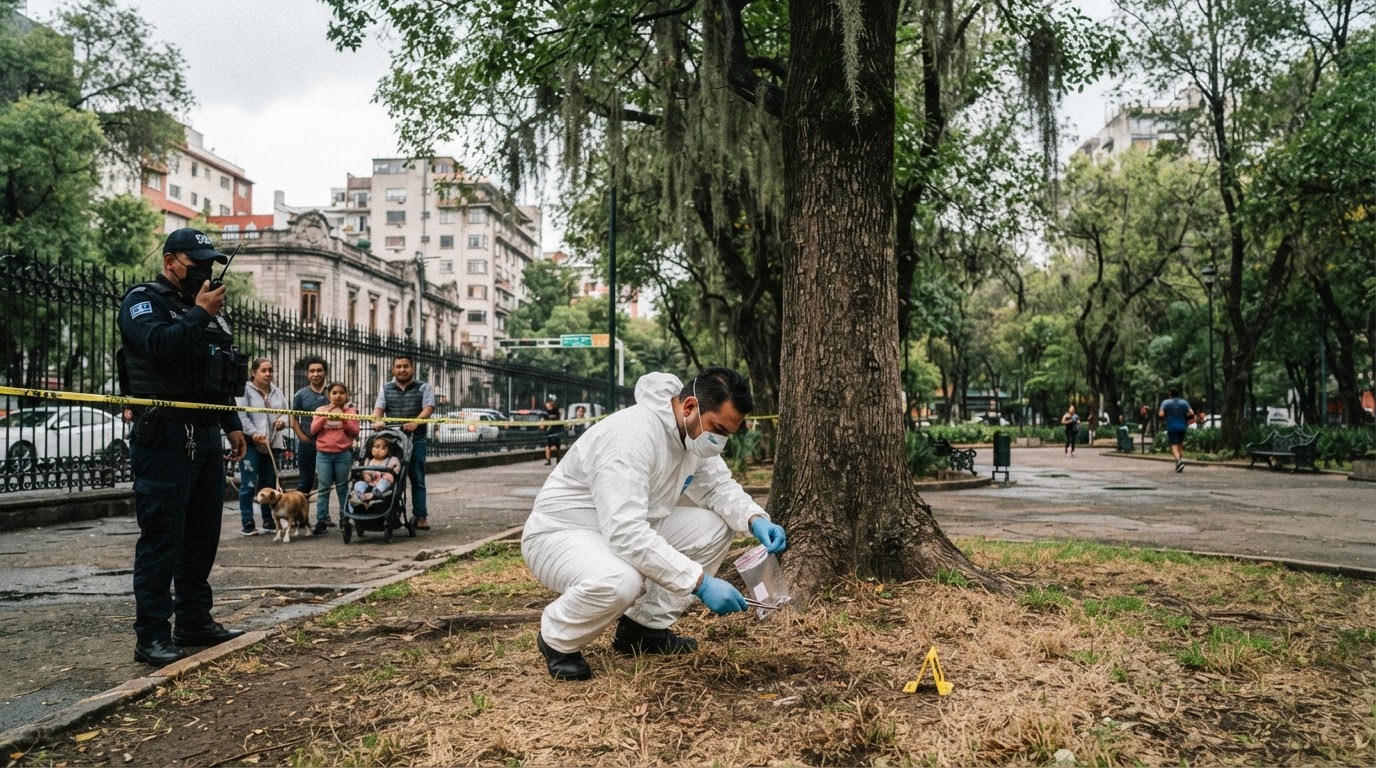
The fatal poisoning of domestic dogs in the Condesa neighborhood of Mexico City offers a grim case in point. Multiple pets fell ill after walking through Parque España, an established public green space dating back 105 years. Police recovered seasoned sausage meat containing a blue capsule filled with white powder, confirming deliberate contamination. While borough Mayor Alessandra Rojo de la Vega reported at least three animal fatalities, resident reports broadcast by Uno TV indicated four. The Mexico City Attorney General’s Office subsequently opened an animal cruelty inquiry, even as official forensic analysis has yet to publicly identify the specific chemical agent responsible.
The Limits of Criminal Framing
Public discourse around the killings has focused almost entirely on criminality and private malice. Condesa, known for dense residential blocks and high concentrations of pet owners, has mobilized around vigilance and mutual warning. This reaction is understandable. Leaving lethal bait in a heavily frequented public garden is an act of calculated violence, endangering not only companion animals but potentially young children using the same pathways.
Yet viewing this event strictly through the lens of individual deviance ignores the structural pressures currently reshaping urban commons across the Pacific Rim. As historic residential quarters transition into dense hubs of service economies and leisure, the physical demands placed on municipal gardens multiply exponentially. Parque España was designed a century ago as a contemplative promenade, yet contemporary urban density requires it to function simultaneously as an off-leash exercise ground, an outdoor dining periphery, and an open refuge for residents lacking private green space. When municipal administration fails to manage these competing uses actively, friction between pet owners and other park users festers in private.
The Friction of Unmanaged Density
A plausible counterargument suggests that reading spatial tension into a covert crime overinterprets a simple pathology. A person who conceals poisoned pills within sausage is acting with distinct sociopathic malice, an aberration that exists independently of neighborhood demographics or municipal park management. No urban design framework, sceptics might argue, can reasonably anticipate or prevent a covert actor determined to distribute toxins under cover of darkness.
That objection holds weight regarding the specific perpetrator, but it fails to address why public parks become the staging ground for such antagonism. Covert malice rarely emerges in an institutional vacuum. It thrives precisely where local governments abandon daily maintenance of civic boundaries, leaving residents to informally contest the rules of engagement. When authorities limit their role to retroactive criminal investigations after tragedy occurs, they concede that the day-to-day regulation of shared space has already collapsed.
The investigation in Parque España will eventually run its course, and forensic specialists may identify the white powder inside the blue capsule. Criminal accountability remains necessary. What it cannot do, however, is restore the underlying civic equilibrium. Once a shared public ground requires pet owners to scan the grass for poisoned bait, the park ceases to function as a genuine commons, leaving municipal authorities to confront the unresolved strain between high-density urban living and the fragile shared spaces meant to sustain it.
Sources
Newsletter
Pacific Daily
A curated briefing from Thailand, Asia-Pacific and the world.