The Cost of Accelerated Recovery in Elite Alpine Sport
Aleksander Aamodt Kilde's latest tendon rupture exposes the physical boundaries that professional winter competition continues to test
SINGAPORE
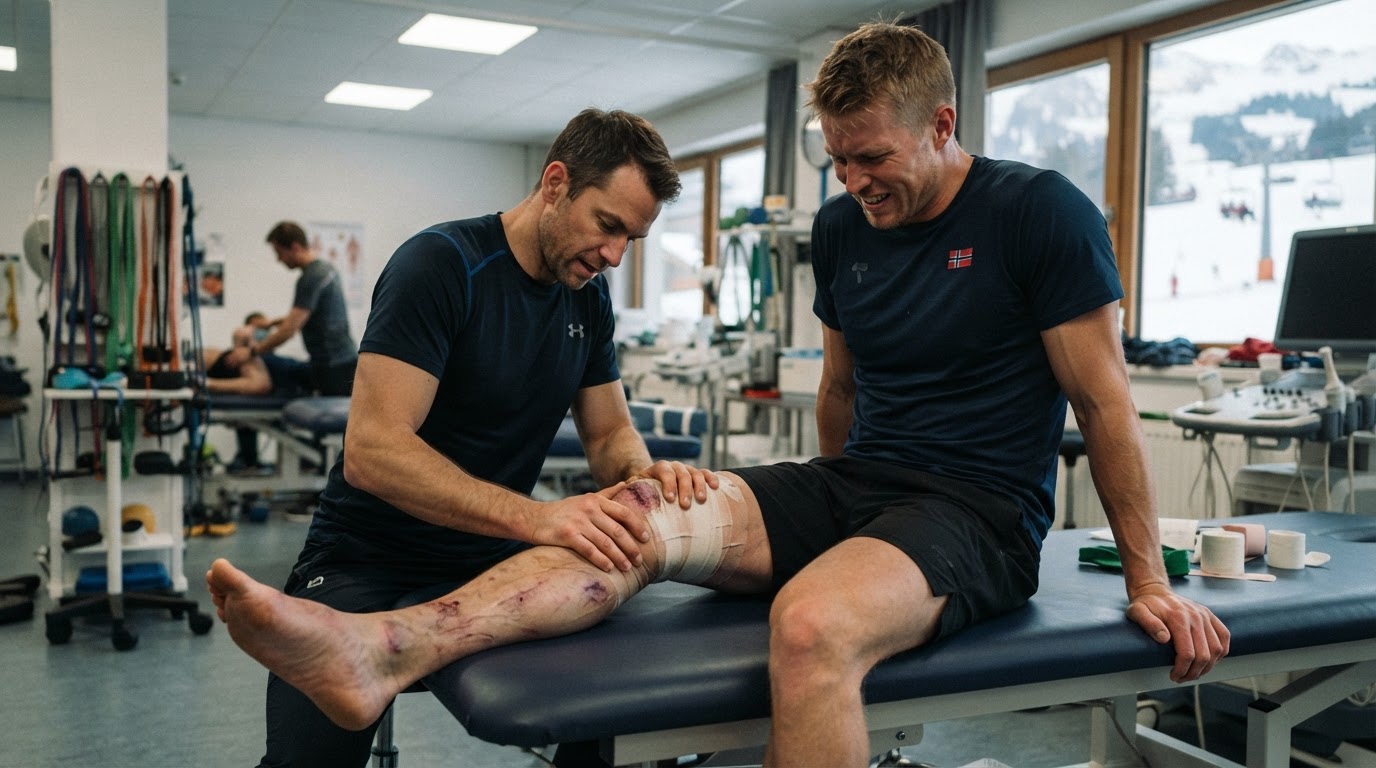
Rehabilitation schedules in high-velocity sport routinely collide with biological limits. In October 2026, Norwegian alpine skier Aleksander Aamodt Kilde sustained a ruptured Achilles tendon. The incident followed a succession of physical setbacks that began during the previous winter campaign. While top-tier athletic programs possess sophisticated conditioning resources, the physical stress of elite downhill competition operates under strict structural parameters that medical interventions cannot artificially compress.
Documented competition logs trace an unrelenting cycle across 2026. In January 2026, a back injury forced Kilde out of the super-G event in Kitzbuehel. Days later, in February 2026, official announcements confirmed he would miss the Olympic Games. Squad reintegration followed swiftly in April 2026. Yet the transition from medical discharge to elite racing speed involves an operational leap that clinical benchmarks struggle to measure accurately. Six months after rejoining the Norwegian team, the structural failure of the Achilles tendon demonstrated the fragility of rapid competitive returns.
The Compounding Cycle of Physical Stress
Clinical readiness does not replicate the violent deceleration inherent in competitive downhill courses. On tracks such as Crans-Montana in Switzerland, where Kilde competed in January and February 2026, kinetic forces test connective tissues beyond ordinary tolerance. When an athlete protects an injured joint or back, kinetic compensation shifts excess strain directly onto the lower extremities. The inferred consequence is clear: connective tissues absorb abnormal secondary torque before complete cellular regeneration occurs.
Physical clearance confirms tissue repair under controlled medical examination, not resilience under downhill racing loads.
Proponents of early reintegration argue that elite conditioning shortens standard recovery timelines through intensive monitoring. Under this reasoning, national team resources shield athletes from premature structural load. The documented record between 2024 and 2026 points toward a far more unforgiving reality. Connective tissue remodeling follows biological schedules that do not yield to competitive calendars, suggesting that rapid re-entry significantly elevates reinjury probabilities.
Structural Limits in Professional Winter Sport
Commercial imperatives in winter sports compound these physical dilemmas. The FIS Alpine Ski World Cup depends on marquee racers to sustain global television viewership and sponsor commitment. When calendar obligations press federations to field top competitors, the institutional tolerance for extended recuperation shrinks. This dynamic leaves elite skiers absorbing disproportionate physical liability to maintain visibility across successive seasons.
The rupture sustained by Kilde illustrates that technical clearance remains distinct from long-term physiological durability. For Norway and the broader alpine circuit, the unresolved challenge lies in tournament scheduling: either winter sports governance lengthens mandatory rest protocols, or racing programs will continue treating catastrophic tendon trauma as an inevitable overhead cost of competition.
Sources
Newsletter
Pacific Daily
A curated briefing from Thailand, Asia-Pacific and the world.