The Coach Who Skated: A Cultural Performance in Leadership
Manny Malhotra's unexpected participation in a Vancouver Canucks bag skate reveals more than just athletic prowess.
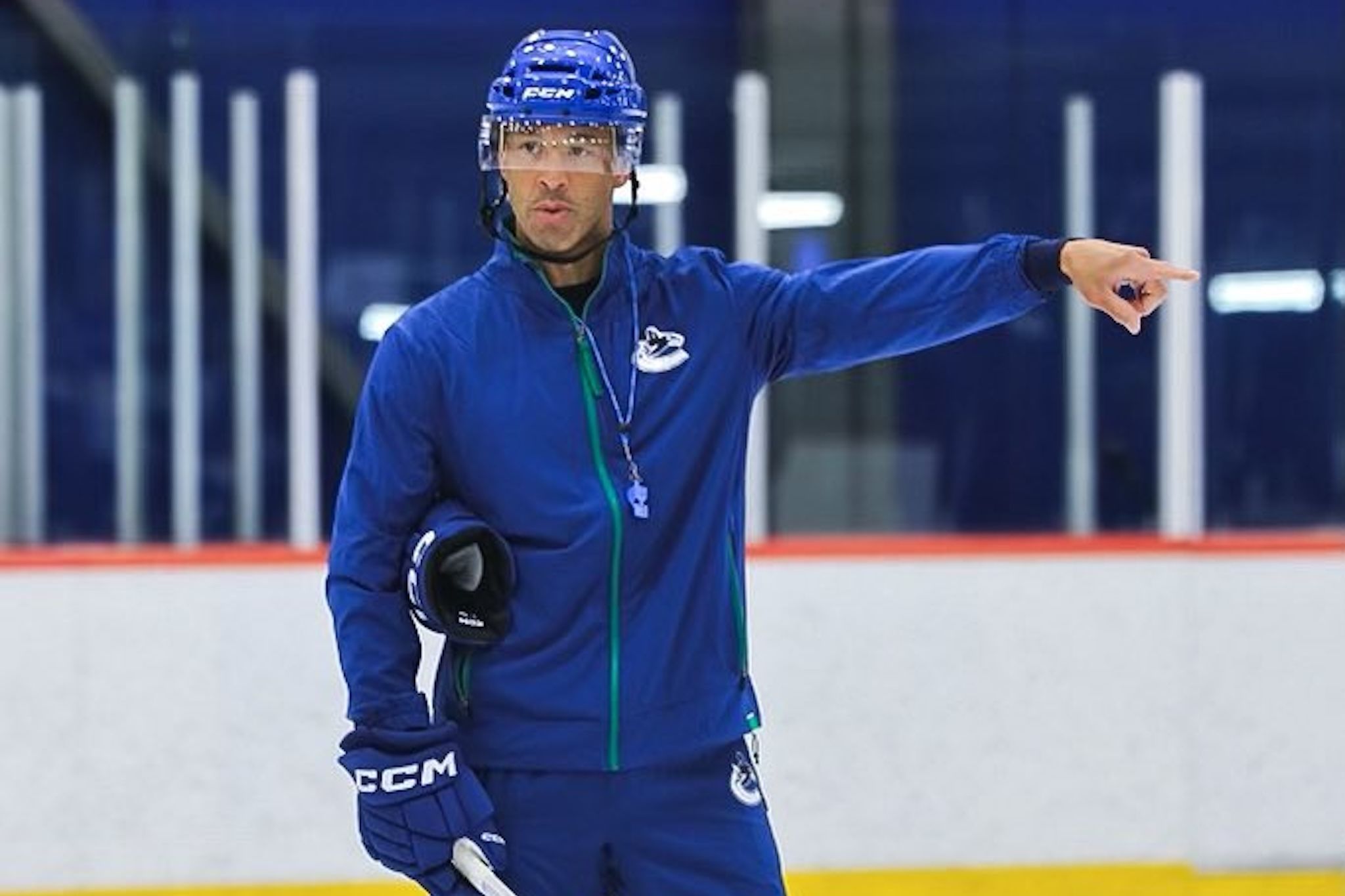
The image of a head coach, Manny Malhotra, lining up to join his Vancouver Canucks players in their least favourite training camp activity—the bag skate—offers a precise observation about how expectations of leadership are shifting. This event, reported near the end of the first day of training camp on September 17, 2026, diverged from the customary distance between coach and athlete, especially in such a physically demanding and often punitive drill.
Malhotra’s decision, alongside the rest of the coaching staff, to participate in the bag skate surprised players. Luke Schenn, a veteran of 19 NHL training camps, remarked, “That might be a first for me.” He noted that he had heard Malhotra had done this in Abbotsford, suggesting a pattern rather than an isolated incident. Filip Chytil described the act as “impressive” and expressed surprise that coaches were skating with them. These statements confirm the unexpected nature of the coaches’ involvement. Traditionally, a coach directs, observes, and critiques, maintaining a hierarchical distance. This action, however, embodies a different approach, one that foregrounds shared experience over positional authority.
This kind of shared physical ordeal, particularly when initiated by those in charge, resonates deeply within a culture that often values communal struggle and mutual support. It signals a form of leadership where vulnerability and shared effort are presented as strengths. The coach's physical commitment might be interpreted as an assertion of solidarity, aiming to foster cohesion within the team by demonstrating a willingness to endure the same discomforts. The implicit message is that no one is above the challenge, not even those who design the challenge itself.
However, it is also plausible to view this action through a different lens. While seemingly promoting unity, such a public display of participation from a coach could also be seen as a calculated performance. The coaches, by joining the skate, presented themselves as capable athletes, challenging any potential skepticism from players about their understanding of the physical demands. The veteran player Schenn's comment that Malhotra “came as advertised” implies that this was not entirely unprecedented, suggesting a pre-existing reputation or strategy at play. A coach leading by example can inspire, but the public nature of this specific act—captured and shared as it was—also frames it as a statement of intent, a carefully constructed image of leadership designed to shape team dynamics from the outset. This raises the question of whether such demonstrations are about genuine camaraderie or a strategic cultivation of perception, especially in high-stakes professional environments where every action is scrutinized. The ultimate impact of such an approach on team performance, particularly in the long term, remains an open question.
Sources
Newsletter
Pacific Daily
A curated briefing from Thailand, Asia-Pacific and the world.