The Borderless Desk Meets the Local Contract
A Sydney currency dealer's hollow legal victory in Singapore exposes the structural limits of cross-border remote financial labor.
SINGAPORE
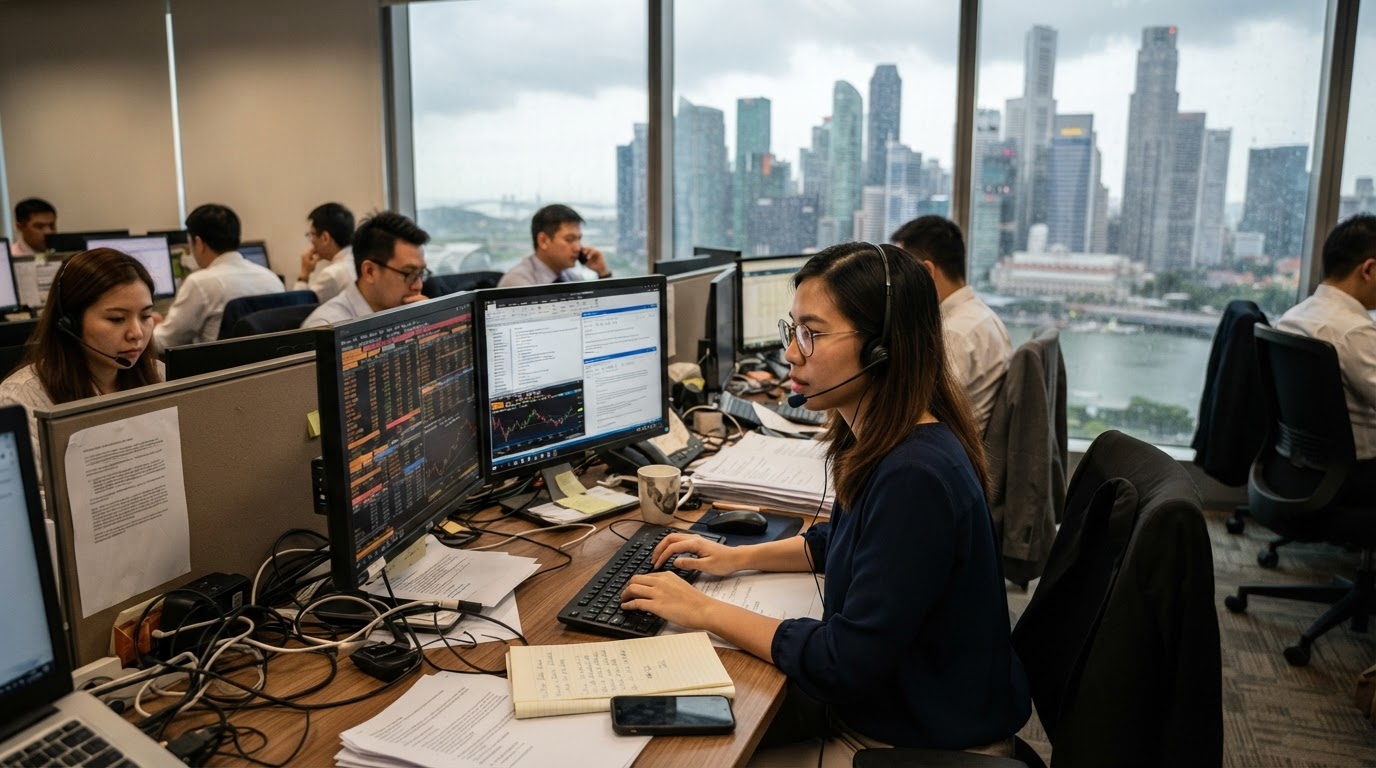
Employment contracts in capital markets still assume geography dictates compliance. When a Sydney currency dealer logged into trading systems from a hotel room in Singapore instead of his domestic residence, the resulting firing concluded with an instructive legal split. A workplace dismissal tribunal determined the termination was procedurally unfair, yet awarded the dealer zero financial compensation. That zero-dollar remedy provides a clear operational signal across the financial corridor connecting Australia and Southeast Asia.
The ruling exposes the exact point where the concept of a borderless desk collides with the local contract. Remote working policies expanded across global banking under the presumption that off-site logins merely replicate corporate cubicles. Institutional risk frameworks, by contrast, draw rigid boundaries around national jurisdictions, data sovereignty, and trading licenses. For an institution operating under statutory financial services charters, an employee executing currency transactions from an unapproved overseas location creates immediate supervisory exposure, irrespective of whether the underlying trades book a profit.
Tribunals evaluating these dismissals are separating process from commercial substance. Under standard employment doctrine, terminating an employee without adequate procedural warnings or investigative protocols constitutes unfair dismissal. At the same time, awarding no damages signals that unilaterally shifting an operational post abroad undermines the core bargain of the local contract. The worker secures a technical finding on paper, while the employer absorbs zero financial penalty for eliminating the position.
The Incentive Division
This outcome reshapes the incentives governing flexible labor in wholesale finance. To an individual trader, cross-border remote access feels like an extension of post-pandemic flexibility, made seamless by identical time zones and cloud-based terminals. To an executive committee, however, an undeclared offshore terminal represents unhedged regulatory exposure. Trading operations conducted from a Singapore hotel room can inadvertently trigger offshore licensing requirements, unexpected tax residency liabilities, and telecommunications monitoring breaches under host-country rules.
Financial institutions will read the tribunal finding as an endorsement of defensive personnel containment. Had the dealer received significant financial damages, banks and trading desks would have faced acute uncertainty regarding their ability to enforce location boundaries. Conversely, had the dismissal been upheld as entirely fair despite procedural flaws, employers might have dispensed with investigative safeguards altogether. The zero-compensation compromise establishes a clean commercial balance: management must maintain proper investigative paper trails, but staff members cannot monetize geographic non-compliance.
Winners in this transition are corporate compliance divisions that have long pushed for stricter controls on staff mobility. Chief operating officers now possess a concrete administrative precedent to reject international remote working requests. If taking a laptop to an offshore hotel nullifies compensation claims after dismissal, the bargaining leverage moves decisively back to management.
Structural Alignment
Regional market architecture between Sydney and Singapore thrives on capital velocity, but human labor remains bound to national soil. Both financial centers maintain complementary trading hours, interconnected currency liquidity, and sophisticated technological pipelines. Yet that functional convergence stops abruptly at the level of statutory labor and regulatory jurisdiction.
Corporate talent models must now adjust to this enforcement reality. Financial institutions that spent recent hiring cycles touting geographic flexibility will tighten physical network controls. Virtual private networks will be reconfigured to block foreign internet protocol addresses automatically, replacing trust-based policies with physical network barriers. What appeared to be an operational victory for an individual worker demonstrates that cross-border labor in finance remains governed entirely by local supervisory law.
Sources
Newsletter
Pacific Daily
A curated briefing from Thailand, Asia-Pacific and the world.