The Balance Sheet as Urban Façade
A proposed rights issue reveals how high-density development models exhaust their structural foundations
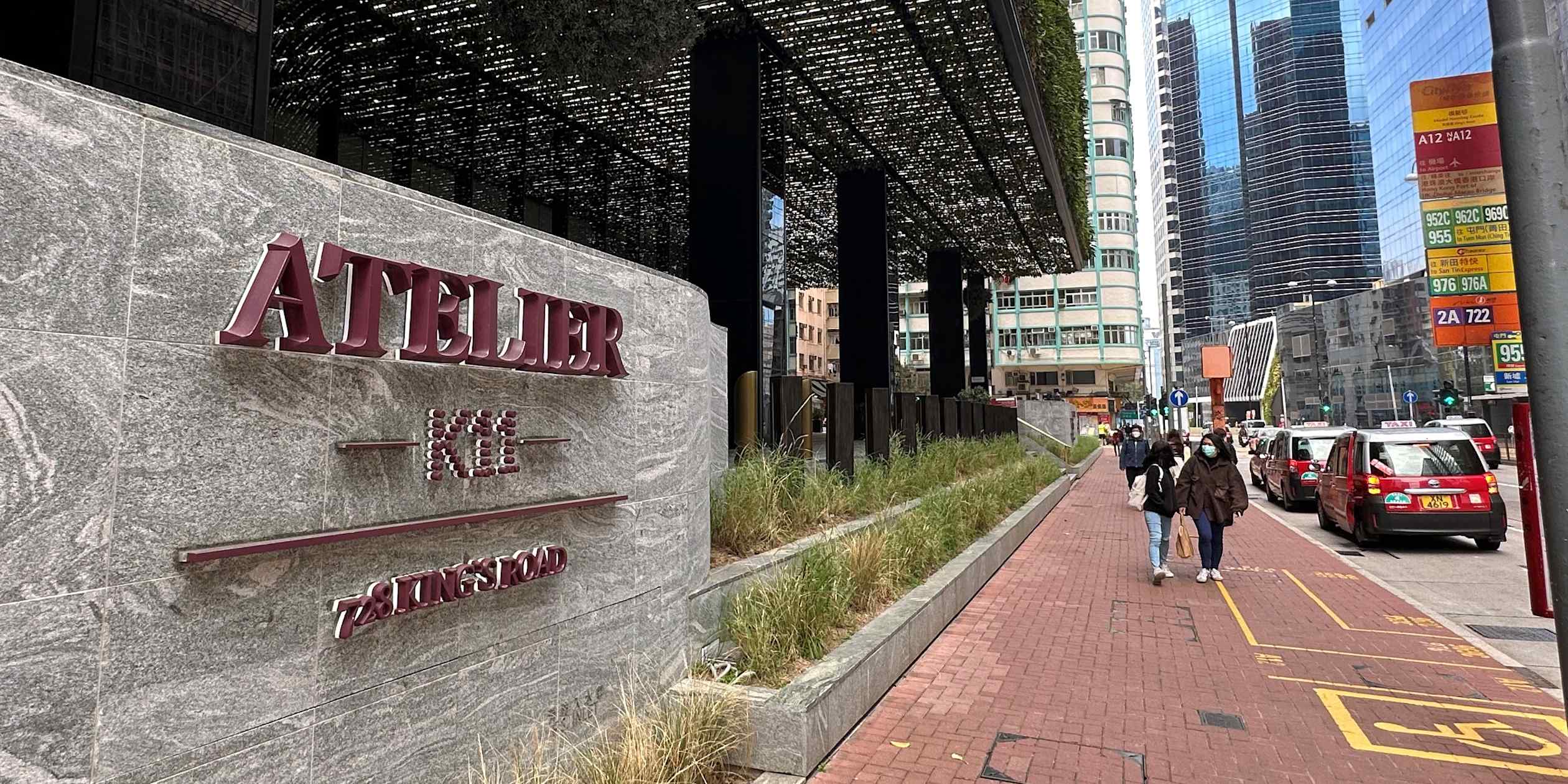
SINGAPORE
Urban development projects in dense Asian financial centres often present their grandest public architecture as expressions of civic permanence, yet their physical scale frequently masks severe financial leverage. Concrete and steel demand sustained liquidity to hold their ground. When capital foundations weaken, the spatial ambitions of major developers contract accordingly. Hong Kong's New World has proposed a $3.2bn rights issue intended as a capital reset. Behind corporate phrasing lies an architectural reality: the modern property empire has encountered the hard limits of debt-financed density.
For decades, commercial builders across the region relied on continuous cash flow from high-value retail and commercial podiums to fund speculative expansions. Towering podium complexes and vast mixed-use enclaves were conceived not merely as functional enclosures, but as yield-maximising machines designed to absorb leverage. Floor-to-ceiling glass, cascading retail terraces and cavernous subterranean transit links projected an air of unassailable prestige. That physical certainty was an illusion. The structural weight of these projects depended entirely on borrowing costs remaining manageable and property valuations remaining immune to broader macroeconomic shifts.
The Mechanics of Retrenchment
When developers must turn to existing shareholders to raise emergency equity, the balance sheet ceases to be a background administrative detail and becomes the primary design constraint. Capital discipline forces an immediate reassessment of what an urban landlord can afford to build, retain or maintain. Speculative master plans are trimmed. Planned expansions in overseas jurisdictions pause as capital retreats to defend core domestic assets.
Capital resets in real estate alter the physical city by dictating what cannot be built.
Sceptics of retrenchment might argue that a equity injection of this scale represents standard balance sheet hygiene rather than an existential crisis. From a purely accounting perspective, a rights offering simply recapitalises a corporate vehicle, allowing operations to proceed unencumbered by debt service burdens. Yet this view ignores the spatial consequences of distress. Developer balance sheets do not reset in a vacuum. A conglomerate seeking billions from equity investors must recalibrate its development pipeline, abandoning high-margin architectural experiments in favour of defensive asset management.
The Contraction of Public Space
The broader regional implication touches urban centres from Southeast Asia to East Asia that borrowed the high-density mixed-use model perfected in Hong Kong. Cities that import the high-rise podium format also inherit its underlying vulnerabilities. When the commercial engine stalls, the generous public atriums, landscaped skybridges and cultural annexes that developers promised municipal authorities are the first amenities to suffer deferral or neglect.
What a building refuses to do is often more instructive than what it displays. A commercial complex structured around relentless debt refuses public utility whenever retail footfall drops, exposing its public plazas as conditional passages rather than civic assets. Hong Kong's New World now faces the discipline of the equity market, but the architectural lesson extends well beyond any single balance sheet. Density without financial resilience produces monuments whose stability remains contingent on the tolerance of their creditors.
Sources
Newsletter
Pacific Daily
A curated briefing from Thailand, Asia-Pacific and the world.