The Arithmetic of Armed Intervention at Silver Rail Elementary
Praising a civilian shooter obscures four fatalities and exposes the balance sheet deficit in civilian deterrence models.
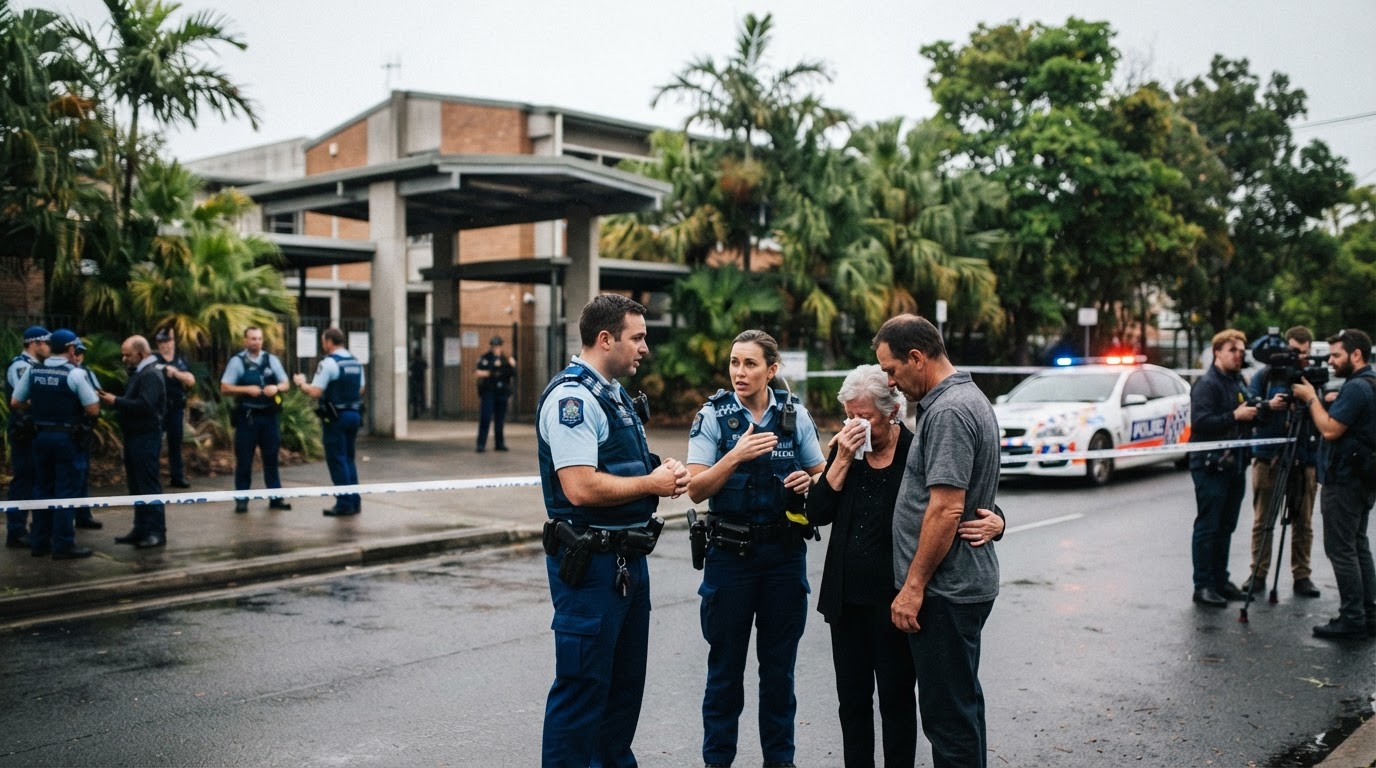
Four fatalities occurred before any defensive intervention began at Silver Rail Elementary School. On Thursday in Bend, Oregon, a 16-year-old gunman breached the facility. The assailant shot dead three children and a teacher. Those students were aged 5, 8, and 11. An armed bystander subsequently engaged the teenager, shooting him dead inside the perimeter. On Friday, Oct. 16, 2026, US President Donald Trump praised the armed citizen as a "great hero." The presidential statement argued that the death toll could have been "much worse."
Political rhetoric books terminal intervention as an asset. An objective audit records an unhedged operational failure.
In institutional safety accounting, a safeguard that activates only after perimeter penetration has failed its primary test. Four victims were dead before the civilian drew a weapon. Calculating a net defensive dividend by comparing four dead to an imaginary higher ceiling is an accounting distortion. The documented loss ledger shows four dead noncombatants, one dead 16-year-old perpetrator, and an elementary school turned into a combat zone. Institutional risk models do not grade systems on potential catastrophes avoided. They grade on realized exposure.
The Flaw in Counterfactual Accounting
Advocates of civilian armament rely on an unquantifiable counterfactual. The core argument assumes that without private intervention, the death toll climbs without limit.
The situation could have been "much worse."
That standard evaluates system efficacy against an invisible disaster rather than baseline containment. In capital markets, no risk committee approves an asset protection mechanism that allows massive principal loss before executing a stop-loss. A safety protocol that functions only after fatal damage occurs is not a hedge. It is an operational breakdown that contingent civilian action happened to terminate. Treating that outcome as an endorsement of civilian weaponry reverses the burden of proof.
The contrast with Pacific governance standards is fundamental. Administrative centers across the Asia-Pacific construct domestic security around absolute upstream interdiction. Public policy in the region treats weapon access as an operational failure of state containment, not an invitation for private kinetic response. Transferring the burden of kinetic defense to unvetted civilians admits that public space carries unmanaged lethality.
Probabilistic Defense and the Unhedged Ledger
Police arrived in Bend to secure the site and gather forensic clues only after the firing ceased. Flowers and candles marked a makeshift memorial outside Silver Rail Elementary School on Friday, as documented by Haven Daley. Those floral tokens mark an unresolved institutional deficit. Dynamic mass assaults develop and conclude in seconds. Uniformed law enforcement routinely arrives in minutes. Inserting an armed bystander into that operational interval introduces uncontrolled variance into an active combat environment.
The bystander in Bend neutralized the shooter. Yet that single data point cannot validate the mechanism. Unscreened civilian intervention introduces severe operational hazards. Crossfire can strike unintended targets. Arriving police officers risk misidentifying armed defenders as active threats. Tactical success by an untrained individual is an outlier, not a repeatable institutional strategy.
State sovereignty rests on the capacity to preserve civil protection without conscripting the public into gunfights. Elevating the civilian shooter to heroic status shifts capital and analytical attention away from upstream security failures. The arithmetic of Silver Rail Elementary School remains fixed: three children aged 5, 8, and 11, alongside their teacher, are dead. Institutional survival now depends on whether safety doctrine audits the lives lost or continues to celebrate the private firepower that arrived too late.
Sources
Newsletter
Pacific Daily
A curated briefing from Thailand, Asia-Pacific and the world.