Thailand's Cannabis Quandary: Two Years On, The Buzz Is Fading, But The Battle Rages
From cannabis cafes to political U-turns, the initial euphoria surrounding Thailand's progressive drug policy has given way to a complex, often contentious, public debate.
BANGKOK
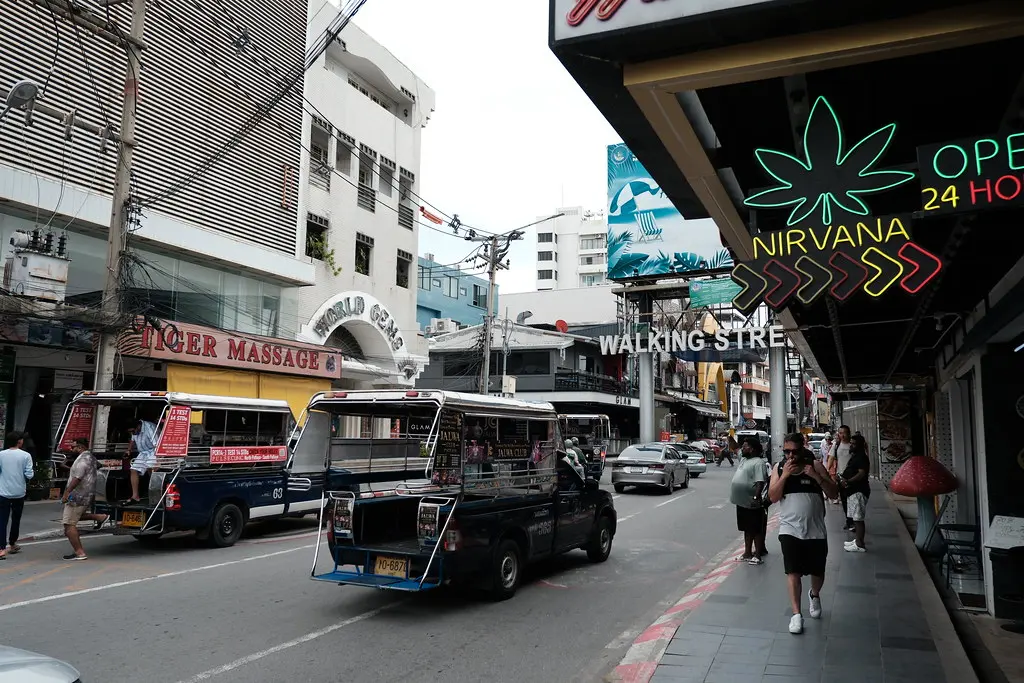
BANGKOK – Two years ago, Thailand made history, becoming the first nation in Asia to decriminalize cannabis. The move, spearheaded by then-Public Health Minister Anutin Charnvirakul and his Bhumjaithai Party, was hailed as a bold step towards economic opportunity and a more enlightened approach to drug policy. The streets of Bangkok and Chiang Mai quickly bloomed with cannabis dispensaries, cafes, and wellness centers, a vibrant green rush attracting tourists and entrepreneurs alike. The initial public discourse was largely one of excitement, opportunity, and a sense of liberation from archaic prohibitions.
Today, that initial euphoria has considerably dimmed. The public conversation around cannabis has shifted dramatically, now dominated by concerns over unregulated access, public health impacts, and a palpable sense of political backtracking. What was once presented as a clear path to economic prosperity is now entangled in a web of public anxiety and policy uncertainty.
The swift proliferation of cannabis businesses, often operating with minimal oversight, caught many off guard. While the intent was to promote cannabis for medicinal and industrial purposes, the reality on the ground has seen widespread recreational use. Schools reported instances of students consuming cannabis edibles, and anecdotal evidence of public intoxication became more common. This lack of clear regulations, particularly regarding age limits and consumption in public spaces, ignited a fierce backlash from conservative elements and public health advocates.
Doctors and medical associations, initially cautiously optimistic, have become increasingly vocal in their calls for tighter controls. They point to the rise in cannabis-related emergency room visits, particularly among youth, and express deep concern over the long-term mental health implications of unrestricted access to high-potency strains. This medical community's amplified voice has significantly altered the public discourse, transforming it from one of economic optimism to a critical examination of social responsibility.
Politically, the landscape has also undergone a seismic shift. The coalition government that emerged after last year’s elections, notably without Anutin’s Bhumjaithai Party holding the Public Health portfolio, has taken a decidedly more conservative stance. Prime Minister Srettha Thavisin’s administration has signaled a strong intent to reclassify cannabis as a narcotic, effectively reversing the decriminalization. This proposed U-turn has thrown the nascent industry into disarray and reignited intense debate.
"The conversation moved from 'What can we gain?' to 'What are we losing?' The lack of clear rules at the start created a vacuum, and now everyone is trying to fill it, often with fear-mongering." – Dr. Pitchaya Boonruang, a public health researcher, reflecting on the shift.
The economic promise, while still cited by proponents, has become harder to defend amidst the regulatory chaos. Many small businesses that invested heavily in the green rush now face an uncertain future. The potential re-criminalization is seen by some as an admission of policy failure, by others as a necessary correction to protect public welfare. The debate is no longer about if cannabis should be regulated, but how severely and who benefits.
What is clear is that Thailand's journey with cannabis is far from over. The initial, bold step created a dynamic and complex situation. The public discourse, once relatively unified in its curiosity and optimism, is now fragmented, polarized, and deeply concerned with the societal implications. The coming months will determine whether Thailand can find a middle ground that balances economic opportunity with public health and social order, or if it will simply revert to a familiar, albeit less progressive, prohibitionist past. The world watches, keen to learn from Thailand’s ambitious, yet increasingly troubled, experiment.
Newsletter
Pacific Daily
A curated briefing from Thailand, Asia-Pacific and the world.