Thai Rivers Toxic From Myanmar Mines, implicating 50 Companies
Chemicals from Myanmar's mining sector are poisoning at least six transboundary rivers, affecting Thai farmland and implicating Thai import firms. The flow of minerals, from Myanmar through Thailand to China, raises questions about supply chain accountability.
SINGAPORE
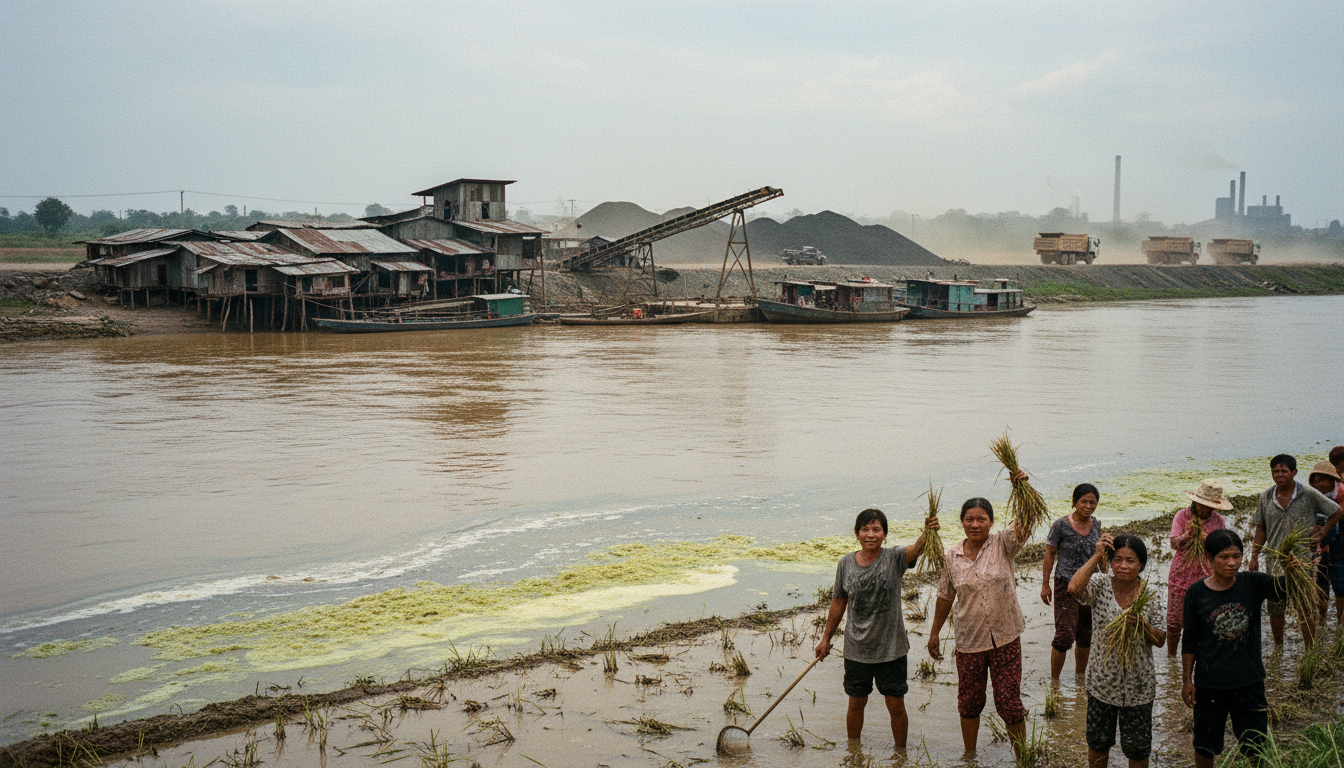
Chemicals linked to Myanmar's mining operations are contaminating at least six transboundary rivers, poisoning vast areas of Thai farmland. A Mongabay investigation, published October 4, 2026, identified over 50 Thai companies importing minerals from these mines.
These imports include antimony, copper, lead, manganese, tin, and tungsten, identified as critical minerals, valued at millions of dollars. They originate in Myanmar, pass through Thailand, and are primarily sold to China. Many of the Thai companies involved reportedly do not know the exact origin of these minerals in Myanmar, whether the mines are legal, or if their operations contribute to river pollution. The veracity of mineral declarations on paper also remains uncertain. This trade benefits Thai, Burmese, and Chinese companies.
Southeast Asia's transboundary rivers have faced chronic pollution from mining, a challenge noted by The Diplomat in June 2026. The issue extends beyond Myanmar, with similar environmental concerns raised regarding mining in Indonesia in October 2025. This context suggests a broader regional challenge with environmental governance and supply chain oversight. The flow of these critical minerals also carries strategic implications, highlighted by a Thai-US Critical Minerals Memorandum of Understanding in November 2025 that sparked backlash over environmental costs.
The absence of clear provenance for these minerals—including whether mines operate legally or adhere to environmental standards—complicates efforts to mitigate pollution. Without this information, Thai importers cannot reliably assess the environmental and legal risks associated with their supply chains. The ultimate responsibility for this contamination, affecting both the environment and the livelihoods of Thai farmers, remains diffused across the supply chain, from extraction in Myanmar to end-use in China.
The current situation reflects an unresolved tension between economic activity and environmental protection in cross-border mineral trade. The long-term impact on regional ecosystems and the agricultural sector in Thailand will depend on whether transparency and accountability can be established within these complex supply networks.
Sources
Newsletter
Pacific Daily
A curated briefing from Thailand, Asia-Pacific and the world.