Taiwan's Workforce Adaptations Signal Deeper Regional Shifts
The Ministry of Labor's response to demographic decline reflects a re-evaluation of national capacity amidst evolving regional challenges.
SINGAPORE
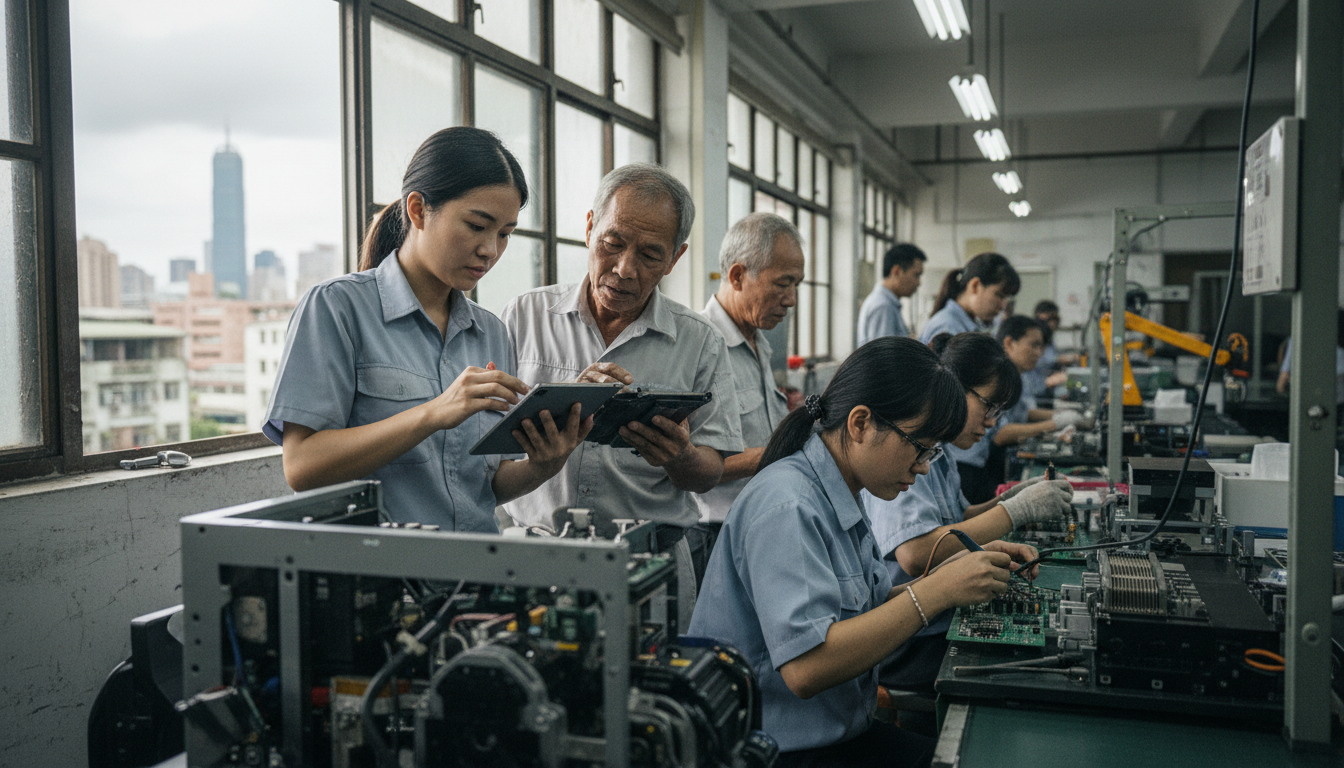
Taiwan’s Ministry of Labor has outlined measures to address worker shortages, a direct response to deepening demographic challenges. This initiative, reported by the Taipei Times on August 28, 2026, signals an acknowledgment of a structural problem necessitating a recalibration of national strategy. The National Development Council’s population projections indicate a persistent low birthrate and an aging populace. These projections forecast a 48 percent total population decline by 2075, reducing the total to 12.15 million.
From 2037, individuals aged 45 to 64 are projected to constitute more than half of the working-age population, putting severe pressure on the labor supply. This demographic imbalance is a constraint directly impacting Taiwan's industrial capacity and regional competitiveness. The Ministry of Labor's response, which includes job-matching programs, represents a pragmatic step to mitigate an immediate crisis. However, the underlying issue extends beyond immediate workforce allocation; it concerns the very foundation of national productive capacity.
Historically, Asian economies have often relied on expanding workforces to drive growth. Japan, for example, committed to a $2.3 trillion investment plan over 14 years in June 2026, partly as a mechanism to sustain economic activity despite its own long-standing demographic issues. Unlike Japan's capital-intensive approach, Taiwan's current labor ministry measures primarily focus on optimizing the existing human resource pool. While the Taipei Times reported on robotic assistance for labor shortages, these are supplementary solutions to a core challenge of dwindling human capital.
These measures represent a significant departure from an era where labor supply could be taken for granted. The shift reflects a strategic imperative for Taiwan to maintain its economic and technological position in the Asia-Pacific. The counterargument to aggressive intervention often centers on the potential for technological innovation to offset labor deficits. While automation and artificial intelligence will play a role, as evidenced by discussions surrounding robotic integration, the scale of Taiwan's projected demographic decline – nearly half its population within fifty years – suggests that technology alone may not fully bridge the gap in human capacity across all sectors.
The implications for regional dynamics are considerable. As some nations, such as Canada, have signaled intentions to reduce international workers as of March 2026, the global competition for skilled labor may intensify. Taiwan's proactive measures to manage its domestic workforce are therefore not merely an internal policy adjustment but a strategic positioning within a changing global human capital landscape. The unresolved tension remains how a society adapts to a fundamentally smaller, older demographic while sustaining economic vitality and strategic relevance.
Sources
Newsletter
Pacific Daily
A curated briefing from Thailand, Asia-Pacific and the world.