Stability in Tokyo, but for Whom?
Takaichi’s first reshuffle signals an immediate intention, yet the long-term implications for the region remain ambiguous.
TOKYO
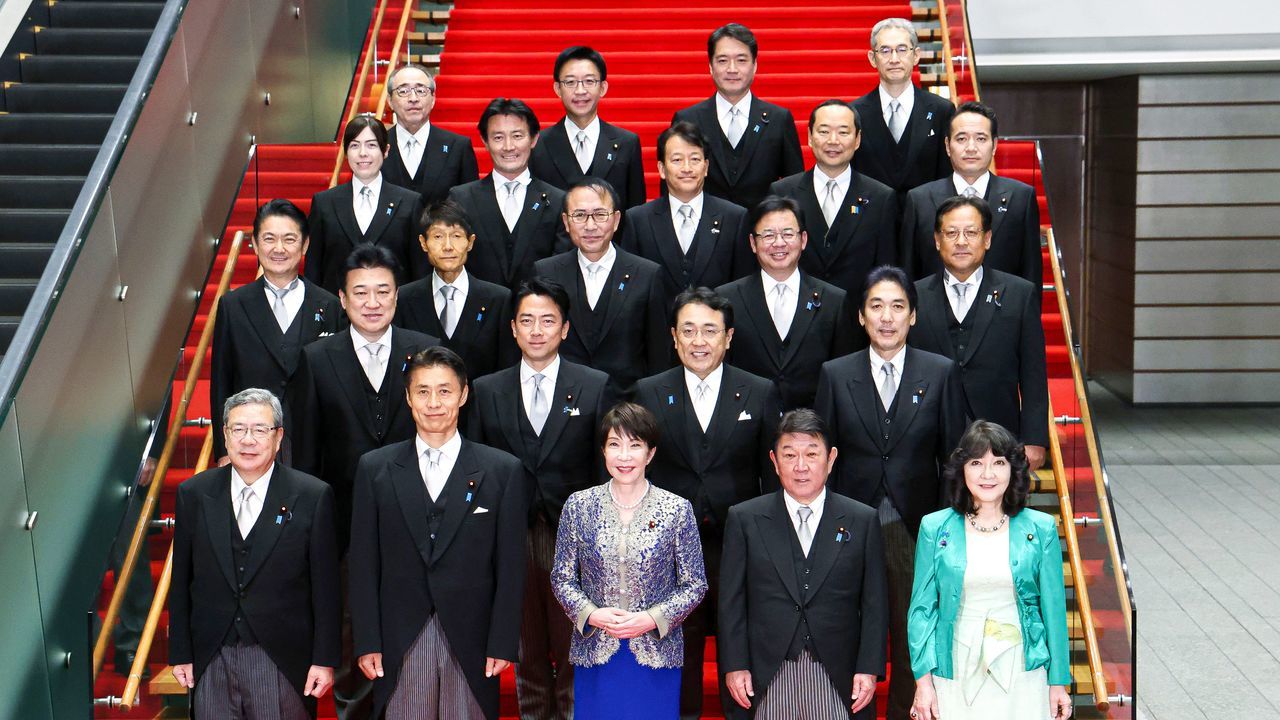
Prime Minister Takaichi Sanae’s cabinet reshuffle on September 17, 2026, represented an exercise in continuity. Key figures like Chief Cabinet Secretary Kihara Minoru and Finance Minister Katayama Satsuki retained their portfolios. Foreign Minister Motegi Toshimitsu and Defense Minister Koizumi Shinjirō, both rivals in the 2025 Liberal Democratic Party leadership contest, also remained in place. This composition suggests a prime minister prioritizing immediate governmental stability over a wholesale reorientation of policy.
The stated emphasis on policy continuity, as reported by Nippon.com, indicates a desire to project an image of steady governance. Yet, the question for observers in Southeast Asia, particularly in nations like Thailand, is what this continuity entails. Japan’s engagements across the Asia-Pacific often involve nuanced diplomatic and economic relationships, and the steadfastness of figures in foreign affairs and defense could be interpreted in multiple ways. A consistent team might offer predictability, which is often valued in international relations. Conversely, it could signify an unwillingness to adapt to evolving regional dynamics, particularly if existing strategies are perceived as insufficient.
The primary deviation from this pattern of retention is the replacement of Hayashi Yoshimasa as minister of internal affairs and communications by Fujii Hisayuki, a new cabinet member. Additionally, a minister representing the coalition partner Nippon Ishin no Kai, Nakatsuka, was appointed. These shifts, while limited, introduce new actors into the governmental structure. The internal affairs portfolio, in particular, may seem peripheral to foreign policy, but changes in domestic political balance can, over time, subtly influence external postures.
While the retention of foreign and defense ministers suggests a continuation of Japan’s existing regional engagement, the broader context demands a closer examination. Japan’s historical economic and diplomatic presence in Southeast Asia is substantial. For Thailand, this has often translated into investment and strategic partnerships. The question is not simply whether the policy continues, but how effectively it addresses the emerging complexities of the region, where economic and security interests are increasingly intertwined and subject to shifting global influences.
### The Absence of New Directions
One might argue that retaining senior ministers after a year in office is a practical move, allowing incumbent leaders to solidify their programs without interruption. This perspective holds that a change of personnel for its own sake would risk disruption, undermining the very stability Takaichi ostensibly seeks. The reshuffle, therefore, becomes a pragmatic affirmation of the existing course, rather than an indication of stagnation.
However, the implications for the wider Asia-Pacific, including Thailand, hinge on whether this continuity signals a static approach to dynamic challenges. A leadership team unchanged for a year might offer consistency, but it may also delay the introduction of fresh perspectives or the re-evaluation of long-standing strategies. The regional landscape is not static, and the challenges faced by nations like Thailand—from supply chain realignments to evolving security architectures—demand adaptive policy responses. The reshuffle offers little to suggest new Japanese initiatives are imminent in this regard.
The value of stability is often in what it allows to continue, not what it initiates.
The reshuffle, while minor, underscores a tension between the immediate need for governmental coherence and the long-term imperative for strategic agility in a complex region. Takaichi’s choice reflects a focus on the former, leaving the latter open to interpretation. The absence of significant changes in key external portfolios means that existing patterns of engagement with nations like Thailand are likely to persist, but whether these patterns are sufficient for the coming years remains an unresolved question for the region.
Sources
Newsletter
Pacific Daily
A curated briefing from Thailand, Asia-Pacific and the world.