Solomon Islands Flu Alert: A Test of Regional Health Preparedness and Resilience
While the immediate concern is local, the incident highlights broader public health infrastructure challenges that could impact trade and travel across the Asia-Pacific.
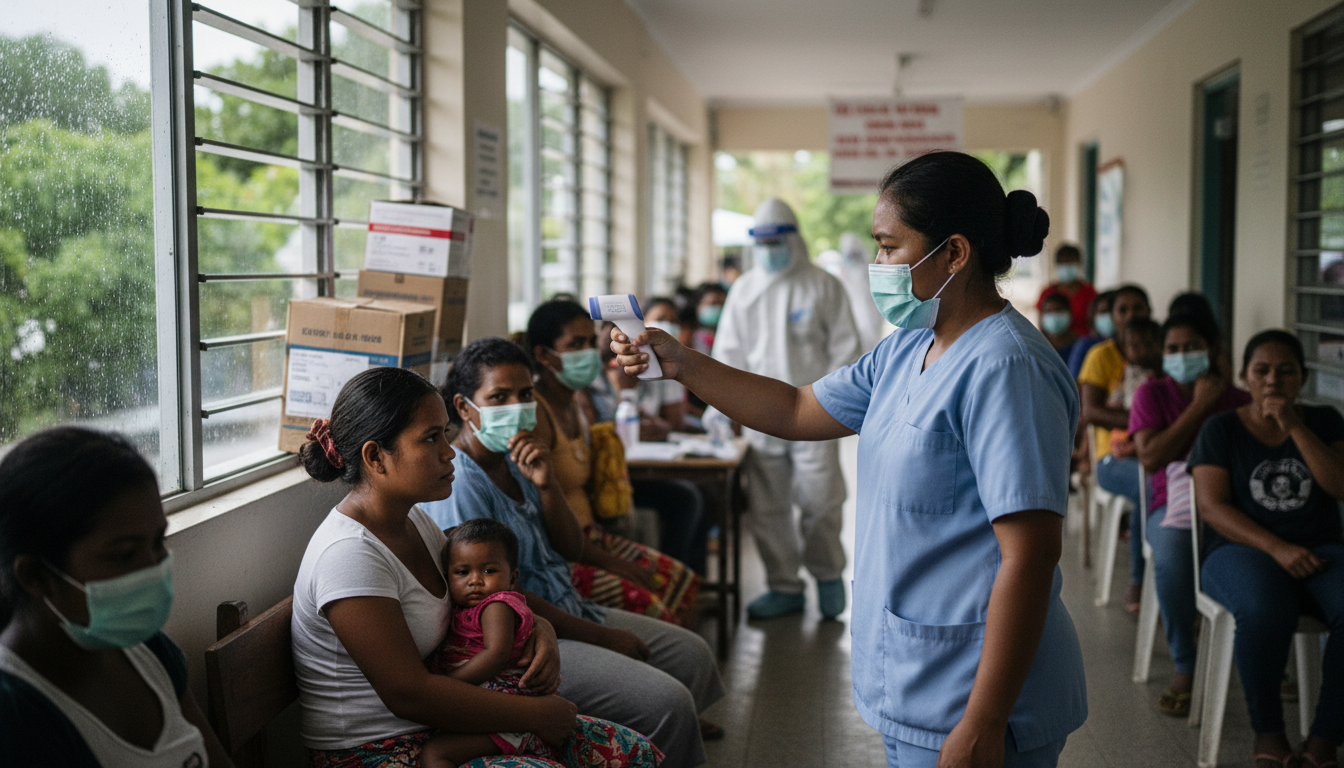
The Solomon Islands Ministry of Health is monitoring an increase in flu-like illness across the country, as reported on September 14, 2026. This development, while seemingly localized, warrants examination beyond the immediate health implications for the archipelago, particularly concerning its potential ripple effects on regional stability and economic activity across the wider Asia-Pacific.
While the specific number of reported cases and the precise strain of influenza are not disclosed, the ministry's public alert signifies a perceived elevation of risk. For a nation with a population density of 24.3 people per square kilometer, the rapid spread of respiratory illness can quickly strain limited medical resources. The capital, Honiara, with its higher concentration of residents and status as a primary international gateway, would likely be a focal point for any escalating public health measures.
Historically, the Solomon Islands has faced significant health challenges, including outbreaks of dengue fever and malaria. Its geographical isolation, while offering some protective barrier, also complicates the rapid deployment of external medical aid should an outbreak intensify. The nation’s healthcare system capacity, particularly in remote areas, may face rapid pressure under a widespread flu event. Past events, such as the 2013 tsunami alert following an earthquake, demonstrate the country’s vulnerability to natural hazards and the subsequent strain on infrastructure, which often extends to public health response.
From a regional economic perspective, any significant health disruption in the Solomon Islands could affect maritime trade and tourism. While not a primary trading partner for major Southeast Asian economies, the Pacific nation forms part of a complex shipping network. Supply chain stability, already under scrutiny from other global events, could experience minor localized interruptions if port operations or workforce availability are compromised. Travel restrictions, even if limited, could impact nascent tourism recovery efforts across the Pacific region.
### Implications for Regional Alliances
The flu alert also intersects with evolving geopolitical alignments in the Pacific. Australia's web of Pacific alliances is set to include the Solomon Islands, as noted by Bloomberg.com and the Taipei Times on September 7 and 8, 2026. This alliance is not exclusively military; it often encompasses development aid, infrastructure support, and, crucially, health assistance. A severe flu outbreak could serve as an early test of the practical implementation and responsiveness of these partnerships, particularly in delivering medical supplies, technical expertise, or emergency personnel. The quality and speed of this assistance could inform future cooperative efforts and perceptions of alliance efficacy.
Conversely, a counterargument might suggest that the contained nature of a typical influenza outbreak, coupled with the Solomon Islands’ relatively small population, limits its wider impact. The global health community has refined its response mechanisms to seasonal influenza, and local health authorities are likely prepared for such events. The alert itself may indicate proactive monitoring rather than an overwhelmed system. Financial markets, as evidenced by Reuters’ observation on November 4, 2025, concerning Wall Street heavyweights flagging equity market risks, typically react to systemic, not localized, events unless they signal broader economic contagion.
### The Data Test
However, the lack of specific epidemiological data for this current flu alert—such as case numbers, hospitalization rates, or virus strain—prevents a comprehensive data-driven assessment of its severity and potential for regional spread. Without these figures, any conclusion about containment or expansion remains largely inferential. What is evident is the public acknowledgement of an increased risk, which alone warrants consideration of preparedness, both domestically and regionally.
The Solomon Islands’ flu alert serves as a localized indicator of the continuous public health vigilance required across the Asia-Pacific. The outcome now depends on the specific trajectory of the illness and the practical efficacy of domestic health responses, bolstered by regional support where necessary. It highlights the often-overlooked public health dimension within emerging regional alliances and the continued need for robust, data-informed health infrastructure across all nations, regardless of their economic scale.
Sources
Newsletter
Pacific Daily
A curated briefing from Thailand, Asia-Pacific and the world.