Small Collisions, Wider Implications: Thailand's Roads and the Foreigner's Gaze
An examination of routine driving risks reveals the quiet shifts in a society navigating global presence.
SINGAPORE
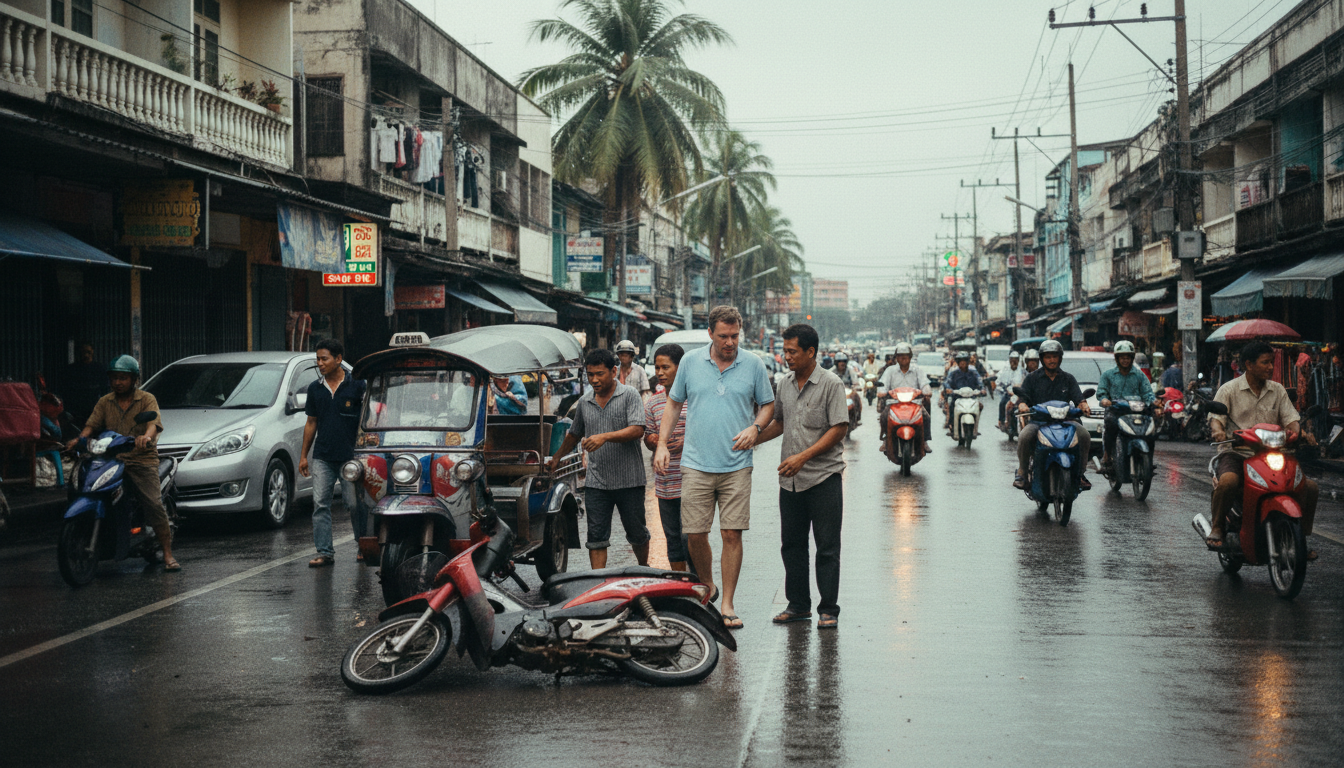
Daily life in Thailand, for many from abroad, eventually incorporates driving. The transition often entails adapting to road conditions that differ markedly from those in their home countries. Dense traffic, a prevalence of motorcycles, and distinct driving patterns characterize the local environment, as observed in Thailand. This everyday reality for foreigners in the country brings its own set of challenges, particularly when considering the less dramatic, yet frequent, occurrences on its roads.
Roojai’s internal claims data, from 2026, indicates that driving risks in Thailand are shaped less by rare, severe accidents and more by the frequency of everyday incidents. Minor collisions, low-speed impacts, and small third-party accidents occur regularly. Such incidents, though seemingly trivial, can still lead to repair bills, liability costs, and medical expenses that add up quickly. For foreigners unfamiliar with local traffic patterns and insurance structures, these routine incidents are often underestimated in their potential financial and logistical impact. This pattern suggests a sustained daily interaction with the local environment that foregrounds consistency over extremity.
The perspective on road safety, particularly concerning foreign residents, highlights a subtle but persistent negotiation between established local norms and the expectations of newcomers. When a foreign individual integrates into Thai society, the mundane act of driving becomes a daily encounter with these differing structures. This is not about a grand, transformative event, but about the accumulation of small interactions, each reinforcing a particular understanding of risk and responsibility. The focus on everyday accidents, rather than spectacular crashes, shifts the discourse from a critique of rare failings to an assessment of continuous adaptation.
While the data points to the frequency of minor incidents, it does not detail the specific cultural or infrastructural elements that contribute to these occurrences. It omits, for instance, the role of local driving customs, informal road rules, or the particularities of road infrastructure in urban and rural areas. This focus on individual foreign drivers and their perceived underestimation of risk might overshadow a broader analysis of the systemic factors that shape the road environment for all who drive in Thailand. The implications extend beyond individual foreign residents, touching upon the ongoing integration of international communities within the established rhythms of the region. The necessity for adaptation, in this context, is not merely a personal adjustment but a quiet reflection of a society's evolving relationship with its own changing demographics and global interactions.
Sources
Newsletter
Pacific Daily
A curated briefing from Thailand, Asia-Pacific and the world.