Segmenting Public Service: The Precedent of Priority Ferry Access
A proposed reservation system in Canada raises questions about the allocation of finite public resources, a tension relevant to ferry-reliant communities across the Pacific Rim.
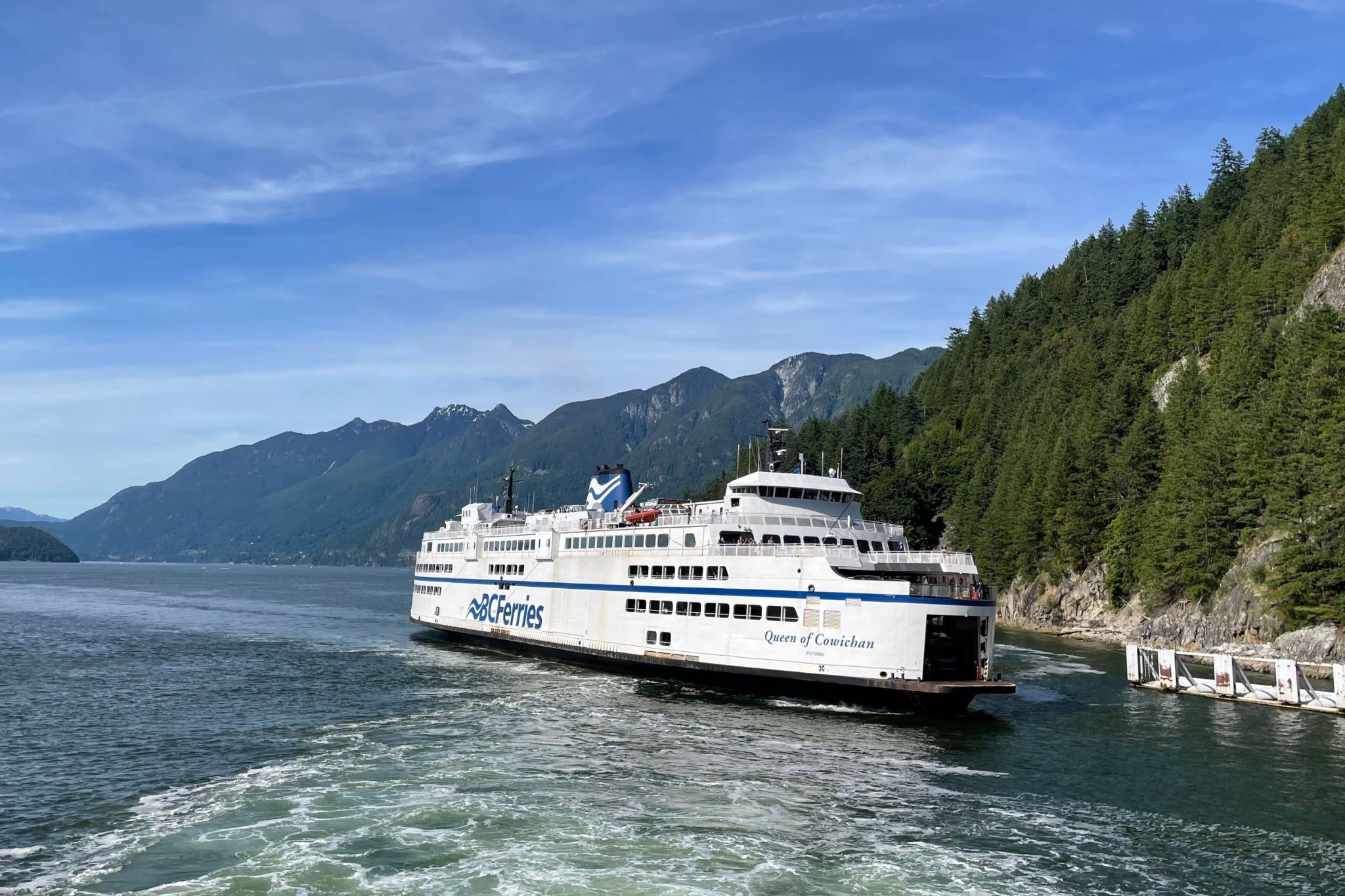
A commitment from David Eby's BC NDP to set aside 12 percent of advance booking space on two BC Ferries routes for local residents, should the party be re-elected, illustrates a specific challenge in public resource management. This proposed pilot project aims to simplify essential bookings for those in ferry-dependent communities served by the Horseshoe Bay-Langdale and Powell River-Comox routes. While positioned as a direct response to local needs, this policy introduces a mechanism of preferential access within infrastructure intended for broad public use.
The policy targets the daily realities of communities like the Sunshine Coast and Powell River. For residents connecting to Metro Vancouver, or between Westview terminal and Little River terminal near Comox, ferry travel is a fundamental necessity. Premier David Eby's announcement suggests designated reservation space would ease this burden. Such a focused intervention provides a clear benefit to a defined group facing consistent access difficulties.
However, implementing a fixed percentage of capacity for exclusive use, even for local populations, reconfigures access for all other users. When 12 percent of advance booking space is reserved, the remaining available capacity becomes the shared pool for everyone else, including those who may also rely on these routes for crucial travel but do not fit the 'local' definition. This introduces an inherent rebalancing of opportunity for different user groups.
The immediate effect in the region could be a shift in who secures passage. For regions across the Pacific Rim, especially island nations and coastal areas that depend heavily on maritime transport, this kind of precedent carries broader implications. In archipelagic countries, where inter-island transit is vital for both economic activity and social cohesion, defining and implementing ‘local’ access could create new layers of social or economic stratification.
Such a policy can inadvertently establish a tiered system of access for a service that traditionally aims for universal availability. While the stated goal is to support a specific demographic facing unique challenges, the method involves state-sanctioned exclusivity. Public infrastructure generally serves the public broadly. Deliberately limiting a portion of its capacity based on residency deviates from this principle. It necessitates careful scrutiny of the criteria for such allocations and the administrative effort required to verify eligibility.
Conversely, a lack of such interventions might leave these communities in continuous disadvantage, affecting their economic and social fabric. It is argued that unrestricted access, while equitable in theory, can fail communities where demand regularly exceeds supply, or where geographical reliance is pronounced. The BC NDP’s proposal could be seen as an attempt to adapt to a strained system, acknowledging that a uniform approach may not equally serve all constituents.
Yet, the long-term implications of sustaining such a system include not only administrative costs but also the potential alienation of other users. These could include tourists important to local economies, or residents from other areas who also rely on the ferry for connectivity. The policy draws a line, distinguishing those considered 'local' enough for special consideration from those who are not.
The proposal remains a commitment contingent on the BC NDP’s re-election. If implemented, its execution would provide insight into the effectiveness of designated access and the subtle costs of such a technique on public perception and equity. This case highlights a common challenge: balancing the particular needs of local populations with the broader principle of public access to shared resources, without creating new divisions. The question is whether the perceived short-term benefit justifies the precedent of public infrastructure serving an increasingly segmented public.
Sources
Newsletter
Pacific Daily
A curated briefing from Thailand, Asia-Pacific and the world.