Sailing Events and the Pursuit of Economic Leverage in Asia-Pacific
The Round Britain and Ireland Race offers a signal, not a celebration, for regional yachting ambitions.
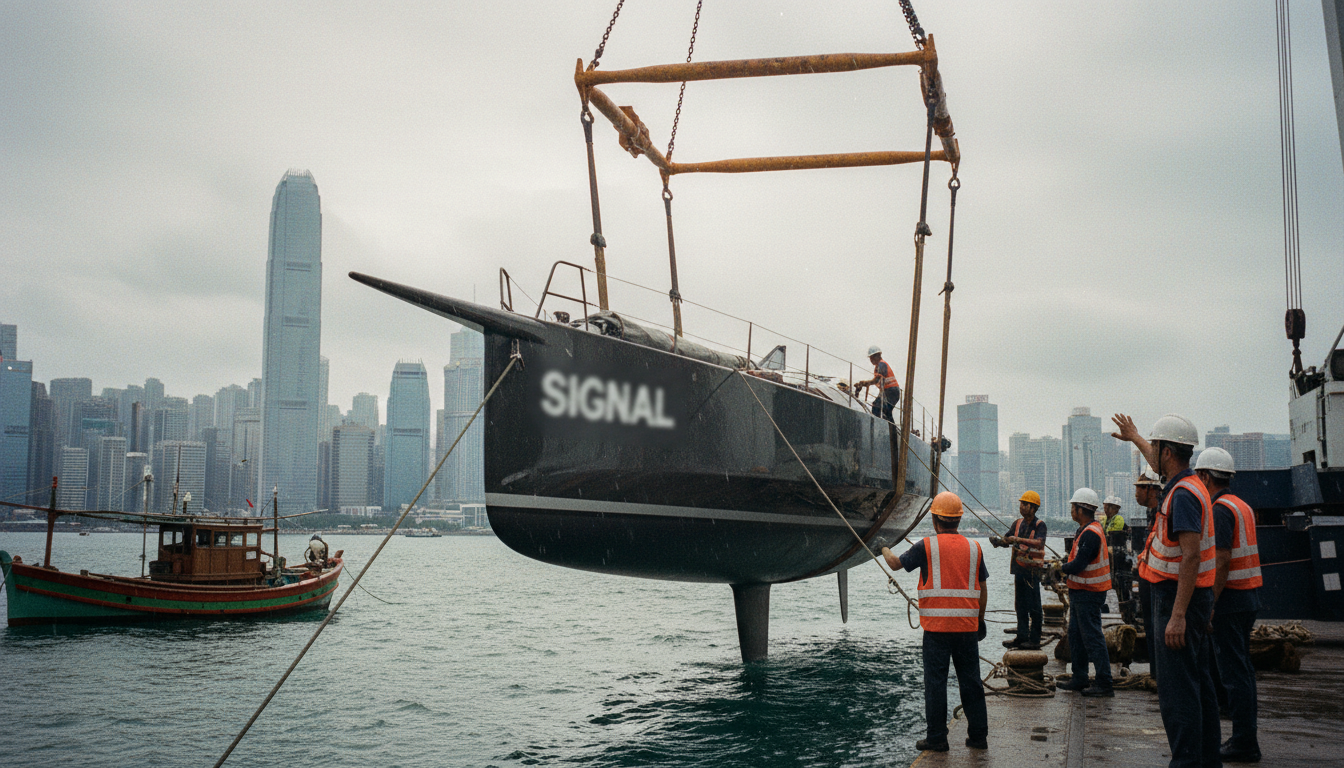
The 50th anniversary Round Britain and Ireland Race, covering 1,805 nautical miles with 32 boats and 182 sailors from five continents, concluded on August 9, 2026. This scale, reported by Sail World Asia, quantifies the event itself. It does not inherently define its relevance to distant markets like Thailand or the broader Asia-Pacific.
Major offshore races are complex logistical undertakings. They require infrastructure, crew support, and substantial financial commitment from participants. The concentration of such events, historically in Europe and North America, correlates directly with established maritime industries, supporting services, and a critical mass of yacht owners and operators. These are the economic engines that berth economics interrogates, beyond the ceremonial aspects.
For the Asia-Pacific, the question is not whether individual races are captivating, but what economic return they generate for host nations. The region has invested in marina development and promoted yachting tourism. However, the value derived from hosting a regatta versus developing a sustainable yachting ecosystem remains distinct. A large-scale event, while bringing temporary visitors, does not automatically translate into long-term infrastructure investment or local industry growth. The focus on participant numbers, while impressive, omits the cost-benefit analysis for peripheral economies.
The incentive for regional governments to host or support sailing events is often tied to tourism revenue and international visibility. However, the specific economic uplift from events like the Round Britain and Ireland Race, if replicated in the Asia-Pacific, would depend on local capacity to absorb and service the demand. This includes technical support, maintenance facilities, and ancillary services for a fleet that, by its nature, is transient. Without a robust local industry, much of the economic benefit accrues to international supply chains.
Thailand, for example, has positioned itself as a yachting destination. However, the berth economics for events of this magnitude would require more than scenic waters. It demands an assessment of existing marina capacity, customs efficiency, and the availability of skilled maritime labor. An event's 'launch party' metrics – the number of boats and sailors – reveal participation, not profit for the host region. The core issue for Asia-Pacific nations remains the conversion of event-driven visibility into enduring economic value. This requires targeted investment in marine services, rather than a sole reliance on event hosting.
### Economic Conversion
To move beyond the temporary impact of a single event, the Asia-Pacific must consider the long-term investment required to build a self-sustaining yachting industry. This includes the development of boatbuilding capabilities, maintenance and repair facilities, and training programs for marine professionals. The ability to service, rather than just host, international fleets is the economic differentiator. Without this, the region functions as a transient stop, rather than an economic hub.
Conversely, a key counterargument is that high-profile events generate exposure, attracting future investment and private yacht traffic. This exposure can be a catalyst, but its conversion into concrete economic gain is not guaranteed. The 2025 UK Budget, which allocated funding for various sectors, does not list specific line items for leveraging niche sporting events internationally. This suggests a broader economic strategy takes precedence, rather than an isolated focus on yacht races.
The outlook for Asia-Pacific nations seeking to integrate into the global yachting economy depends on their capacity to develop comprehensive marine support industries. Without this, the region risks remaining a spectator rather than a key player in the economic currents of the sport. The outcome now depends on whether the investments prioritize sustainable infrastructure over transient spectacle.
Sources
Newsletter
Pacific Daily
A curated briefing from Thailand, Asia-Pacific and the world.