Regional Racing Results Signal Future Skill Transfer Challenges
Manly Skiff Series Offers Early Indication for Asia-Pacific Maritime Development
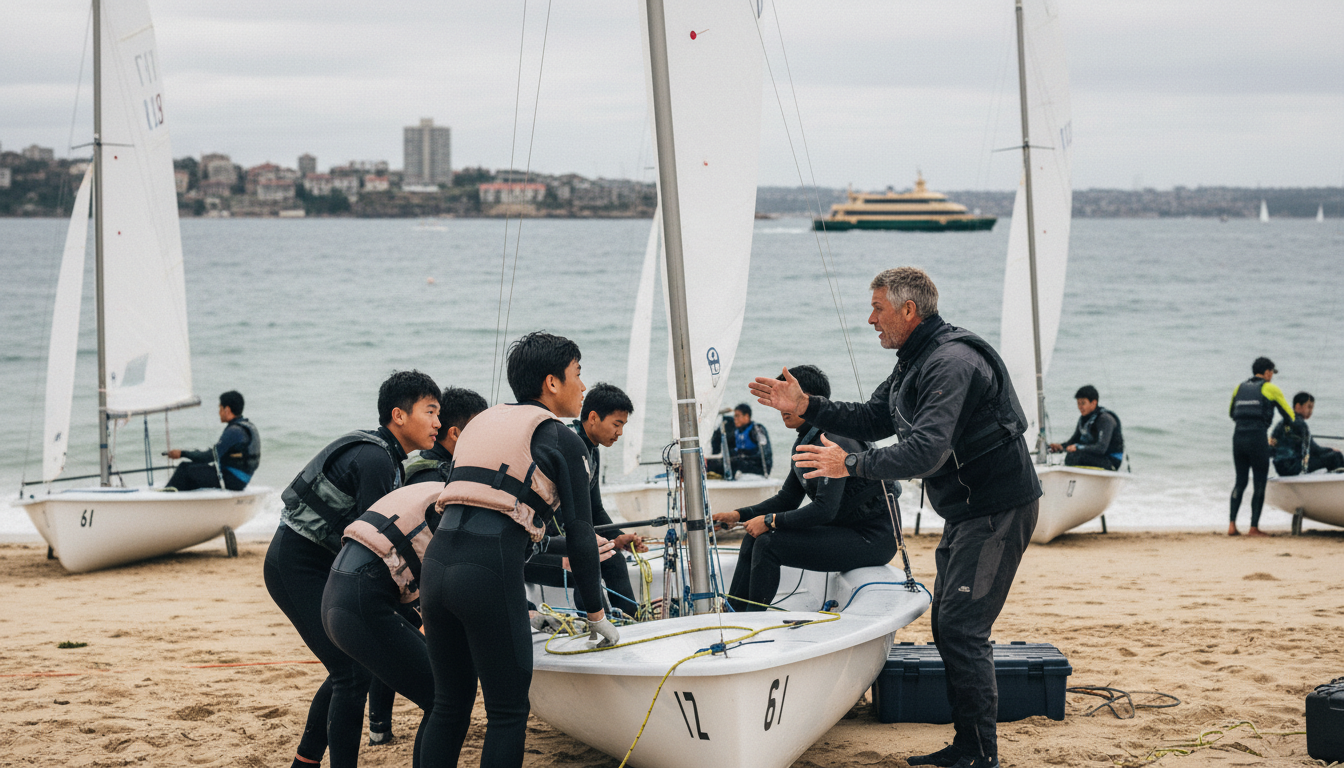
The recent performance at the Manly 16ft Skiff Club’s short course pointscore series, as reported by Sail World Asia, provides specific data points for assessing regional maritime competitive readiness. Canberra Airport secured consecutive wins in the initial heats on Saturday. While a single event does not define a season, this result offers a specific, measurable outcome in a competitive sailing discipline.
The nature of skiff racing, demanding immediate tactical responses and precise crew coordination, provides a direct proxy for evaluating a region's pool of skilled maritime professionals. The consistent success of one team, as evidenced by Canberra Airport's back-to-back victories, demonstrates a concentration of competitive expertise. This concentration suggests a robust local talent pipeline or an established training regimen that supports consistent high performance. For Thailand, and the broader Asia-Pacific, the implication extends beyond competitive sport.
Developing a national marine industry, particularly in sectors requiring precision and rapid decision-making—such as advanced navigation, coastal defense, or specialized marine engineering—relies on a foundation of fundamental maritime skills. Competitive sailing, especially in categories like skiffs, serves as a practical proving ground. The skills honed in managing a high-performance, unstable craft under varying conditions translate into a broader capability for complex marine operations. The ability to consistently win indicates a developed system for talent identification and skill refinement. This system is a prerequisite for fostering a self-sufficient and innovative marine sector.
### Local Infrastructure and Global Standards
The prominence of a specific team from a particular region, such as Canberra Airport from Australia, highlights the efficacy of existing support structures. This includes training facilities, coaching expertise, and competitive circuits that allow for continuous skill progression. If Thailand aims to elevate its maritime capabilities beyond traditional shipping or tourism-dependent activities, it must benchmark against such established performance indicators. The absence of comparable, consistently high-performing teams from other Asia-Pacific nations in similar events suggests a potential disparity in this foundational development.
However, a counterargument proposes that competitive sailing, being a niche sport, offers limited predictive value for the broader marine industry's health. The argument asserts that the technical demands of a 16ft skiff crew do not directly mirror the requirements for commercial port operations, shipbuilding, or offshore energy support. This view considers competitive sailing a recreational pursuit, distinct from professional maritime vocations. While the disciplines are indeed separate, the underlying aptitudes—problem-solving under pressure, teamwork, precise execution, and an intimate understanding of hydrodynamics—remain universal.
The specific demands of high-performance skiff racing provide a direct, albeit narrow, lens into regional maritime skill development.
The challenge for Thailand is not merely to replicate competitive sailing success but to analyze what underpins it: consistent training, access to appropriate technology, and a culture of performance. The outcomes from the Manly skiff series, while specific to a sporting event, point to a broader concern regarding the systematic cultivation of advanced maritime skills across the Asia-Pacific. The unresolved constraint lies in the transferability of these competitive advantages into a comprehensive, national marine industry strategy. The question remains how the demonstrated competitive rigor in one domain will translate into a measurable uplift in professional maritime competencies in other, more economically significant sectors. The next steps depend on whether these regional results are interpreted as standalone sporting achievements or as indicators for future industrial development.
Sources
Newsletter
Pacific Daily
A curated briefing from Thailand, Asia-Pacific and the world.