Regional Athletic Outcomes Reflect Deeper Strategic Commitments
Jean Claude Saclag's silver medal at the Asian Games, while significant, highlights national resource allocation patterns that extend beyond sports.
SINGAPORE
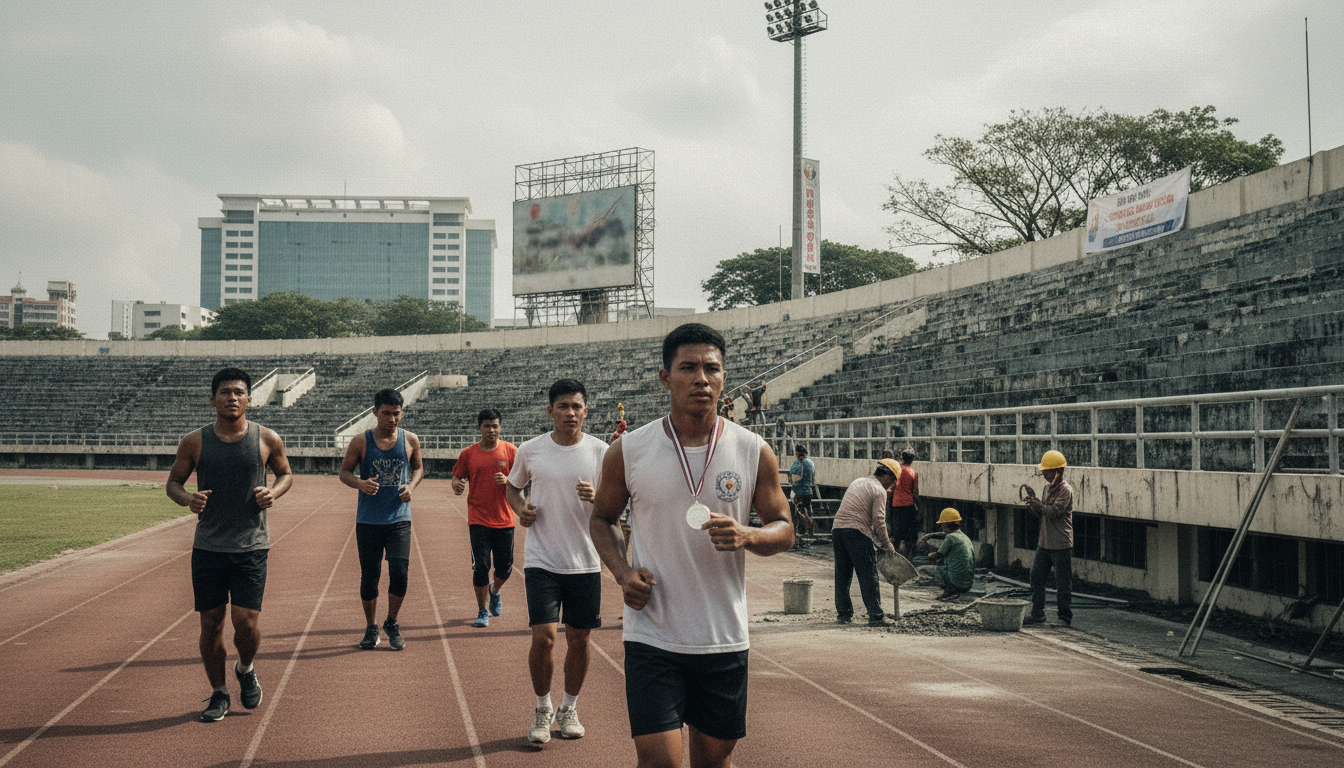
The 2026 Asian Games have presented a series of athletic results, among them Jean Claude Saclag's silver medal in MMA for the Philippines. This outcome, with Saclag bowing to his Tajikistan foe and falling short of a gold medal, occurs within a broader pattern where national sporting achievements can reflect the varying strategic investments and resource distributions across the Asia-Pacific.
Historical observations indicate that consistent national success in international competitions aligns with a nation's commitment to developing infrastructure, training programs, and talent pipelines. The Philippines, for instance, saw Saclag achieve silver, and Carlos and Eldrew Yulo reach the gymnastics finals. This demonstrates capabilities in specific disciplines but also suggests areas where comprehensive national support might differ from those nations that consistently secure top finishes. This is not solely about individual athletic skill; it is also about the depth of systemic support.
For Thailand, like many other nations in the region, these sporting outcomes prompt a consideration of national strategic priorities. Cultivating an athlete to an elite international standard requires substantial investment, encompassing not only direct coaching and specialized facilities but also broader societal foundations like health, education, and economic stability. These underlying conditions enable individuals to pursue demanding athletic careers over the long term. When athletes consistently perform at a high level but do not secure gold, it can signal distinctions in the long-term commitment to particular sectors or the comprehensive nature of national programs.
Within the Asia-Pacific context, where geopolitical and economic strategies are constantly assessed, athletic performance offers a tangible, if indirect, metric of a nation's ability to execute sustained plans. Saclag's silver and Alvarez's bronze are individual triumphs, but they also draw attention to the systemic conditions that either facilitate or constrain such results. A nation's capacity to develop talent into consistent high-level international performance in competitive arenas like sports can reflect broader institutional strength and the effective mobilization of resources. This points to a strategic output rather than isolated incidents of success.
Translating individual athletic achievements into broader systemic advantages remains a challenge for many nations in the region. Without coordinated, sustained investment across the requisite supporting structures, a silver medal, while commendable, may remain an individual accomplishment. The question persists as to how the region's diverse economies will address these strategic disparities, especially given finite resources and wide-ranging priorities that span economic, social, and environmental sectors. The patterns observed on the athletic stage are often mirrored in national development outcomes elsewhere.
Sources
Newsletter
Pacific Daily
A curated briefing from Thailand, Asia-Pacific and the world.