Phuket Readies for US Naval Visit Amidst Recurring Deployments
The upcoming port call by two US Navy ships with 5,000 personnel in Phuket reflects a pattern of frequent deployments, raising questions about the operational costs absorbed by Thai communities.
PHUKET
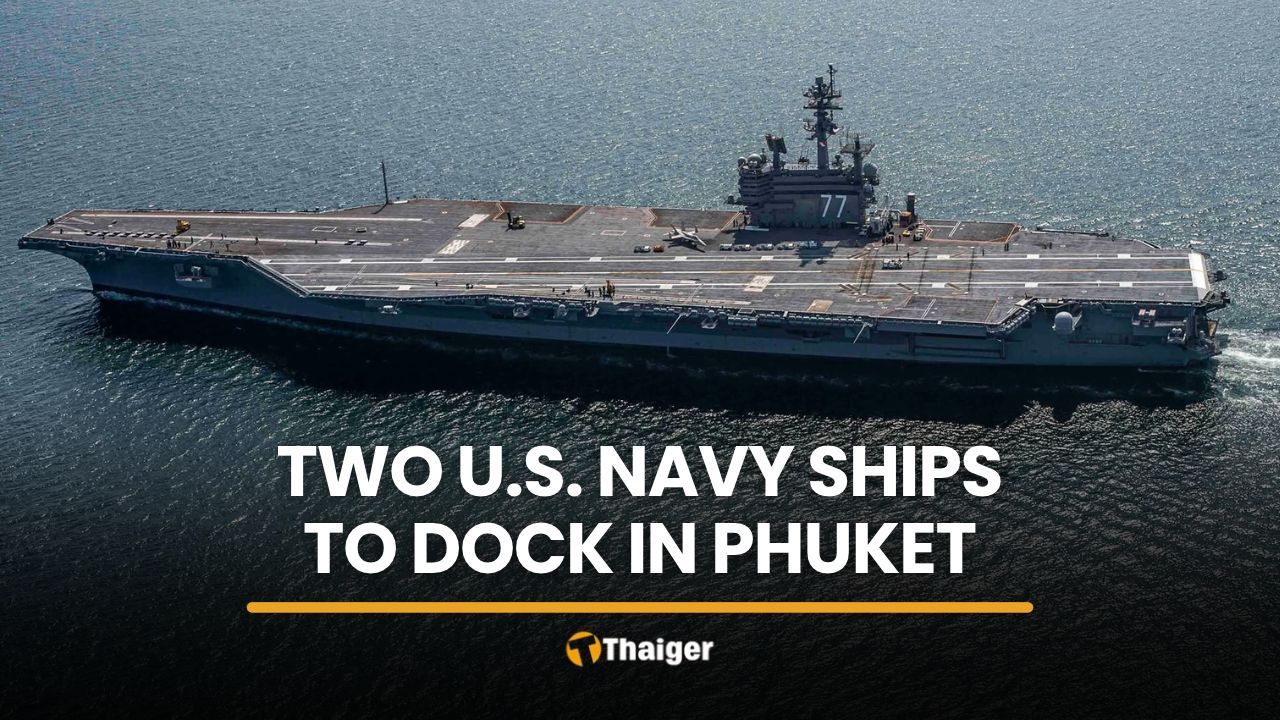
Phuket Deep Sea Port is preparing to host two US Navy ships, the USS George H.W. Bush (CVN-77) and the USS Delbert D. Black (DDG-119), carrying more than 5,000 personnel from October 5 to 10. Lou Pham and Robert Robinson, US Embassy force protection representatives in Thailand, met with officials at Patong Police Station on September 29 to discuss arrangements for the naval personnel’s arrival. Thai officials and US representatives are also coordinating preparations for the visit, including measures to maintain order during the port call.
This deployment follows a similar event in August, when Pattaya prepared to welcome 5,000 US military personnel aboard the USS Abraham Lincoln. Reuters reported in September that a US aircraft carrier visited Thailand for "well-deserved" R&R after 286 days at sea. The recurring nature of these large-scale naval visits suggests a consistent operational tempo for US forces in the region, with Thailand serving as a regular port of call for rest and replenishment. While these visits bring a temporary influx of visitors, the practical implications for local infrastructure and public services merit consideration.
Hosting thousands of foreign military personnel requires significant logistical coordination. Local police, port authorities, and public health services bear the primary responsibility for managing the arrival and presence of such a large group. Discussions on September 29 specifically addressed coordination between Thai agencies and the US side, indicating a proactive recognition of the potential strain on local resources. The immediate economic benefit to Phuket's businesses is a direct result of increased consumer activity from the visiting personnel. However, the costs associated with increased security, waste management, and potential public health monitoring are less frequently quantified.
Such regular military visits underscore Thailand's strategic role in regional security dynamics. While official statements often frame these as routine port calls for R&R, they simultaneously reinforce bilateral defense ties and allow for operational flexibility for US naval assets. The consistent presence also raises an unstated question about the long-term division of labor: how much of the operational support cost is defrayed by the host nation's existing infrastructure and public services? While the immediate economic injection is clear, the more diffuse costs associated with facilitating such large, frequent deployments often go unexamined.
The repeated deployment of thousands of personnel to Thai ports points to a deeply embedded operational partnership. The current arrangements for the Phuket visit reflect a refined process of coordination between US and Thai officials. This recurring pattern, however, necessitates a closer examination of the burden on the communities that provide the infrastructure and services, ensuring the benefits are distributed equitably and the costs are not disproportionately borne by local Thai taxpayers.
Sources
Newsletter
Pacific Daily
A curated briefing from Thailand, Asia-Pacific and the world.