Panguna Attack Signals Persistent Local Power in Pacific Resource Conflicts
The recent assault on an Indian mining firm in Bougainville underscores enduring local capacity to disrupt foreign resource ventures, a critical dynamic for external actors like Thailand.
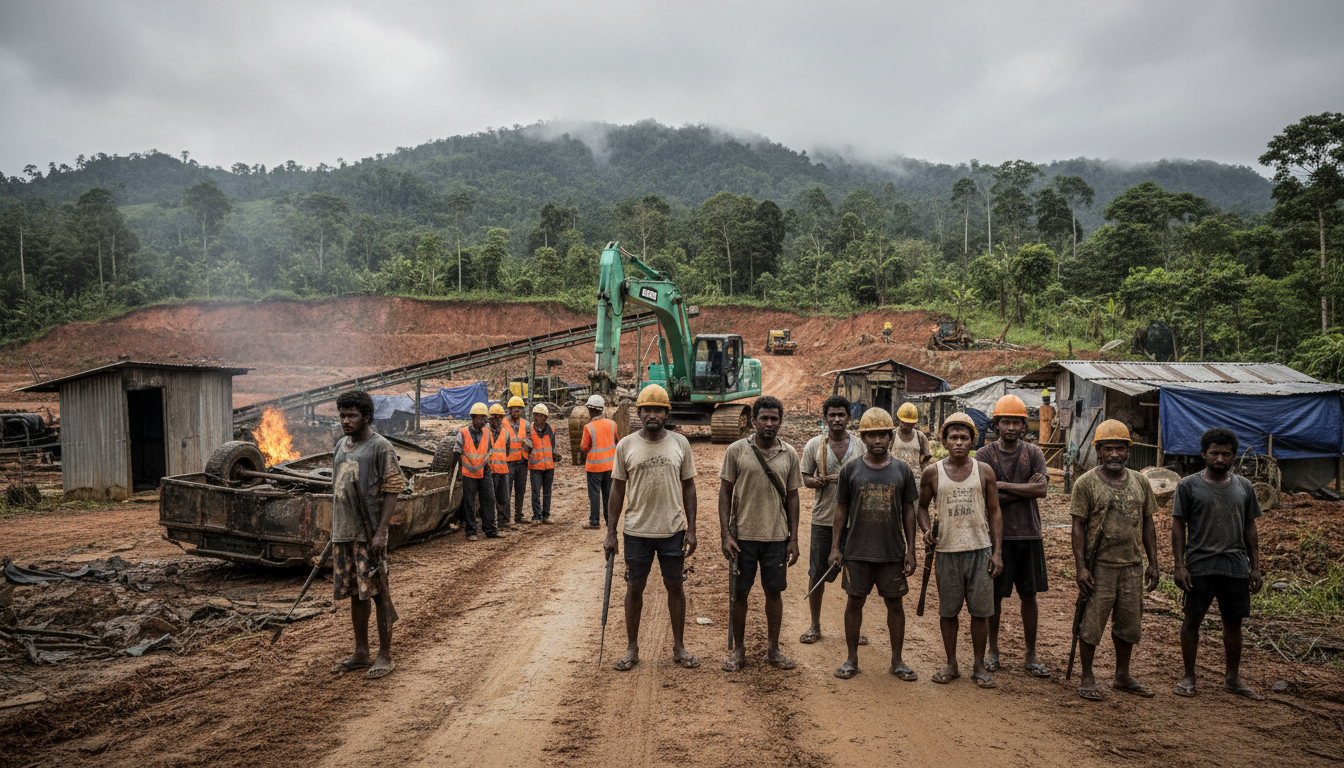
The reported attack on Lloyds Metals & Energy Ltd at the Panguna mine site on a Sunday, involving armed individuals, destruction of machinery, alleged staff assaults, and fatalities, represents a material shift in the operational environment for foreign investment in the region. Papua New Guinea’s trade minister claims he had warned the Indian mining company against investing in Bougainville. Bougainville police chief Francis Tokura stated that a group from Buin invaded the site with high-powered weapons, leading to a shootout and subsequent arrests.
This incident follows a historical pattern. The Panguna mine itself has a history deeply intertwined with Bougainville’s autonomy aspirations, having previously provided significant revenue before its closure. The alleged arson targeting Lloyds Metals & Energy Ltd’s machinery on September 13, and the condemnation from the President of the Autonomous Region of Bougainville, highlight the persistent volatility surrounding resource ownership and development in such politically sensitive locales.
Regard for this event should extend beyond its immediate details. Bougainville had previously rejected a Chinese partner for the same mine in January 2026, stating its intent to use mine revenues to fund its independence. The shift from a Chinese proposal to an Indian investment, now facing direct resistance, illustrates the specific challenges foreign entities encounter when navigating resource development in areas where local populations hold significant leverage over their land and future. The critical question this incident raises is not merely about standard investment security, but about the enduring capability of local actors to disrupt or derail projects perceived as externally imposed or insufficiently aligned with community interests.
The stated warning from a Papua New Guinean minister, if accurate, indicates a degree of official foresight regarding the potential for such opposition. It also suggests a complex interplay between national government advice, regional aspirations, and the realities on the ground that can undermine even officially sanctioned ventures. Such patterns hold significant implications for nations like Thailand. As Southeast Asian economies increasingly seek raw materials and new investment opportunities, the region of Bougainville demonstrates that the capability to control resources, and by extension, political destiny, remains a potent force in regional dynamics. Any assessment of engagement in such regions must therefore extend beyond contractual agreements to a rigorous understanding of historical grievances, internal political structures, and the capacity for local populations to assert their claims through direct action. The unresolved tension between economic development objectives and local sovereignty continues to define the operating environment.
Sources
Newsletter
Pacific Daily
A curated briefing from Thailand, Asia-Pacific and the world.