Online Courses Address Skill Deficit in Asia's Yachting Sector, Raising Practicality Concerns
The industry's embrace of virtual training for emergency preparedness signals a deeper, systemic gap in maritime skills, prompting questions about real-world competence.
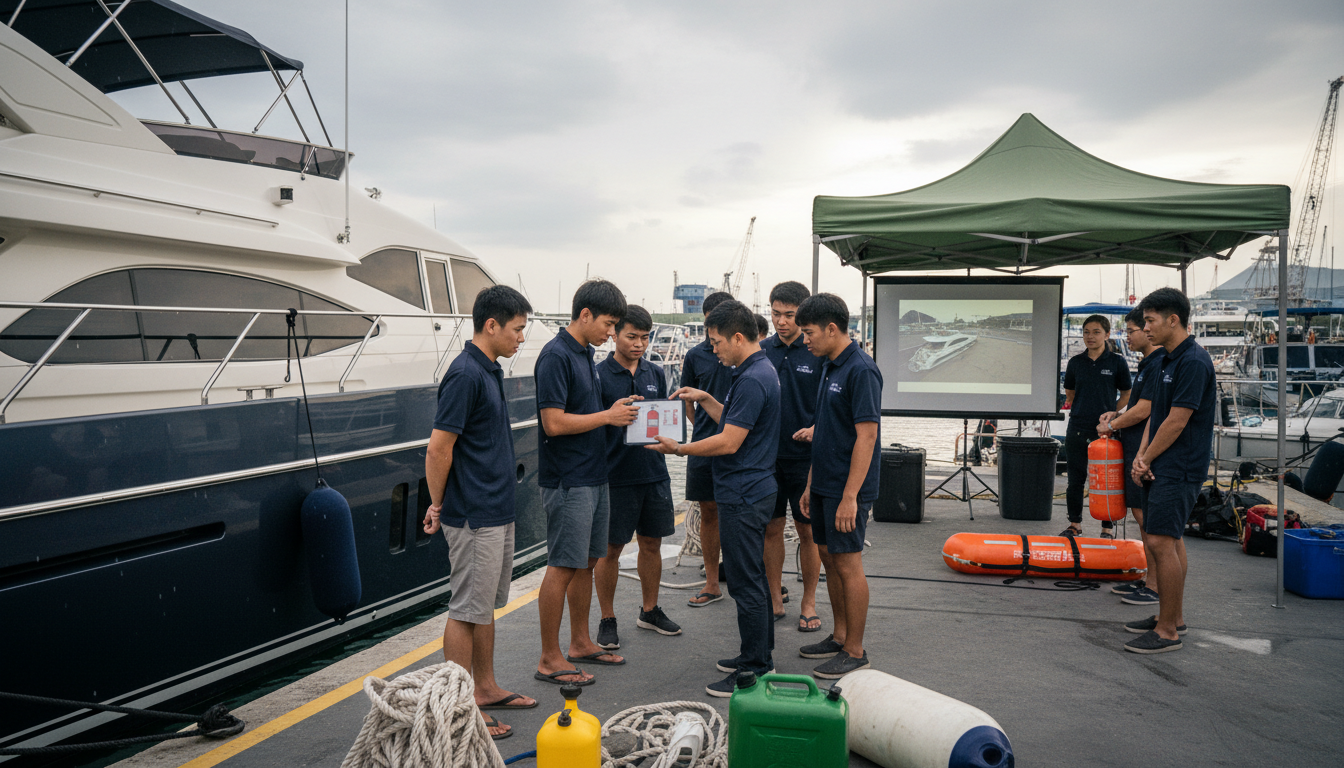
Pacific yachting operators are being advised to prepare their teams for various situations through virtual courses as the busy summer season approaches. This focus on online learning, presented as a readiness measure, suggests a reliance on digital platforms to fill what appears to be a persistent skill deficiency within the region's marine workforce.
Marine Business World reported on 2026-09-16 that the industry is pushing for virtual training. This implies an acknowledgment of a knowledge gap requiring immediate, scalable intervention. The stated aim is for these courses to equip teams with "necessary tools and knowledge before emergencies unfold." However, the perceived need for rapid, virtual upskilling, especially for "industry leaders" to impart knowledge, suggests that existing foundational training or ongoing professional development may be insufficient. This points to a necessity for quick solutions, rather than mere convenience.
While online courses offer flexibility, their growing prevalence in specialized sectors like yachting raises questions about the practical application of digitally acquired skills. The Washington Post discussed non-collegiate entities promising "fast, cheap college credits." Forbes listed "Best Online Certificate Programs Of 2026" and "Best Online Bachelor’s Degrees In Cybersecurity Of 2026," demonstrating widespread adoption of online education across fields. The United Nations Development Programme launched an online course on climate finance on 2025-02-04. This trend highlights a broader shift toward accessible, often condensed, online learning modules.
For sectors requiring hands-on proficiency, such as yachting, these implications warrant scrutiny. Online platforms can provide theoretical understanding. However, they may not adequately replicate the operational complexities or critical decision-making demanded by maritime emergencies. The Guardian reported on 2026-09-02 that an AI chatbot assists in teaching online-only psychology classes. The New York Times highlighted students using AI agents to complete online courses. These examples suggest a growing distance between the learner and practical engagement, raising concerns regarding the depth of skill acquisition in online-only environments.
For Thailand and the broader Asia-Pacific, regions dependent on tourism and maritime commerce, the shift towards virtual emergency preparedness could present mixed outcomes. It offers a quick solution to immediate training needs, potentially lowering costs and increasing accessibility for a dispersed workforce. However, it risks developing a workforce with theoretical knowledge that lacks adequate practical experience, which is crucial for navigating unexpected, high-stakes situations at sea. The outcome now depends on whether virtual training demonstrably translates into competence in critical real-world scenarios, a claim that remains unvalidated.
Sources
Newsletter
Pacific Daily
A curated briefing from Thailand, Asia-Pacific and the world.