Nintendo Defends Human Craft Against Generative Automation
Shigeru Miyamoto asserts design identity while artificial intelligence reshapes hardware supply and entertainment economics across Asia.
SINGAPORE
Entertainment software development has long pursued technological scale, treating computational brute force as the definitive marker of industrial progress. When Shigeru Miyamoto, the creator of Mario and Super Mario Galaxy, recently observed that there remain creative tasks human designers can uniquely execute even in an era of artificial intelligence, he articulated a quiet resistance against prevailing corporate orthodoxy. For decades, Nintendo has deliberately decoupled its core entertainment philosophy from raw computing cycles. That historical posture now confronts an automation wave that threatens to homogenise digital production across global creative studios.
Technological transitions historically reward companies that subordinate novelty to distinct design logic. Decades ago, Mario began with a 16-pixel start, forcing developers to derive emotional resonance and playability from severe hardware limitations rather than cinematic fidelity. Miyamoto has frequently explained his design decisions through an inclination toward idiosyncratic mechanics, framing creative success around seeing problems differently rather than adopting uniform industry trends. The contemporary software sector, conversely, increasingly views generative models as an inevitable substitute for iterative manual craft. Studio executives across North America and East Asia frequently frame algorithmic content generation as an obvious pathway to suppress rising labor budgets, betting that automated scripting, asset generation, and procedural environment design can sustain consumer engagement.
Hardware Strain Across Regional Hubs
This philosophical divergence intersects with acute material frictions across Asian supply chains. The expansion of enterprise artificial intelligence has ignited severe resource contention in semiconductor manufacturing, generating significant supply bottlenecks in critical components. Both Nintendo and Sony have grappled with surging memory prices as data center infrastructure absorbs semiconductor capacity, restricting component allocations for consumer hardware. While corporate software engineers race to implement machine intelligence across commercial pipelines, the physical cost of manufacturing dedicated entertainment hardware continues to climb across Asian manufacturing hubs.
Market realities across the Asia-Pacific reveal sharp regional divides in how interactive entertainment is consumed and valued. In mature domestic environments such as Japan, consumer attachment to proprietary hardware ecosystems and signature human-directed creative franchises remains resilient. Mobile-games-fixated Southeast Asia presents an entirely different consumer landscape, where budget smartphones dominate digital interaction, and micro-transaction mechanics matter more than premium console lineage. Nintendo introduced its Switch 2 hardware into Southeast Asian territories where mobile software platforms already establish low entry barriers, forcing the company to demonstrate why dedicated hardware and bespoke creative direction justify independent capital investment.
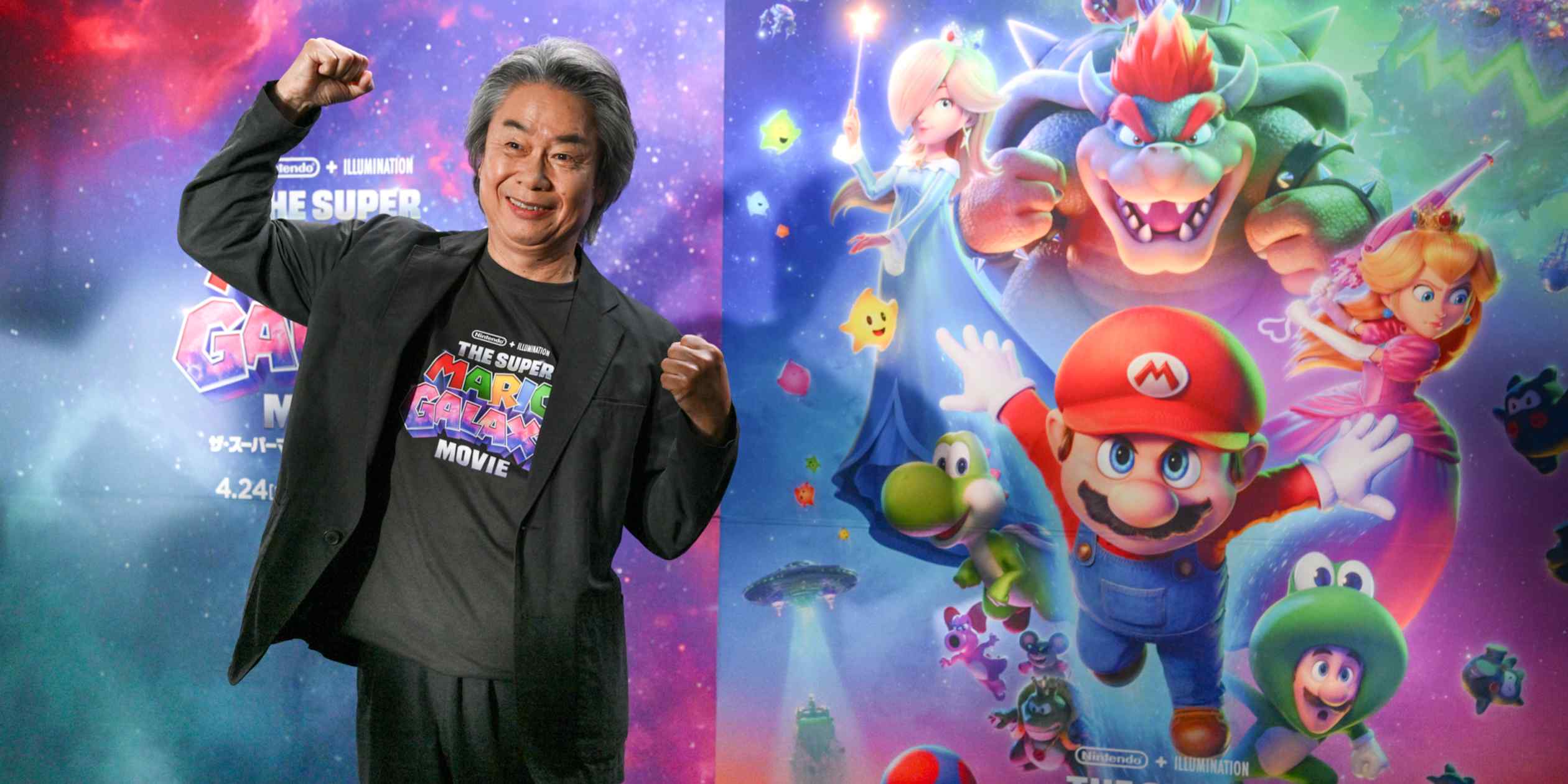
Miyamoto sees distinct creative territory for human designers even as artificial intelligence infrastructure inflates regional manufacturing costs.
Industry observers often argue that resistance to generative tools is economically untenable. Sceptics contend that studio payrolls cannot indefinitely sustain hand-crafted animation and physical level testing when synthetic generation engines produce equivalent visual complexity in seconds. If automated game engines eventually master adaptive design and user feedback loops, purist reliance on human intuition risks leaving traditional console manufacturers vulnerable to nimble, algorithmically powered digital platforms that deliver endless, personalized software streams at negligible incremental cost.
The Commercial Limit of Mechanical Abundance
Yet mechanical abundance exposes its own commercial boundaries. When visual assets and narrative templates become computationally trivial to generate, consumer perception of real cultural value migrates back toward distinctive authorial perspective and tactile cohesion. Automated production inevitably produces formulaic repetition, flooding app storefronts with mathematically optimal yet aesthetically interchangeable digital entertainment. A design methodology built deliberately around human idiosyncrasy offers an enduring defence against the rapid commodification of digital art.
The structural tension between digital efficiency and authorial voice remains unresolved. Large software platforms will continue directing immense infrastructure investment into automated generation, while East Asian electronics conglomerates absorb higher semiconductor input costs to manufacture traditional physical consoles. Whether international consumers will pay a persistent premium for hand-crafted creative vision when synthetic alternatives proliferate across mobile networks remains the fundamental industrial uncertainty facing Nintendo across the region.
Sources
Newsletter
Pacific Daily
A curated briefing from Thailand, Asia-Pacific and the world.