New Caledonia's U17 World Cup Berth: A Reorientation of Regional Capacity
The qualification of New Caledonia for the FIFA U-17 Women's World Cup signals a shift in sports development beyond traditional Pacific powers, posing questions for broader regional engagement.
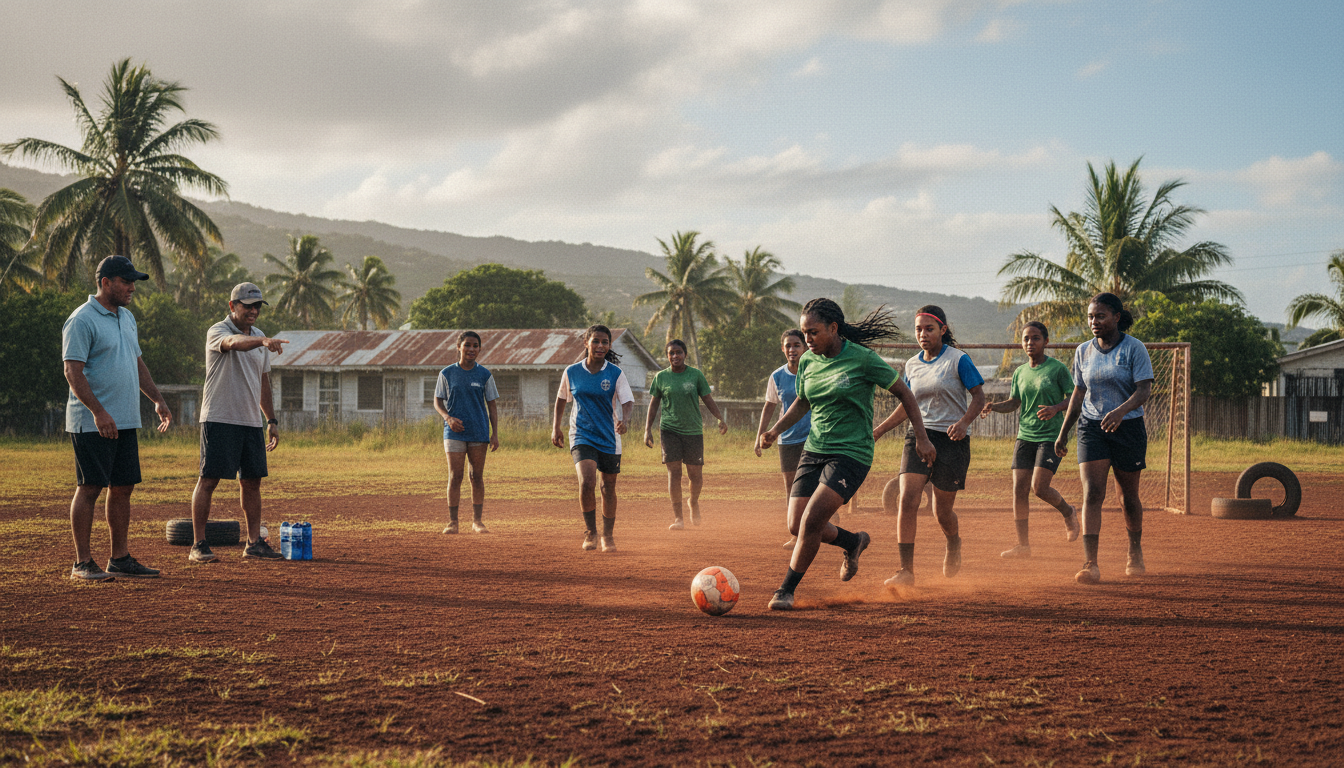
The qualification of New Caledonia for the FIFA Under-17 Women's World Cup, secured by a 1-0 victory against Fiji in the 2026 OFC U16 Women's Championship semifinals, represents a notable development in Pacific regional capabilities. This achievement, marking New Caledonia's first appearance at this specific FIFA event, follows their U20 women's team's participation in the FIFA U-20 Women's World Cup in Poland earlier this month. Kinë Hmaen's goal in the 10th minute decided the U16 semifinal.
Historically, New Zealand has been a dominant force in Oceanic football, as evidenced by their 3-0 semifinal win against Papua New Guinea in the same tournament, securing their own qualification. The consistent presence of New Zealand in such competitions has shaped perceptions of athletic development within the region. However, New Caledonia's advancement, alongside the U20 team's recent international presence, suggests an evolving landscape where capacity is not solely concentrated in the larger, more established nations. This shift merits attention from a regional strategic perspective, as it indicates a broader distribution of competitive potential.
The implications for countries like Thailand, and the wider Asia-Pacific, reside in understanding this reorientation of regional sporting capacity. While football diplomacy and cultural exchange have long been elements of international relations, a diversification of competitive strongholds within the Pacific demands re-evaluation of engagement strategies. It prompts consideration of how burgeoning capabilities in smaller territories like New Caledonia could contribute to broader regional athletic ecosystems, potentially fostering new avenues for training partnerships, infrastructure development, or talent exchange programs. The focus shifts from merely acknowledging New Zealand's consistent performance to recognizing emergent forces capable of international qualification.
There remains, however, the inherent limitation of size and resource allocation that traditionally constrains smaller Pacific territories. The sustainability of such achievements, particularly in a sport requiring significant investment in coaching, facilities, and youth development pathways, remains a critical factor. While New Caledonia's success is demonstrable, the capacity to replicate and expand this across various age groups and sports, without robust external support or sustained internal policy, is an open question. The current qualification is a concrete event, yet the long-term trajectory of this expanded capacity requires further observation. The challenge for regional strategists is to discern whether this signals a systemic uplift in capability or an isolated athletic success.
Sources
Newsletter
Pacific Daily
A curated briefing from Thailand, Asia-Pacific and the world.