National Discourse Obscures Critical Regional Governance Events in the Philippines
The recent BARMM elections, overshadowed by Manila's political activity, demonstrate a recurring pattern of national priorities eclipsing sub-national developments, with implications for broader Asia-Pacific stability.
SINGAPORE
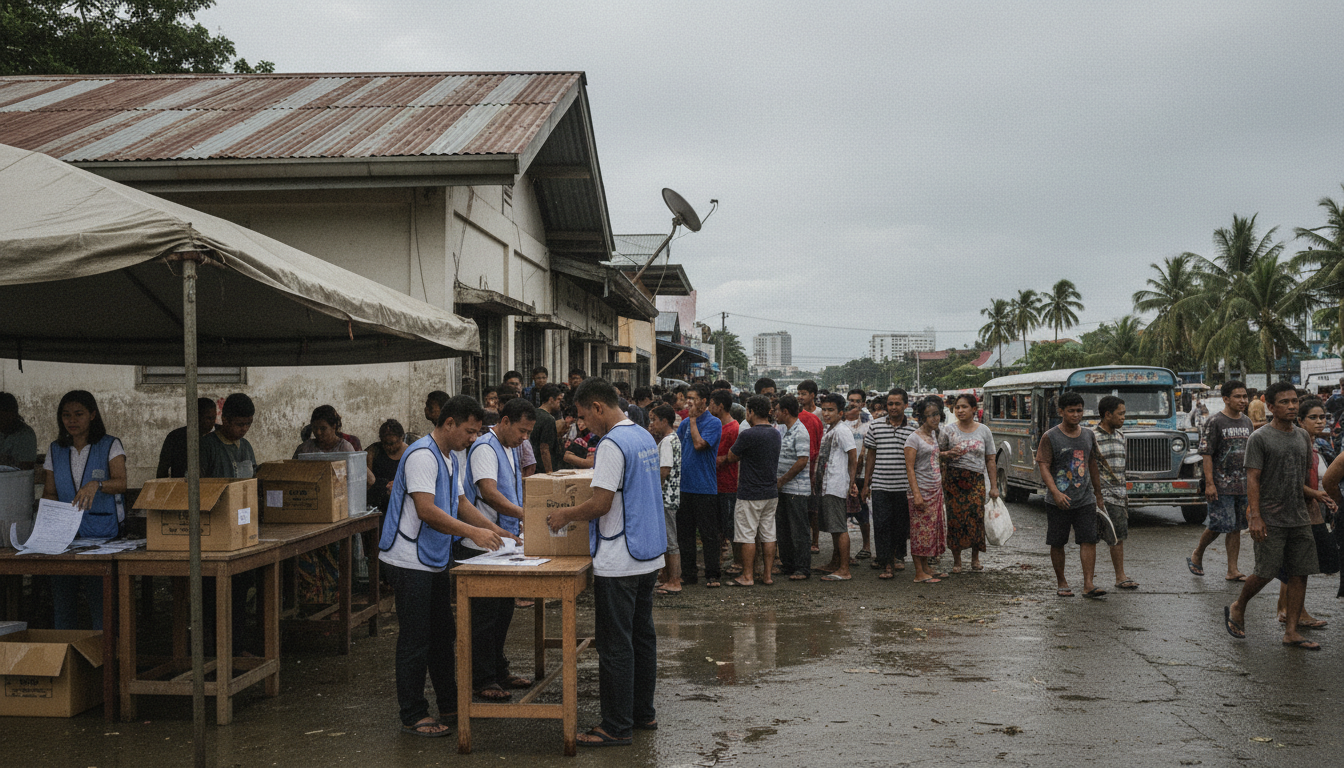
The elections in BARMM, held on 2026-09-14, garnered limited attention, according to Rappler's report on the same date. This relative obscurity was attributed to the continued dominance of political activity in Manila within the attention economy. Such a phenomenon indicates a consistent internal focus, where national political narratives frequently absorb or diminish the significance of regional events, even those with substantial implications for governance and security within the Philippine archipelago.
Historically, the Philippines has navigated a complex internal political landscape. The establishment and functioning of autonomous regions represent critical attempts to address long-standing grievances and promote internal stability. The effective governance and perceived legitimacy of such entities are contingent upon both local engagement and broader national acknowledgment. When the national political discourse, often characterized by the “antics and shenanigans of politicians” based in Manila, diverts focus from these sub-national processes, it can dilute the perceived importance of regional autonomy and potentially undermine its intended outcomes.
A vote buried in the noise.
The regional implications of such a dynamic are pertinent. While Southeast Asian nations increasingly articulate a shared vision for regional stability and economic integration, the internal political calibration of member states remains paramount. For Thailand and other states in the Asia-Pacific, understanding the granular political developments within neighbors, especially those concerning self-governance and internal conflict resolution, is vital. A stable, well-governed autonomous region, for instance, could contribute positively to broader regional security architectures by minimizing potential flashpoints and fostering economic growth in historically volatile areas. Conversely, an autonomous region whose processes are consistently overshadowed or de-prioritized by national political narratives risks internal dissatisfaction, potentially impacting its long-term viability and, by extension, regional equilibrium.
This pattern reflects a broader challenge across the Asia-Pacific: the difficulty in maintaining a sustained focus on sub-national governance initiatives when national political centers draw disproportionate media and public attention. The capacity of regional autonomous structures to deliver stability and development is directly influenced by the national political environment in which they operate. The present situation, where crucial regional elections are reported by Rappler as 'buried in the noise' of national politics, suggests that the capability for sustained, focused attention on local governance needs further recalibration within the Philippine political system. The unresolved tension lies in balancing the immediate demands of national political theater with the enduring requirements of building robust, legitimate regional governance structures, particularly in areas of strategic importance for the nation’s internal cohesion and external perception.
Sources
Newsletter
Pacific Daily
A curated briefing from Thailand, Asia-Pacific and the world.