Mexico’s Pitch for Stability Falters
A recent football defeat in Arizona highlights internal vulnerabilities within the Mexican national team, suggesting broader challenges beyond the sporting arena.
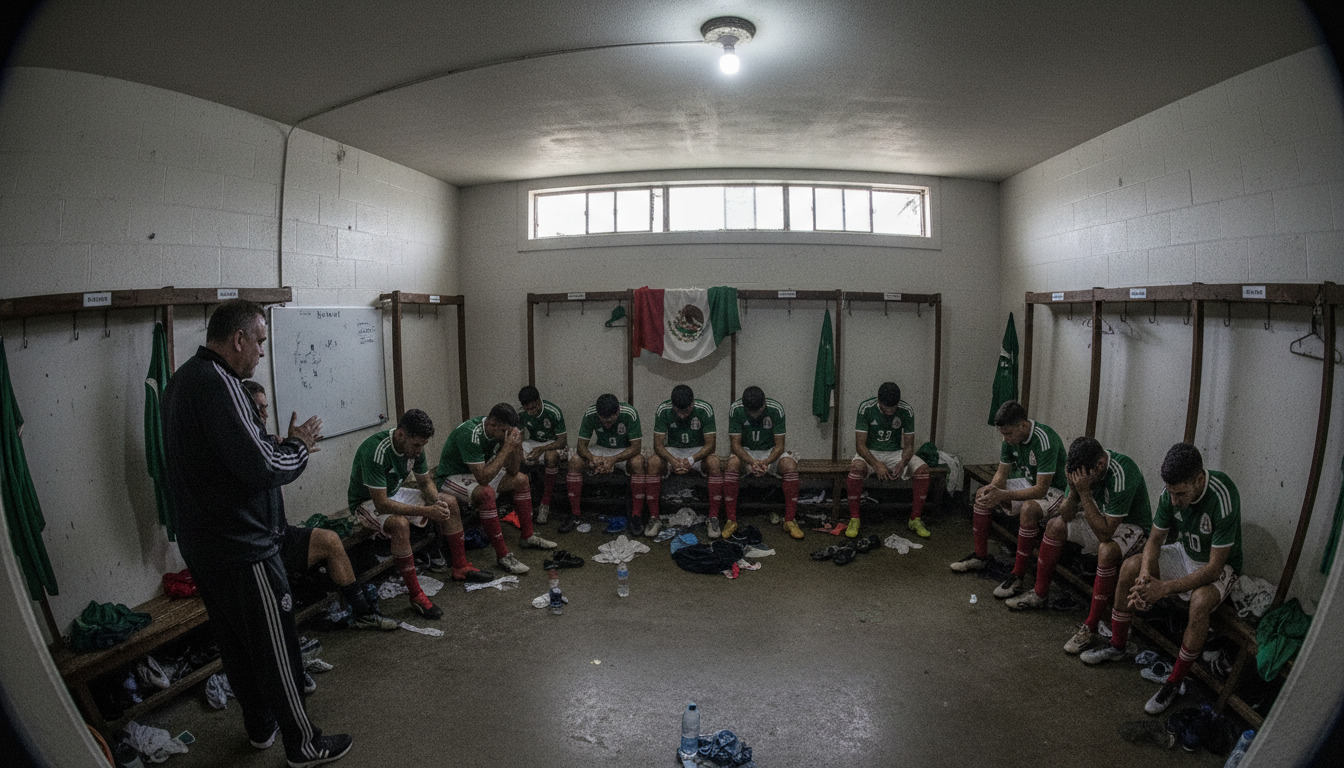
In Arizona, Mexico’s national football team, known as El Tri, experienced a significant 3-0 defeat against the United States on a Saturday night. This loss marked the first under coach Rafa Márquez, characterized by what Mexico News Daily described as a series of “blunders” and “self-inflicted wounds.” Goalie Raúl Rangel, fullback Mateo Chávez, and defender Diego Campillo were identified as key players whose errors contributed to the outcome. This performance has prompted calls for potential line-up adjustments ahead of a match against Chile. The broader implications of this match extend beyond the immediate disappointment of a sporting loss.
While the focus remains on the national team’s internal dynamics, the incident raises questions about resilience and performance under pressure. The team’s “face-plant” in a critical match, despite ongoing natural challenges like Hurricane Polo, described as one of the “strongest storms ever” churning off Mexico’s Pacific coast in September, and a Magnitude 7.3 earthquake striking off its coast in July, points to a period of heightened scrutiny. These natural events, while unrelated to football, form a backdrop against which any national setback is viewed. The errors on the field, which Mexico News Daily noted “might not cost them roster spots for next month’s Concacaf Nations League quarterfinals, but a loss of confidence is surely a possibility,” suggest a deeper fragility.
This event for Mexico, situated on the Pacific Ring of Fire, a region prone to seismic and weather events, draws attention to the interplay between national identity and public perception. The performance of El Tri, a team often seen as a symbol of national pride, can reflect or influence the national mood. In the Asia-Pacific region, many nations grapple with similar pressures, where the successes and failures of national symbols are intensely felt. The collective sigh over a flawed game in Arizona, therefore, serves as a point of observation for how nations manage both external and internal challenges. The question is not simply one of athletic prowess, but of how a public space — whether a stadium or a national stage — reveals underlying strains.
The defeat underscores that even seemingly robust systems can harbor vulnerabilities. For nations in the Pacific Rim, this sporting event, while geographically distant, echoes local realities where internal consistency and external resilience are constantly tested. Guillermo del Toro, the Mexican filmmaker, has offered recommendations for those going to Mexico, highlighting its cultural richness. The contrast between this cultural depth and the current sporting setback offers a study in national image versus internal struggles. The immediate consequence is uncertainty for Tuesday’s game against Chile. The longer-term implication is a challenge to rebuild confidence, not just within the team, but potentially across a broader public consciousness.
Sources
Newsletter
Pacific Daily
A curated briefing from Thailand, Asia-Pacific and the world.