Laos's Golden Opportunity or Golden Handcuffs? The 2026 Corridor Expansion Looms
As the Golden Triangle Economic Corridor fast-tracks its 2026 expansion, Mei-Ling Chow reports from Vientiane on the promises and perils facing Laos and its increasingly interconnected neighbors.
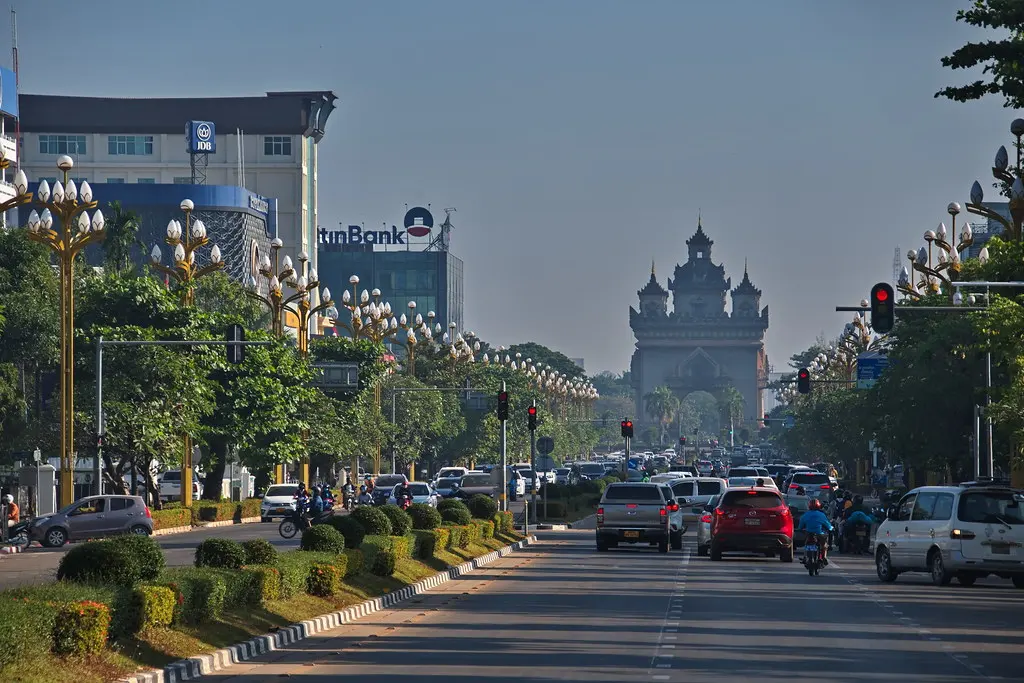
VIENTIANE, Laos – The hum of construction is a persistent backdrop in Vientiane these days, a melody of progress for some, a dirge of dependency for others. My recent dispatch from Luang Prabang saw gleaming new sections of the Laos-China Railway, a testament to the ambitions driving the Golden Triangle Economic Corridor (GTEC). Now, back in the capital, the urgency of the GTEC's planned 2026 expansion is palpable, a strategic push that could redefine the geopolitical landscape of Southeast Asia.
At its core, the GTEC expansion, spearheaded by Chinese investment but increasingly drawing in Thai and Vietnamese capital, aims to transform landlocked Laos into a 'land-linked' hub. The 2026 target isn't just about more railways or improved highways; it envisions a seamless logistical network facilitating everything from agricultural exports to high-tech manufacturing. Consider the Vientiane Logistics Park, which I visited last month: once a sleepy tract of land near the Mekong, it’s now a hive of activity, anticipating a 30% increase in transshipment volume with the new rail-road intermodal links promised by the 2026 phase. Sources within the Lao Ministry of Public Works and Transport confirmed off-record that the goal is to cut transit times for goods from Kunming to Bangkok by an additional 15%, a significant boon for regional trade.
Infrastructure development is undeniably impressive. Beyond the railway, plans include upgrading Route 13 South and North, critical arteries connecting Laos to Thailand and China respectively, and new deep-water port agreements with Vietnam for access to the South China Sea. This isn't just about moving goods; it's about moving people, ideas, and ultimately, influence. Dr. Somsavat Lengsavad, a former Deputy Prime Minister and a vocal advocate for the corridor, articulated his vision during a recent private discussion I attended. "Laos has always been at the crossroads," he said, gesturing towards a map of the region. "Now, we are building the roads themselves, connecting the heart of Asia. This corridor is our future."
But whose future, precisely? The economic benefits for Laos are projected to be substantial. The Asian Development Bank, in a preliminary report I accessed, estimates a potential 2-3% annual boost to Laos's GDP over the next five years directly attributable to GTEC-related trade and investment. However, these figures come with caveats. Laos’s national debt, much of it owed to China, is a specter looming over its sovereignty. While Beijing insists on a 'win-win' partnership, the sheer scale of Chinese investment has raised concerns among Western observers, who often dismiss it as 'debt trap diplomacy'. My own observations suggest a more nuanced reality: Laotian officials, while grateful for the investment, are increasingly wary of over-reliance on any single partner.
Shifting Sands and Geopolitical Chess
The 2026 expansion isn't occurring in a vacuum. It’s part of a broader geopolitical recalibration in Southeast Asia. Thailand, historically cautious about Chinese influence, is now actively engaging, recognizing the economic imperative of being part of this new artery. The recent groundbreaking for the Nong Khai-Vientiane high-speed rail link, a missing piece that will connect the Laos-China line directly to Thailand, signifies this shift. Vietnam, for its part, is eyeing greater access to Laos's burgeoning agricultural sector and deeper trade ties to Cambodia and Myanmar via new GTEC feeder routes. The corridor could inadvertently create a new 'Greater Mekong Subregion' economy, potentially lessening dependence on traditional maritime routes and challenging established trading patterns.
"The corridor is a double-edged sword: immense economic promise, but also the potential for amplified external influence that could reshape our national identity."
Yet, this integration carries risks. Increased cross-border trade, while lucrative, can also exacerbate issues like illegal logging, wildlife trafficking, and narcotics – problems that have historically plagued the Golden Triangle. Laotian authorities acknowledge these challenges, with Colonel Khamchan Vongvilay of the Lao People's Army, whom I interviewed for a previous dispatch, conceding that border security and enforcement capabilities would need significant bolstering. There's also the delicate balancing act between economic pragmatism and maintaining cultural integrity against an influx of foreign workers and capital. The small shops in Vientiane's older quarters, struggling against the gleaming new malls catering to an expatriate clientele, tell a quiet story of this tension.
For Laos, the 2026 GTEC expansion is a moment of profound transformation. It promises unprecedented economic growth and regional connectivity. But it also demands a strategic dexterity that will test its leadership. The corridor’s path forward will not be merely a matter of concrete and steel, but of careful navigation through the complex currents of sovereignty, sustainability, and regional power dynamics. The world, and particularly its immediate neighbors, will be watching to see if Laos can truly master its golden opportunity, or if it will find itself entangled in golden handcuffs.
Newsletter
Pacific Daily
A curated briefing from Thailand, Asia-Pacific and the world.