Kiribati: The Limits of Moral Leadership Amid Economic and Geopolitical Currents
While spiritual guidance garners attention, Kiribati faces persistent challenges demanding quantifiable solutions beyond inspiration.
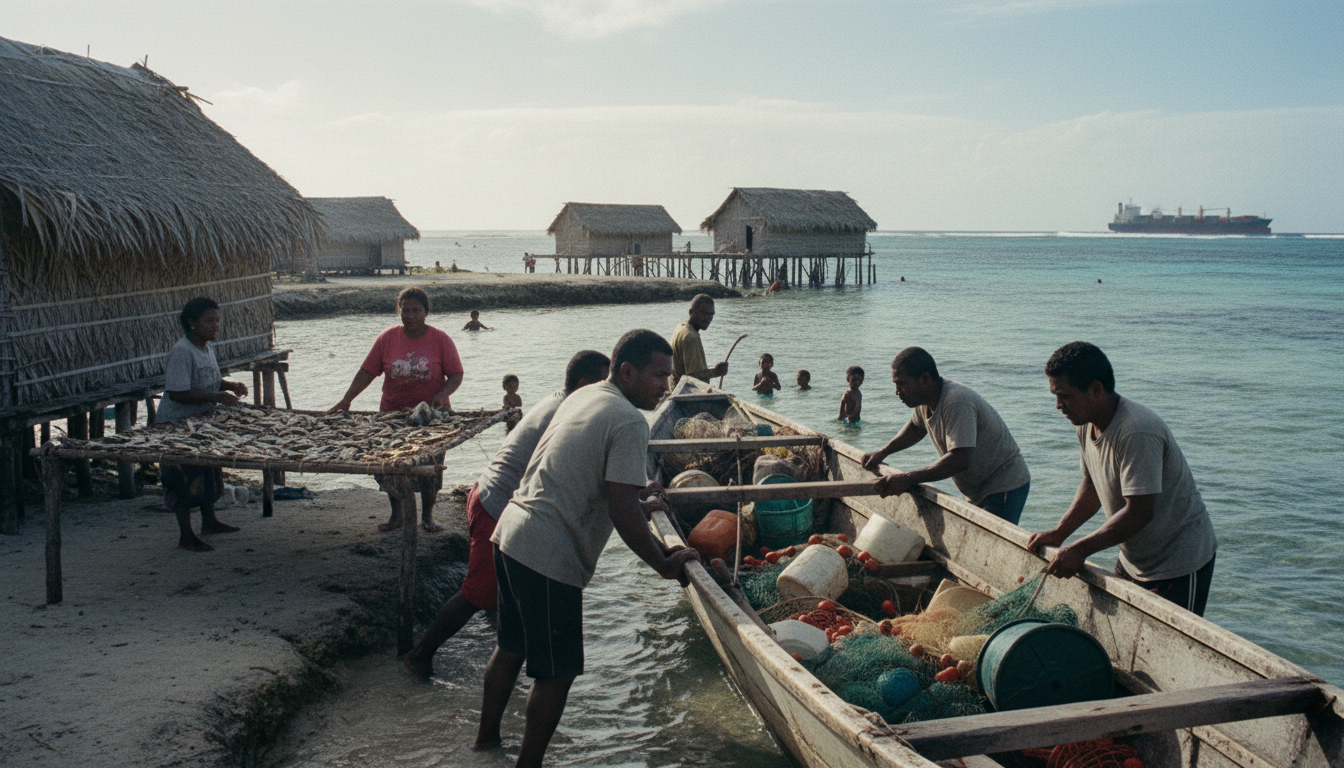
The report by Islands Business on September 17, 2026, highlighting a Kiribati priest’s role in inspiring Pacific youth, offers a narrative of moral leadership within the region. However, a data-driven examination of Kiribati's broader context suggests that such influence, while culturally significant, does not directly address the nation's pressing economic and environmental vulnerabilities.
Kiribati's economic landscape continues to grapple with fundamental issues. In September 2026, the United Nations Development Programme launched a Virgin Coconut Oil Initiative, aiming to strengthen outer island livelihoods. This initiative, while positive, underscores the reliance on primary resource diversification as a developmental strategy. The nation's financial stability remains dependent on such programs, rather than the internal generation of significant new economic activity. The focus on livelihoods, as opposed to large-scale industrial or service sector growth, indicates the limited scope of current economic expansion. The question remains whether these localized initiatives can sufficiently buffer a national economy vulnerable to external shocks and the escalating costs associated with climate change.
Environmentally, Kiribati faces existential threats that transcend spiritual inspiration. The Guardian reported in June 2026 that rising sea levels threaten Kiribati’s World Cup dream, a specific cultural aspiration, but more broadly, the habitability of its islands. This ongoing threat dictates a need for substantial, quantifiable infrastructure investment and adaptive strategies, which are capital-intensive. The removal of WWII explosives in August 2026 from Pacific battlegrounds, as reported by ABC News, serves as a reminder of historical burdens that often divert resources from contemporary development needs. This past environmental cleanup, while necessary, does not contribute to proactive climate resilience.
Geopolitically, Kiribati operates within a complex and competitive regional environment. ABC News reported in September 2026 that Pacific leaders at a summit failed to reach unanimous condemnation of China’s ballistic missile launch. This highlights a divergence of interests and priorities among Pacific nations, which could fragment collective action on shared challenges. Australia’s Prime Minister Albanese, as ABC News noted in August 2026, was anticipated to face a "bust-up" at the Pacific Islands meeting. This indicates that even discussions among allies or partners are fraught with potential disagreement, impeding a cohesive regional response to issues like climate financing or economic aid distribution.
The emphasis on a priest's inspirational role, while notable, appears disconnected from these measurable economic and geopolitical realities. Moral leadership does not generate GDP, construct sea walls, or directly negotiate international aid packages. The sustained viability of Kiribati will depend on tangible economic development indicators and robust geopolitical engagement, not solely on intangible influences. The effectiveness of any spiritual or community leadership must ultimately be tested against its ability to foster concrete, measurable improvements in national resilience and economic independence. Without this, the narrative risks becoming an optimistic diversion from the underlying data.
Sources
Newsletter
Pacific Daily
A curated briefing from Thailand, Asia-Pacific and the world.