Institutional Authority Faces Player Leverage in Global Chess Governance
FIDE's disciplinary referral of Magnus Carlsen exposes structural vulnerabilities across tournament sanctioning and commercial partnerships.
SINGAPORE
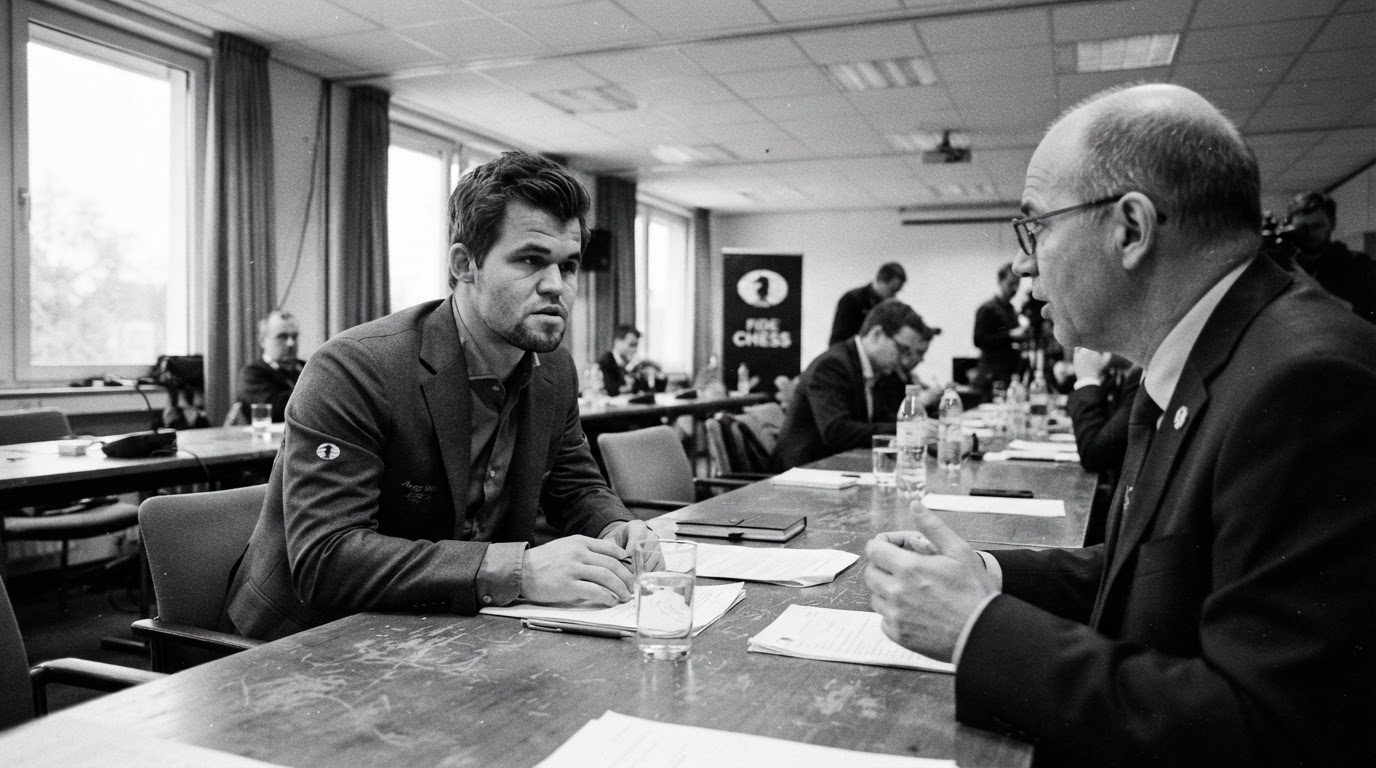
Governance bodies in elite competition rely on contractual predictability, yet individual marquee assets frequently test regulatory limits. On Saturday, world chess governing body FIDE confirmed it referred Norwegian grandmaster Magnus Carlsen to its Ethics and Disciplinary Commission, known as the EDC. The referral followed three unplayed fixtures during a pilot event for the Total Chess World Championship Tour in Budapest, where Carlsen failed to appear for scheduled matches against Vladislav Artemiev.
The administrative dispute targets unfulfilled fixtures in a bracket contest. FIDE criticised Carlsen for missing three scheduled encounters against Artemiev while their 17th-place playoff remained undecided. The Norwegian forfeited both rapid games on the opening day of the fixture and subsequently conceded a fast classic contest on the following day.
Institutional federations operate on the assumption that ranked competitors will honour tournament brackets regardless of placement. When a marquee figure withdraws from lower-tier classification rounds, that assumption breaks down.
Governance Friction in Commercial Circuits
Sanctioning authorities depend on established stars to secure broadcast credibility and private investment for experimental schedules. In its public rebuke, FIDE articulated the friction between star recognition and commercial integrity:
Given GM Carlsen’s stature and his significant role in promoting chess, such actions are particularly concerning, as they may damage the reputation of competitions and demonstrate a lack of respect for opponents, spectators, and tournament partners,
The statement directly links competitive compliance to external stakeholder confidence. Broadcast distributors and commercial backers purchase institutional tournaments on the promise of guaranteed appearances by elite figures. When a player bypasses a 17th-place playoff, the monetary and promotional value promised to tournament partners degrades immediately.
Traditional federation rules treat all scheduled board appearances equally under standard regulatory sanctions. Commercial realities, conversely, accord disproportionate leverage to individual players whose presence drives audience interest across international markets. While regulatory commissions possess formal powers to issue fines or formal reprimands through bodies like the EDC, applying harsh penalties against a sport's primary commercial asset risks alienating the figure organizers need most.
Limits of Disciplinary Deterrence
Administrative oversight must balance institutional deterrence against competitive disruption. Carlsen previously demonstrated his comfort operating outside traditional federation structures, having attended diverse events such as the Esports World Cup closing ceremony at the Grand Palais in Paris, France, in August 2026. Global competitive circuits increasingly offer alternative platforms for prominent talent, weakening the exclusivity historically held by established governing bodies.
Disciplinary proceedings face clear mechanical limits. FIDE has framed the Budapest forfeits as an issue of professional respect and brand damage. Yet governing bodies cannot easily compel performance in non-championship tiers without addressing player fatigue and competitive scheduling incentives.
Enforcing regulatory attendance through ethics panels highlights an ongoing administrative contradiction. If disciplinary mechanisms penalize elite talent without restructuring incentive structures for consolation matches, federations risk widening the distance between formal governance and commercial viability. The resolution of the Budapest referral now rests on whether the EDC treats missed classification matches as routine misconduct or an unaddressed structural conflict.
Sources
Newsletter
Pacific Daily
A curated briefing from Thailand, Asia-Pacific and the world.