Haiti's Environmental Decay and the Absence of the State: A Structural Analogy for Asia-Pacific
The ongoing destruction of fruit trees for charcoal in Haiti, driven by gang control and state collapse, illuminates how power vacuums enable environmental destruction and shift decision-making away from formal governance.
SINGAPORE
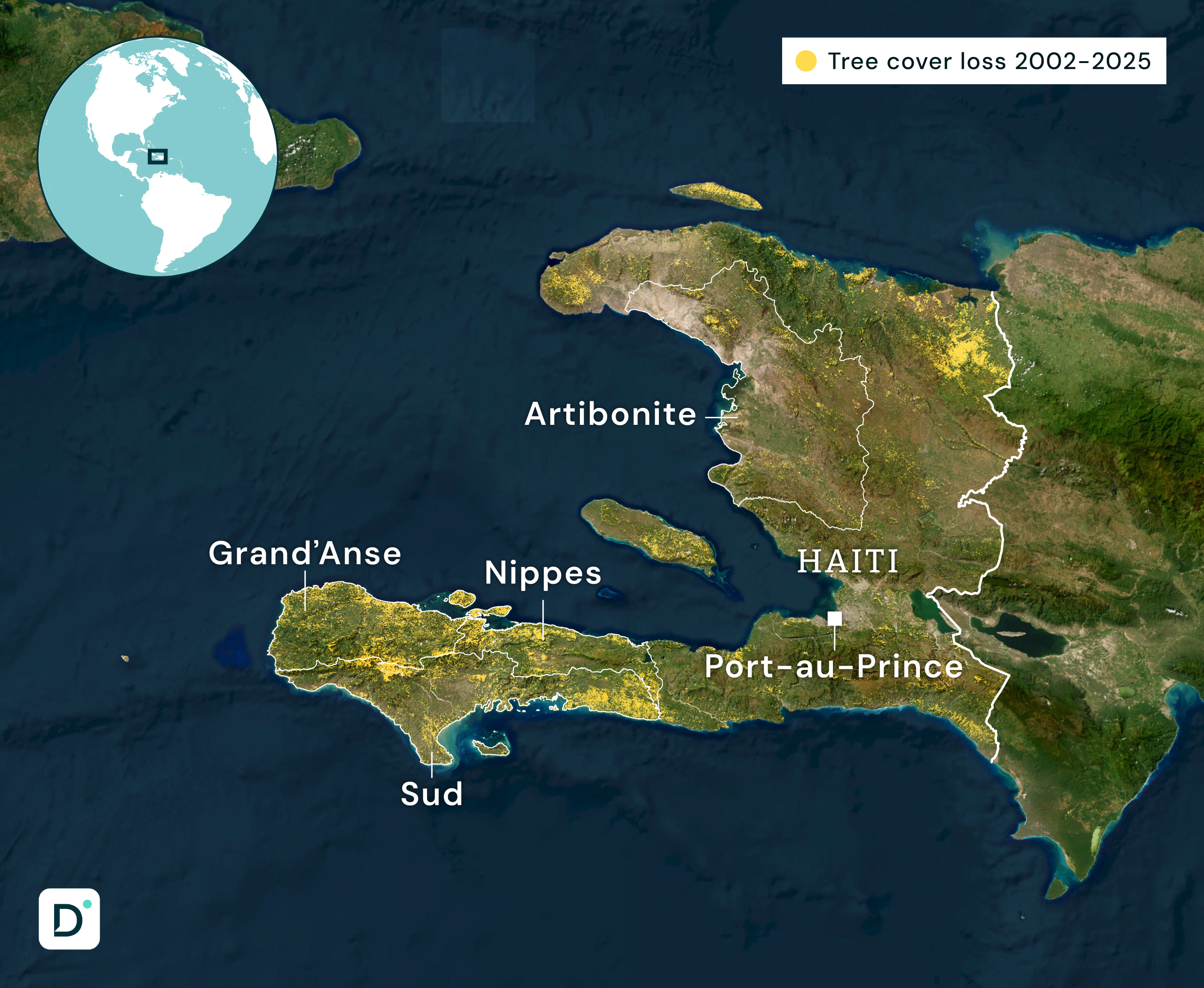
In Haiti, a nation grappling with the aftermath of a hurricane and pervasive violence, the control exerted by armed gangs over significant portions of the country has precipitated an environmental crisis. Reports from China Dialogue Ocean on September 18, 2026, indicate that abandoned Haitians are resorting to felling fruit trees to produce charcoal. This activity, occurring in the absence of effective state governance, highlights a fundamental shift in decision-making power regarding natural resources.
According to Haiti’s Bureau of Mines and Energy, wood and charcoal constituted more than 75% of the country’s energy needs in 2023. While this statistic predates the most recent surge in gang activity, it establishes a pre-existing dependency on wood fuel. The current dynamic, where the state’s inability to project authority into these areas allows for the uncontrolled exploitation of critical natural assets, suggests a structural breakdown. The decision over which trees are cut, and by whom, has effectively been ceded from any central authority to local, informal actors, often operating under duress or within economies controlled by non-state armed groups. This is not merely an environmental degradation issue; it is a symptom of political fragmentation and the transfer of sovereign decision-making power from formal institutions to emergent, often destructive, forces.
While Haiti's immediate circumstances are distinct, the underlying principle — that state weakness or absence creates vacuums that can be filled by forces inimical to sustainable resource management — holds relevance for the Asia-Pacific. The region, with its diverse political landscapes and varying degrees of state capacity, faces similar structural risks. From illegal logging in remote border areas to unregulated fishing in disputed waters, the breakdown of governance, whether due to conflict, corruption, or ineffective enforcement, permits exploitation that formal frameworks aim to prevent. The specific actors and resources may differ, but the mechanism of resource predation enabled by a power vacuum remains consistent. The question for the Asia-Pacific is not whether such pressures exist, but how effectively state structures can withstand them.
Some might argue that such a comparison is inexact, pointing to the specific, extreme nature of Haiti's internal conflict and humanitarian crises, which are not replicated across the entire Asia-Pacific. It is true that the scale of outright state collapse and widespread gang control seen in Haiti presents a dire situation not immediately analogous to many Asia-Pacific nations. However, the structural analogy focuses on the *mechanism* of resource degradation driven by governance gaps, rather than the specific *drivers* of those gaps. Even in relatively stable parts of Southeast Asia, localized governance failures or institutional weaknesses have demonstrably led to unsustainable practices, such as deforestation for agricultural expansion or illicit mining operations. The Haitian case provides a stark illustration of the extreme consequences when such structural weaknesses are left unaddressed.
The critical constraint that remains unresolved, both in Haiti and in potentially vulnerable parts of the Asia-Pacific, is the restoration and maintenance of robust, legitimate state authority capable of enforcing environmental regulations and ensuring equitable resource access. Without a functioning state that can assert control and provide viable economic alternatives, the imperative of immediate survival will continue to override long-term ecological sustainability, transferring environmental decision-making to the most immediate, and often destructive, actors.
Sources
Newsletter
Pacific Daily
A curated briefing from Thailand, Asia-Pacific and the world.