Gulf Cup Final Flight Rush Highlights Gulf Mobility Shifts, With Asia-Pacific Implications
The immediate sell-out of charter flights to Jeddah for the Gulf Cup final points to evolving travel capabilities and priorities within the Gulf, suggesting broader regional shifts that may affect Asia-Pacific connectivity.
SINGAPORE
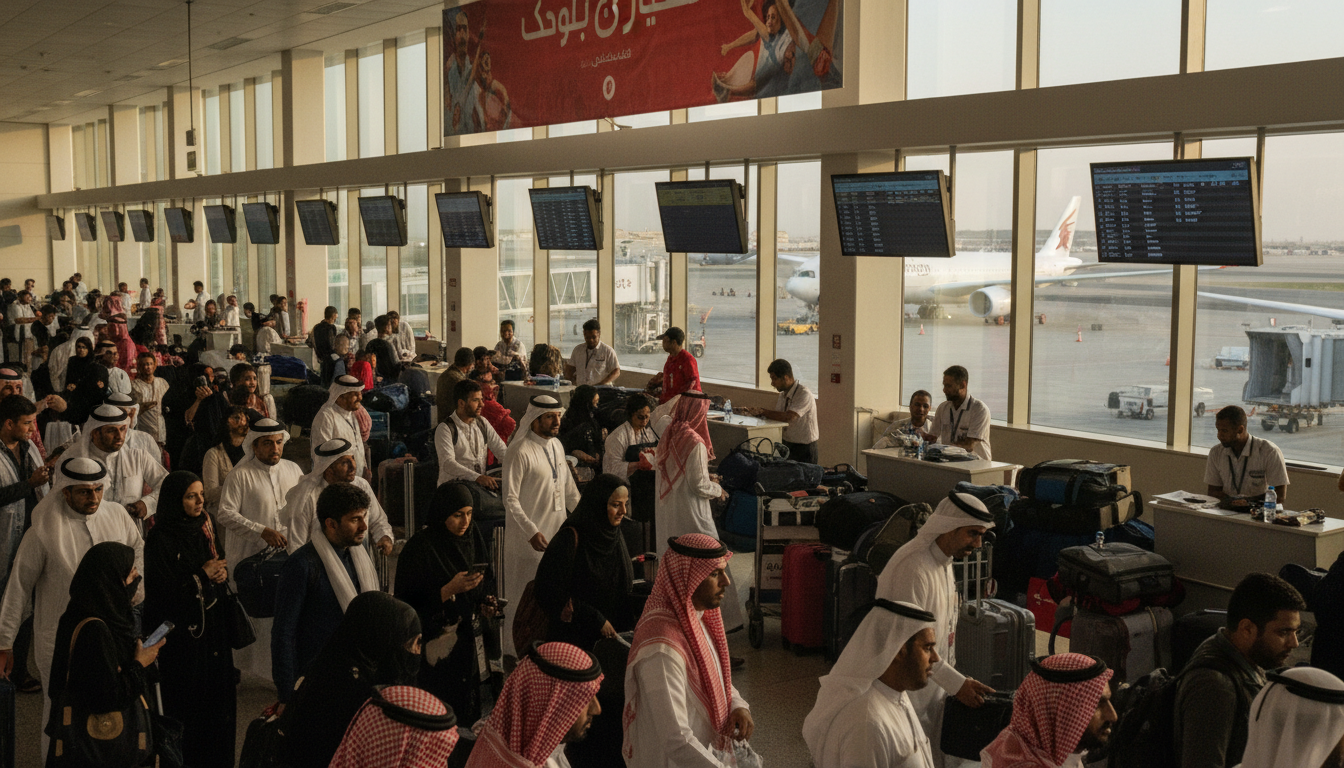
The rapid demand for charter flights to Jeddah, with seats for six aircraft selling out in less than 10 minutes for the Gulf Cup final, illustrates more than just enthusiasm for soccer. This event reflects a convergence of factors shaping regional travel patterns, with economic and political dimensions that resonate with wider Asia-Pacific trends.
Six aircraft were arranged by the United Arab Emirates Football Association to transport supporters to see the UAE play Saudi Arabia on October 8, 2026. Such swift mobilizations for major events indicate both developed logistical capabilities and a willingness to facilitate cross-border movement for specific groups. This ease of movement, while specific to a sporting event, stands in contrast to past regional tensions, such as the Saudi-U.A.E. rift in January 2026, which impacted tourism to a Yemeni island. The immediate implications are regional, highlighting intensified economic and cultural exchange within the Gulf.
Shifting Travel and Strategic Priorities
The ability to move thousands of fans so quickly suggests significant investment in air travel infrastructure and coordination between the nations involved. While the immediate context is sports, this phenomenon aligns with broader changes in how people and capital move across borders. It indicates a growing domestic and regional travel market, potentially reducing reliance on traditional long-haul travel.
For Asia-Pacific, these shifts present both opportunities and challenges. As Gulf nations strengthen their internal connectivity and develop their own event tourism, this could influence leisure and business travel from and to the Asia-Pacific region. There is potential for increased stopover tourism through established hubs, as more individuals transit the region for events. Conversely, a stronger internal focus within the Gulf could also mean a reallocation of travel budgets, potentially impacting the flow of outbound tourism from these nations to destinations further in Asia-Pacific. The political and economic currents enabling such swift cross-border movements, including potential defense pacts proposed by Turkey with Pakistan and Saudi Arabia in August 2026, suggest a complex and evolving geopolitical environment. The observed ease of travel for the Gulf Cup, while specific, occurs within this larger strategic recalibration.
The rapid uptake of flights for a sporting event, therefore, serves as an indicator of changing regional dynamics. It reflects not only the passionate engagement of sports fans but also maturing infrastructure and evolving political will to facilitate rapid, large-scale mobility within the Gulf. This movement, while focused on a football match, offers a lens through which to observe deeper currents of integration and strategic repositioning that will continue to shape Asia-Pacific's engagement with the Gulf.
Sources
Newsletter
Pacific Daily
A curated briefing from Thailand, Asia-Pacific and the world.