Falling Poles in Bangkok Highlight Neglected Urban Infrastructure Risk
An incident in Sathon district, where four power poles fell after rain and strong winds, reflects wider concerns for daily life and city resilience.
BANGKOK
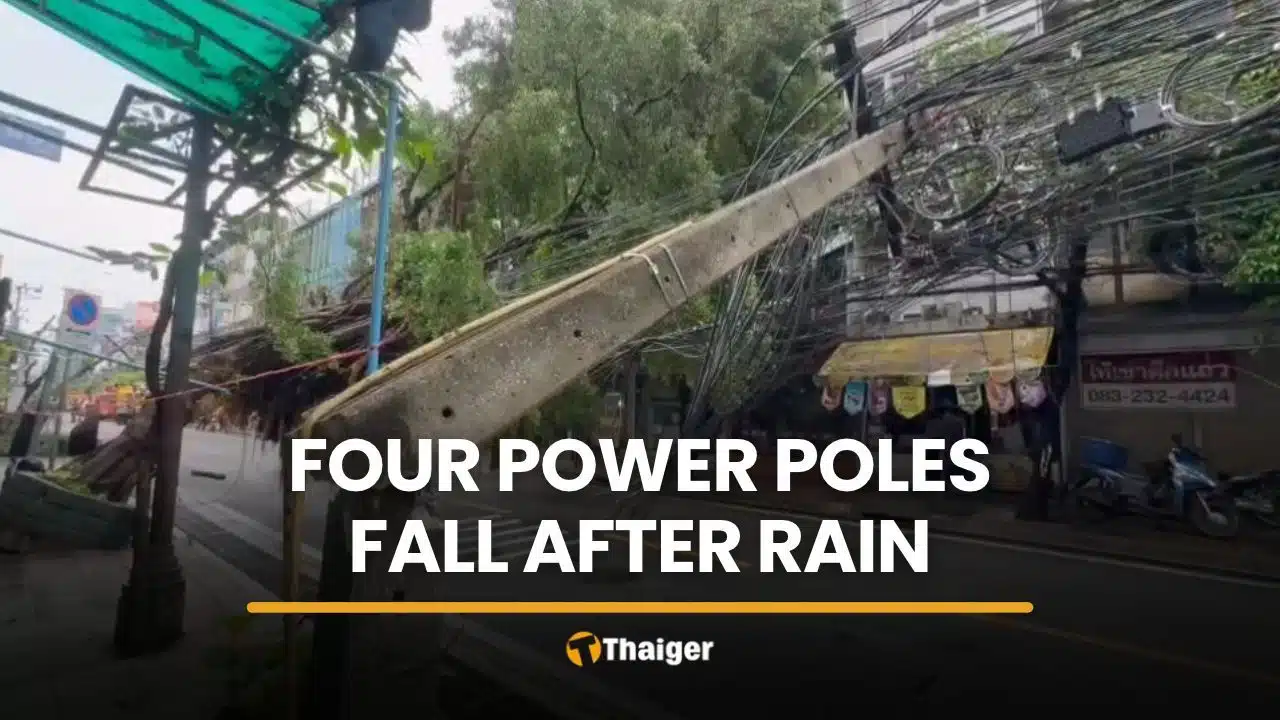
Four power poles collapsed in Bangkok’s Suan Phlu area on October 5. They sparked and produced a loud sound before authorities cut power. This incident, occurring around 1pm in Sathon district, followed heavy rain and strong winds, according to residents who witnessed the poles leaning then falling. Electricity officials, disaster prevention personnel, and police from Thung Maha Mek Police Station responded, closing off the affected section and redirecting traffic.
While the immediate impact was limited to a localized power outage and traffic disruption, the event points to a larger, recurring challenge for urban residents. Daily life in a major city like Bangkok depends on reliable infrastructure. When foundational elements such as power poles fail due to weather, it highlights potential vulnerabilities that directly affect household routines and local commerce. The sequence of events — rain and winds preceding the collapse — suggests an infrastructure potentially unable to withstand common seasonal conditions.
The swift response by officials to secure the area and manage traffic addressed the immediate hazard. However, the occurrence itself raises questions about the maintenance and stress capacity of existing urban utilities. For residents, such failures translate into inconvenience, safety concerns, and potentially lost income from disrupted businesses. The incident in Sathon, though confined, suggests that similar events could recur across the city, particularly as weather patterns bring more intense rainfall or wind. The financial implications for the utility provider and the city are also worth considering.
Repairs and response efforts incur costs, which are ultimately borne by the system or its users. More frequent incidents could strain maintenance budgets and divert resources from other urban development projects. From a human-scale perspective, repeated disruptions erode public confidence in urban services and can compel individuals and small businesses to adapt, often at their own expense, to a less predictable environment. This localized event underscores the broader need for a proactive approach to infrastructure resilience.
The city's ability to maintain essential services under pressure is crucial for its economic and social stability. As urban populations grow and climate patterns shift, the robustness of infrastructure becomes an increasingly important factor in everyday costs and quality of life. The Sathon power pole incident, while resolved, illustrates how the hidden costs of aging or inadequate infrastructure can surface unexpectedly, impacting monthly budgets and routine activities.
Sources
Newsletter
Pacific Daily
A curated briefing from Thailand, Asia-Pacific and the world.