Evaluating the Enduring Resonance of Western Classical Music in Southeast Asia
A recent Singapore performance by violinist Augustin Hadelich, lauded by local media, offers a lens into who benefits from and who underwrites the region's engagement with international classical music.
SINGAPORE
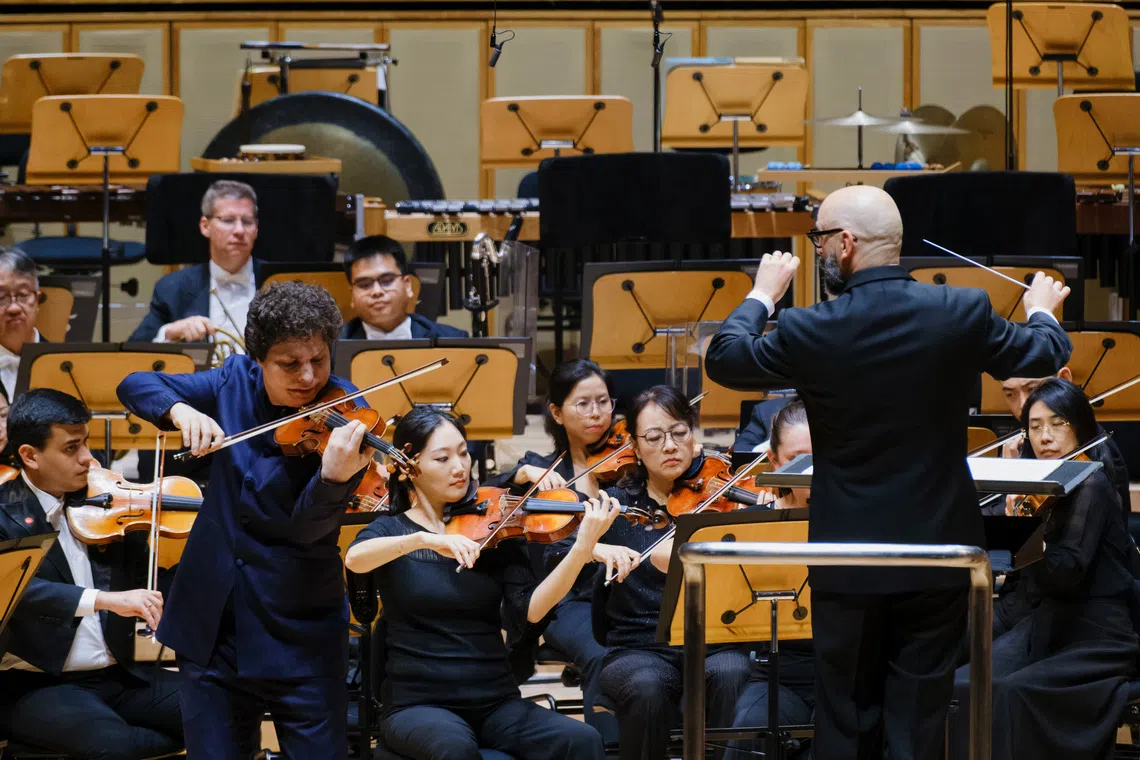
Violinist Augustin Hadelich recently performed with the Singapore Symphony Orchestra, featuring Tchaikovsky’s Violin Concerto. The program also included works by local composer Zechariah Goh, Bartok, and Ravel. The Straits Times Life, reporting on September 28, 2026, described Hadelich’s Tchaikovsky as “elegantly suave,” noting his “brilliant technique” and “lovely violin tone.” This observation of technical mastery in a high-profile Western classical music event raises questions about the sustained investment in and reception of such cultural forms across Southeast Asia.
Events like these, held at venues such as Singapore’s Esplanade Concert Hall and Victoria Concert Hall, frequently draw media attention and, presumably, audiences. The report highlights the “triumphant solo recital” delivered by Hadelich, suggesting a successful engagement with the Singaporean public. Yet, the costs associated with bringing international 'superstars' and orchestras to the region are substantial. These include performance fees, venue rentals, and extensive marketing. The financial and logistical support required often originates from government subsidies, corporate sponsorships, and individual patrons, reflecting a strategic allocation of resources. While media celebrate artistic excellence, the economic infrastructure enabling such performances, and who ultimately bears its expense, remains less frequently discussed.
From a broad perspective, these performances introduce diverse musical experiences to local audiences and provide platforms for collaboration, as seen with the inclusion of Zechariah Goh’s Dream(e)scapes. They also contribute to a city’s cultural reputation, potentially attracting arts tourism and international recognition. Yet, an emphasis on Western classical music, particularly on acclaimed international soloists, suggests a specific cultural hierarchy. This focus can overshadow the development and promotion of indigenous musical forms or local artistic talent, which may struggle for comparable funding or exposure. The choice to invest significantly in a performance like Hadelich’s reflects an institutional preference for established global cultural products, often perceived to carry prestige.
Arguments for supporting these events often centre on their educational value and their ability to elevate local standards. However, a counterargument would point to the opportunity cost: resources directed towards international classical acts are resources not allocated to local arts education initiatives, community music programs, or the preservation of traditional Southeast Asian musical heritage. The Straits Times’ focus on Hadelich’s virtuosity, while valid from a critical standpoint, does not explicitly address wider implications for local musicians or the regional arts ecosystem. This dynamic prompts consideration of who genuinely benefits from this cultural exchange: is it primarily international artists and their agents, the local elite audience, or does it meaningfully enrich the broader public and local artistic community?
The sustained presence and promotion of Western classical music in Southeast Asia indicate a complex interplay of cultural aspirations, economic realities, and institutional priorities. While individual performances may be met with critical acclaim, ongoing investment in such forms carries both direct financial costs and less visible cultural costs for the region’s diverse artistic landscape. A full understanding requires moving beyond performance reviews to examine the funding mechanisms and their broader societal effects.
Sources
Newsletter
Pacific Daily
A curated briefing from Thailand, Asia-Pacific and the world.