European Audits Confront the Hard Economics of Cambodian Factory Greening
Technical reviews can calculate industrial efficiency, but supplier balance sheets determine whether decarbonisation actually happens.
SINGAPORE
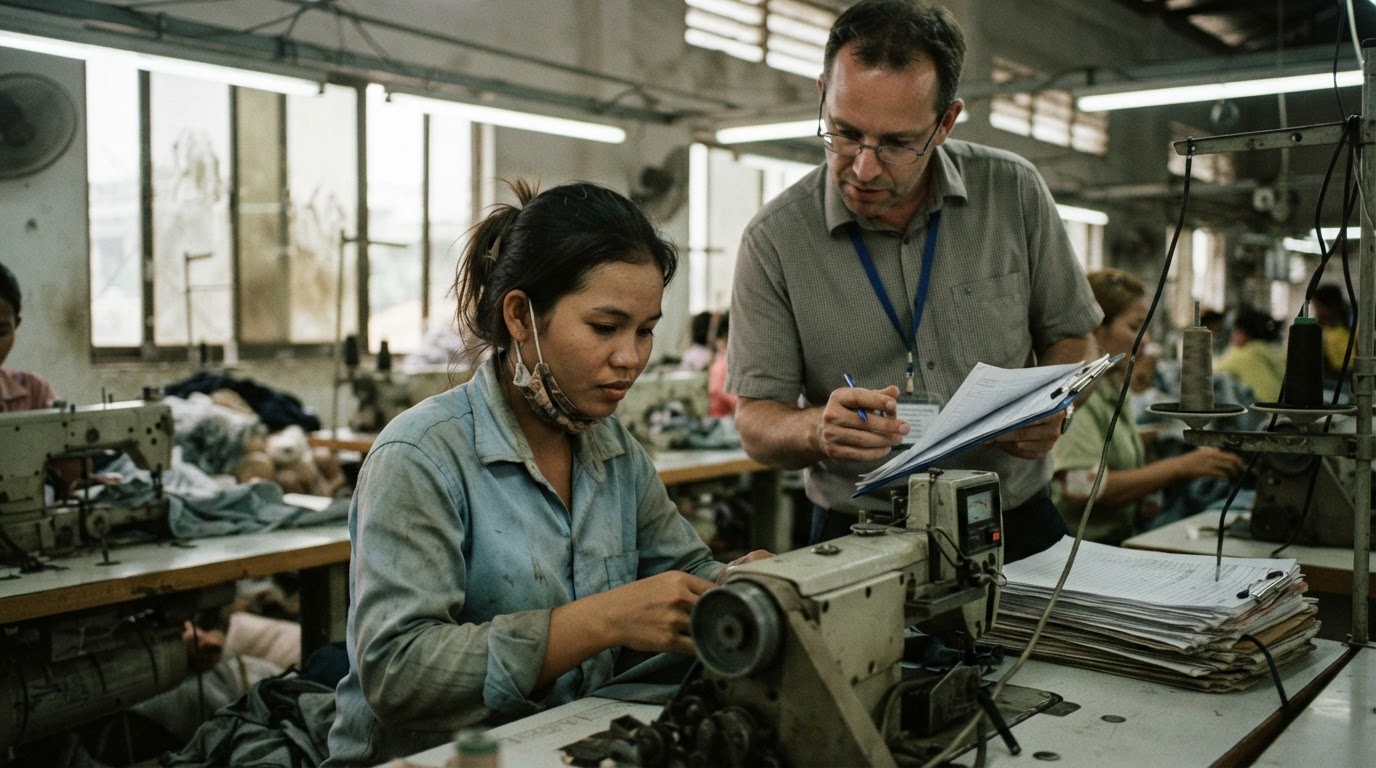
Auditing a factory floor measures energy waste, but measuring waste does not finance its removal. Cambodia and the European Union have set a schedule to conduct 210 energy audits across garment, footwear, and travel goods facilities, rolling out a scheme designed to help manufacturing suppliers identify and fund power efficiency upgrades. Officials outlined the initiative in Phnom Penh following a preparatory trajectory that began when the European Union established a 6 million euro budget, equivalent to 6.5 million dollars, in March 2024. Execution relies on an operational grant finalised in June 2026, allocating 2.94 million euros, or 3.2 million dollars, to the United Nations Industrial Development Organization to oversee plant assessments and technical workforce training through May 2028.
European Commission records frame these assessments as the frontline of supply chain compliance. European buyers face rising legislative scrutiny over environmental impacts embedded within imported apparel, passing statutory pressure downward to contract manufacturing hubs across Southeast Asia. Yet diagnostic programs encounter a fundamental balance sheet reality once auditors depart. An earlier European Union-backed project identified 20 million dollars in potential upgrades across just 50 Cambodian garment factories. Scaling that ratio across hundreds of plants exposes an immediate capital gap. Diagnostic advice clarifies thermodynamic loss, but factory owners operating on low margins cannot justify capital expenditure simply because an international partner audited their machinery.
The Capital Deficit
Commercial incentives determine whether technical findings become industrial reality. Garment assemblers operate under intense price competition from regional peers, including Indonesia, where trade agreements with Western blocs reshape procurement calculations. When European brands demand reduced emissions profiles from their sourcing footprint, they routinely decline to absorb higher unit costs or underwrite structural equipment replacements. Factory operators consequently face a lopsided proposition: absorb debts to retrofit boilers, lighting, and electrical feeds, or risk falling out of brand procurement tiers.
An earlier project identified 20 million dollars in potential upgrades across just 50 factories, illustrating the funding gap facing export manufacturers.
Publicly funded assistance helps bridge advisory hurdles, but donor allocations remain tiny beside commercial retrofit requirements. The 2.94 million euro grant awarded to the United Nations Industrial Development Organization funds diagnostics and instructional seminars rather than heavy capital installations. Training local engineers and mapping shop-floor power leakage addresses genuine operational deficiencies, yet commercial banks in Phnom Penh rarely extend long-term concessionary credit based solely on energy audit certificates. Unless international development agencies and European authorities mobilise concessional lending mechanisms that lower local borrowing costs, technical roadmaps risk sitting idle inside corporate ledgers.
Structural Leverage and Sourcing Shifts
Cambodian industrial planners rely on apparel and light manufacturing exports to sustain formal urban employment and balance external accounts. Geopolitical instability along regional borders and fluctuating Western retail demand have already tested export margins. If compliance standards tighten without matching pools of transition capital, smaller domestic suppliers face consolidation or outright disqualification from high-value distribution networks. Larger multi-plant conglomerates may manage the capital outlays, concentrating sector output into fewer hands while marginal facilities exit the European export stream.
The outcome across 210 export facilities depends on procurement terms rather than engineering surveys. If European apparel conglomerates provide guaranteed multi-year purchase volumes to suppliers completing retrofits, commercial financing follows. Without those structural commitments, capital remains the unresolved constraint, leaving suppliers with documented plant inefficiencies they cannot afford to fix.
Sources
Newsletter
Pacific Daily
A curated briefing from Thailand, Asia-Pacific and the world.