EU climate response reveals shifting global dependencies for Asia-Pacific
Brussels' push for a new firefighting fleet after a deadly summer points to a European internal focus that contrasts with its strategic outreach to the Pacific Rim.
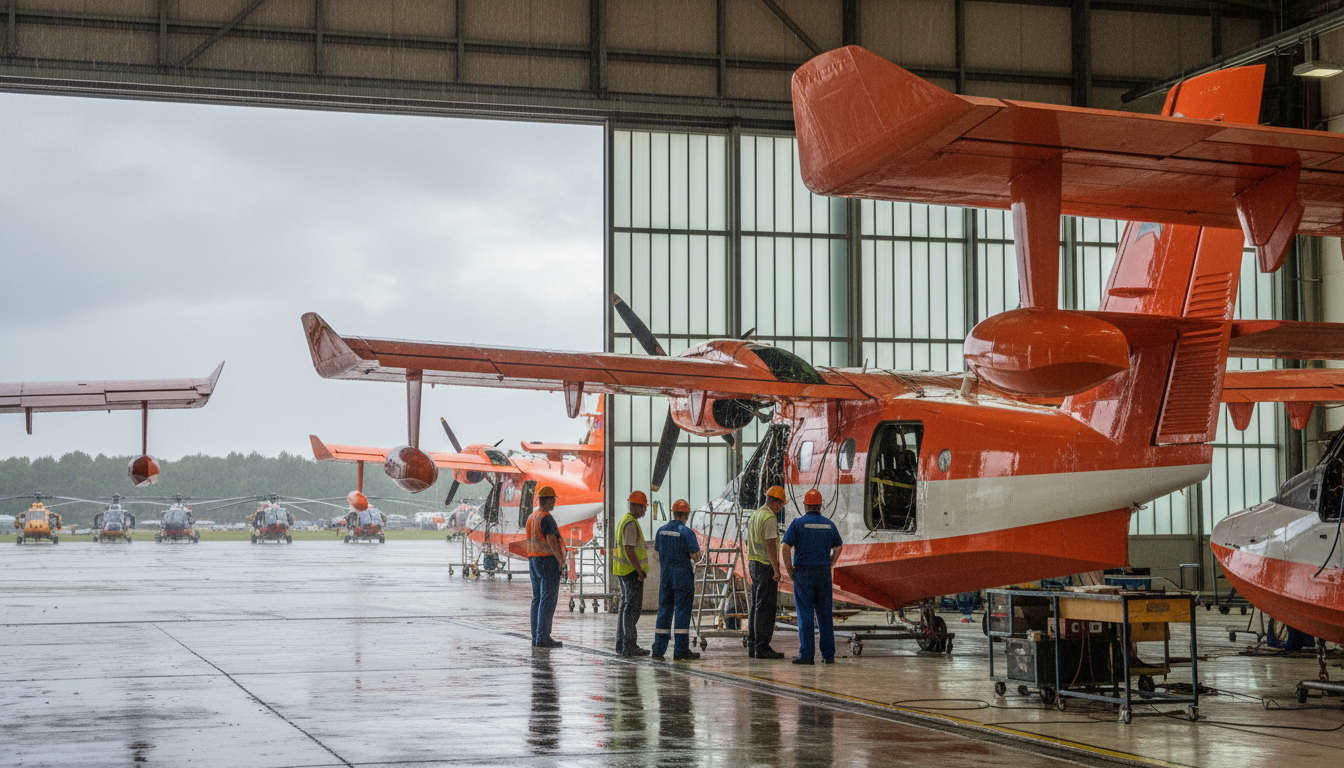
The European Union’s proposed response to a recent severe heatwave, which killed tens of thousands and dried up rivers from Portugal to Hungary, highlights an internal focus on climate resilience. European Commission President Ursula von der Leyen stated on Wednesday, September 16, 2026, that the summer's instability necessitated a new European Heatwave Plan and a future European firefighting fleet. The EU currently operates a small fleet while coordinating a network of national aircraft, water trucks, and volunteers across its 27 member states.
This commitment to build a new firefighting fleet, announced after a summer described by von der Leyen as a “summer of truth” that spared almost no part of the continent, implies a significant capital allocation. The structural analyst would question whether this internal infrastructure development aligns with or diverges from the EU’s broader engagement with the Pacific Rim. The EU has actively pursued trade agreements, exemplified by its 2017 deal with Japan, and has seen proposals for further integration, such as Sweden’s plan to propose EU membership in the CPTPP free trade group by 2025. This dual focus suggests a complex strategic calculus where climate mitigation within Europe competes with or complements external economic and geopolitical objectives.
For Thailand and the wider Asia-Pacific region, the EU’s internal climate response is not merely an environmental matter but a signal of evolving global dependencies. While the EU seeks to deepen its engagement with the Pacific Rim through trade and economic partnerships, its immediate and substantial investment in domestic climate resilience suggests a prioritization of internal stability. This shift could alter the dynamics of international cooperation on climate change, as resources are directed inwards. A figure associated with Canada has indicated an aim to lead a new global trading order less reliant on the US by January 20, 2026, which further fragments established alliances and could increase the onus on regional blocs to manage their own climate challenges.
The counterargument posits that a more resilient EU could be a stronger partner in global climate initiatives. A stable European bloc, better equipped to manage its own environmental crises, might possess greater capacity to contribute to international efforts in the Asia-Pacific. However, the immediate evidence suggests a resource allocation towards internal fortification, which may reduce the proportional investment in external climate aid or collaborative resilience-building, particularly for regions facing different, albeit equally severe, climate impacts. The historical context of widening transatlantic rifts, such as those noted in 2017, further underscores the potential for major powers to prioritize national or bloc interests over multilateral global efforts.
Ultimately, the EU’s proposed firefighting fleet represents a tangible commitment to protecting its own populations and infrastructure from escalating climate threats. The unresolved tension lies in how this internal focus on climate adaptation will intersect with its aspirations for deeper economic and strategic ties with the Pacific Rim, and what implications this holds for the global burden-sharing of climate action.
Sources
Newsletter
Pacific Daily
A curated briefing from Thailand, Asia-Pacific and the world.